
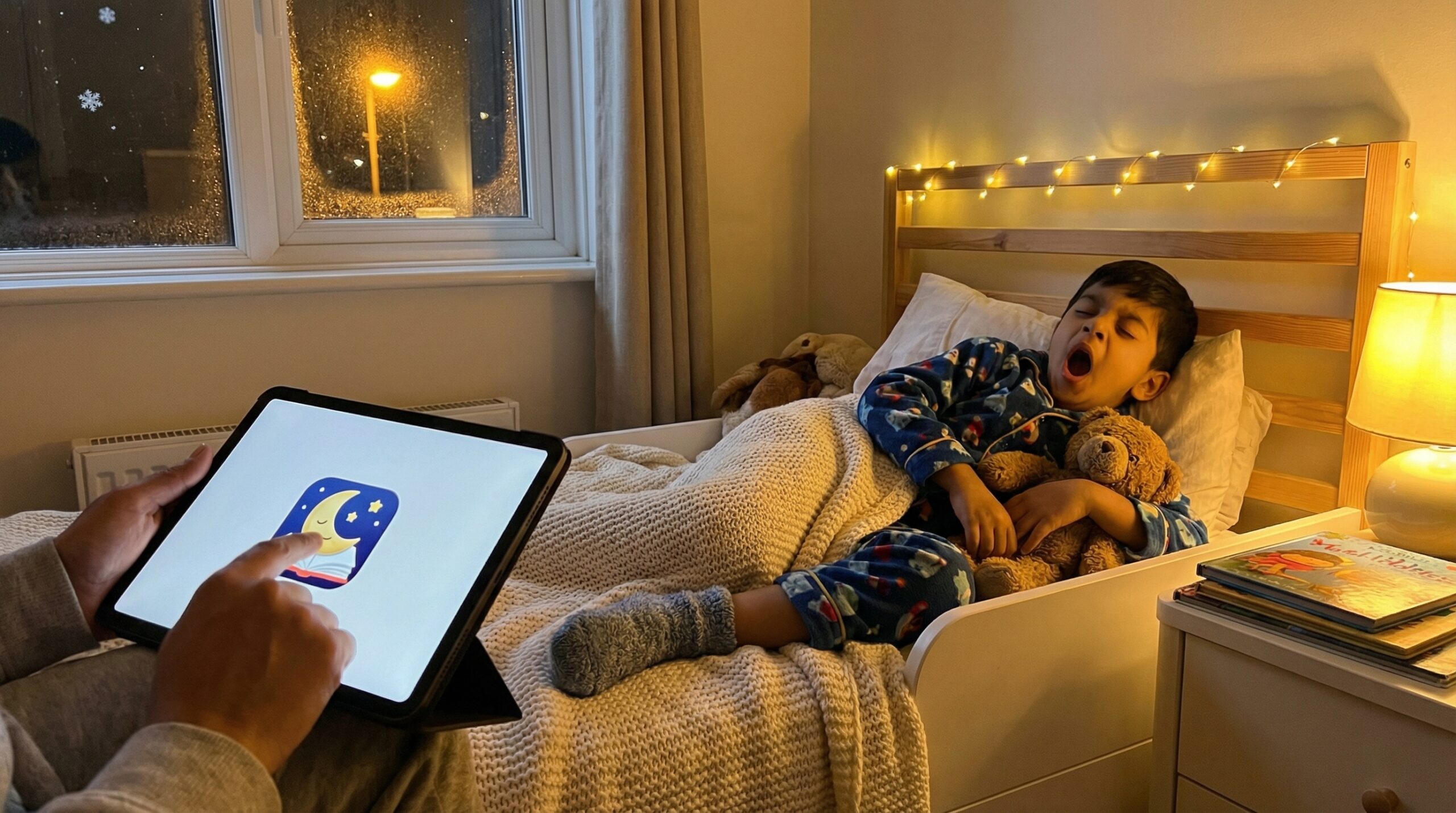
A bedtime mini story ritual is a short, predictable audio routine that signals the end of the day. Parents and teachers love it because it is quick, soothing, and reliable. For busy evenings, this tiny ritual can turn restless wiggles into cozy yawns. In fact, a 2025 study reported that consistent bedtime routines, including storytelling started as early as 3 months, were associated with fewer night-time awakenings, reduced sleep problems, and longer sleep durations by age 3.
What a bedtime mini story ritual is
This ritual is audio-first and very brief. It usually lasts one to five minutes. A steady narrator, familiar words, and a calm close make it feel safe and known. Also, repetition helps children recognize the cue for sleep without fuss. A 2024 systematic review of treatments for behavioral insomnia in children under 6 concluded that structured sleep routines, including storytelling, are empirically supported and recommended from around 3 months of age.
Why the bedtime mini story ritual works
Science and pediatric guidance support consistent bedtime cues. Consistent cues lower arousal and help the body prepare for sleep. In short, a reliable mini story ritual can shorten the time it takes to fall asleep. It can also strengthen parent-child connection over time. According to a 2025 survey, 71% of parents agreed that storytelling helps their children wind down at bedtime, with 49% naming it their preferred method.
Key characteristics
- Very brief micro-stories, often one to five minutes.
- Audio-first delivery to avoid bright screens near bedtime.
- Soothing voice and familiar wording for fast recognition.
- Predictable structure and gentle endings that cue rest.
Age adaptations and variations
Infants and toddlers usually respond best to one to three minute prompts with repeated phrases. Preschool and early school-age children can enjoy slightly richer three to five minute mini stories. Consistency matters more than length. For every age group, the ritual stays simple and calm. A 2024 study reported that reading or sharing a story before bed was significantly associated with lower sleep disturbance in preschoolers.
Small real-life example
One busy parent used a three-minute Storypie mini story for several nights after a late sports practice. Nights later, the child showed less resistance. Bedtime shortened and mornings felt easier. This little ritual proved quick and effective for that family. Additionally, a nationally representative C.S. Mott Children’s Hospital poll found that 90% of parents of 1–6-year-olds report having a bedtime routine, and 67% include reading a bedtime story, emphasizing the importance of these rituals in child development.
Quick tips and practical notes
Keep these points in mind when choosing a mini story ritual. They help keep the ritual true to its calming purpose.
- Time the story to signal the final step in the routine, not the middle.
- Prefer audio-first content or night mode to minimize light.
- Use the same voice or content so the cue becomes familiar.
- Choose age-appropriate, culturally sensitive material and check parental controls.
Benefits for busy families
Mini story rituals reduce nightly negotiation and travel stress. They are easy to repeat and support language exposure in tiny time slots. Also, the ritual offers a small moment of calm and connection, even on hectic evenings.
Where to find ready-made mini stories
Storypie offers calming audio collections and simple playback controls for families. For example, explore the Storypie calming audio collection or get the app to try curated mini stories on the go. Visit Storypie for calming collections and app options.
Small rituals can bring big results. A bedtime mini story ritual is a gentle, evidence-friendly way to end the day with calm, connection, and a touch of bedtime magic.