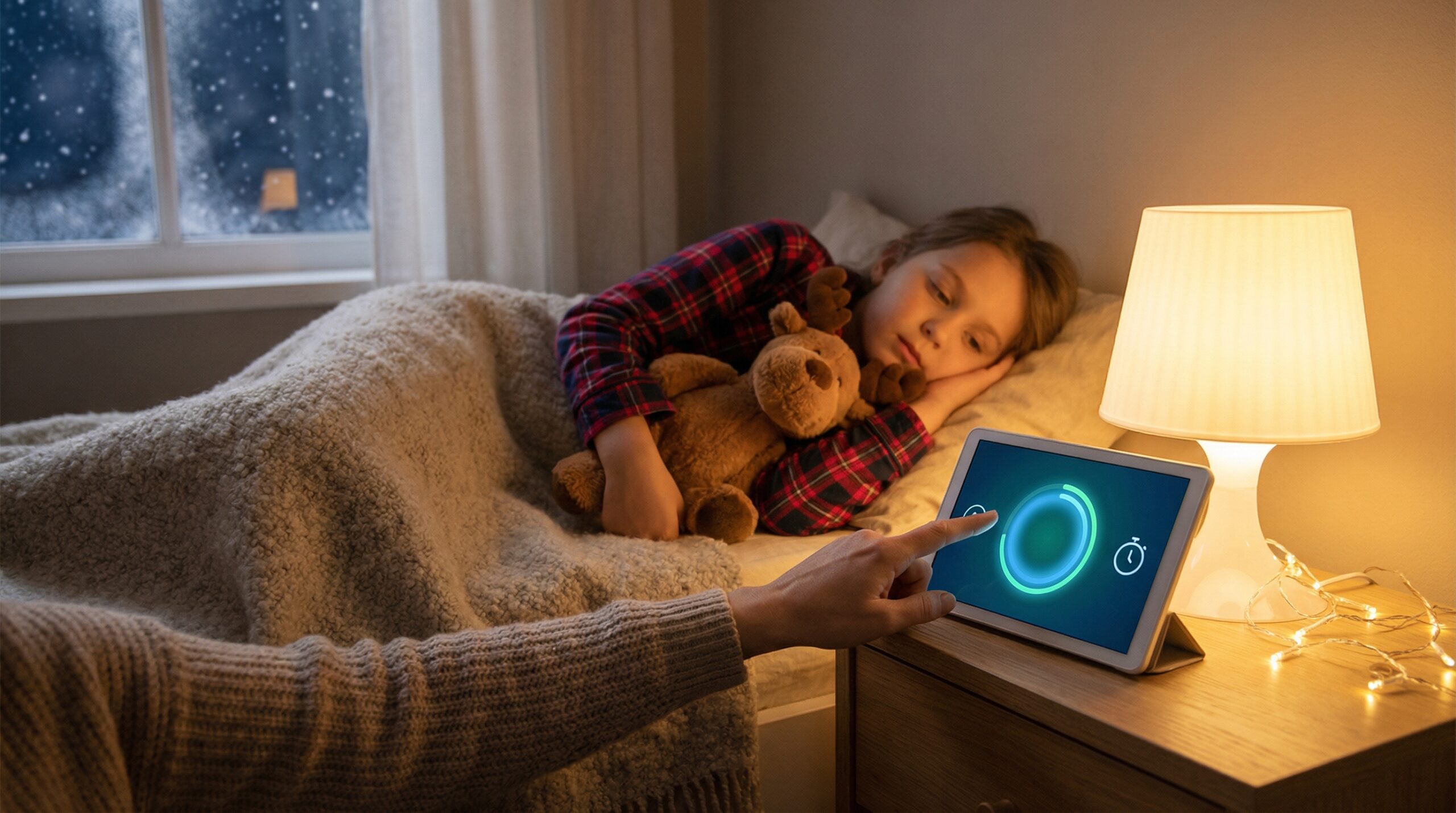
I use a bedtime mini story ritual every night. This small habit signals the end of the day. Five minutes is my favorite length. It fits tired kids and tired parents. It gives predictability without prolonging bedtime negotiations. In fact, a 2025 survey found that 71% of parents agreed that storytelling helps their children wind down at bedtime, with 49% naming it their preferred method.
Why the bedtime mini story ritual works
Routines calm children and adults. Short, repeatable rituals become sleep cues. Repetition trains the brain to expect rest. Also, a calm voice and steady pace lower arousal. As a result breathing slows and the heart rate eases. In short, a mini story ritual makes bedtime feel cozy and predictable. Research shows that consistent bedtime routines, including storytelling started as early as 3 months, were associated with fewer night-time awakenings, reduced sleep problems, and longer sleep durations by age 3.
How I run the bedtime mini story ritual
I dim the lights and choose audio-only or a whisper voice. Then I avoid bright screens. Next, I keep the plot gentle and familiar. For infants I focus on tone and repetition. For toddlers I add a repeatable line they can finish. For preschool and early school-age kids I allow a bit more detail. Still, I keep the pace slow.
A simple 5-minute script
Timeboxed and tiny. Instant little magic.
- 0:00 Two slow breaths and a soft “ready?”
- 0:30 Set the scene: “In a sleepy forest…”
- 1:30 Introduce a small problem and a tiny try
- 3:30 Resolve it gently and cue rest
- 4:30 End with a repeat line: “Sleep now, little star.”
Practical tips for tonight
- Keep the story close to lights-out so it becomes the cue.
- Make it consistent. Nightly repetition is the point.
- Prefer audio-only when possible to reduce blue light.
- Limit choices. Two options beat twelve.
- Celebrate attempts. Praise the ritual, not performance.
Age notes
Infants need tone, closeness, and simple repetition. Toddlers like interaction, a predictable refrain, and a comfort object. Preschool and early school-age children enjoy richer language but still need calm pacing and short length.
Anecdotes from my bedside
Once I told a five-minute “lost mitten” story. A toddler who fought sleep sighed and closed their eyes mid-sentence. Another night a shy four-year-old whispered the ending back to me in the dark. Small wins add up, and they feel delightfully magical.
Modern help
Apps and short audio collections can make this easier. For example, Storypie offers curated short stories meant for bedtime. Also, use a sleep timer and prefer offline playback on cold nights.
Safety, science, and final notes
Keep supervision for infants and avoid bright screens. Short routines support language exposure, attachment, and habit-building. Moreover, research shows that 90% of parents reported having a bedtime routine for their child, and 67% reported that reading bedtime stories was part of that routine. Consistent bedtime routines can also improve empathy and creativity in children, with a study finding substantial gains in children aged 6–8 who had a nightly reading routine. In other words, tiny rituals bring big bedtime wins.
Try this mini story ritual tonight. A small, five-minute habit can feel like cozy magic and build calm habits fast. For gentle story collections, visit Storypie.