
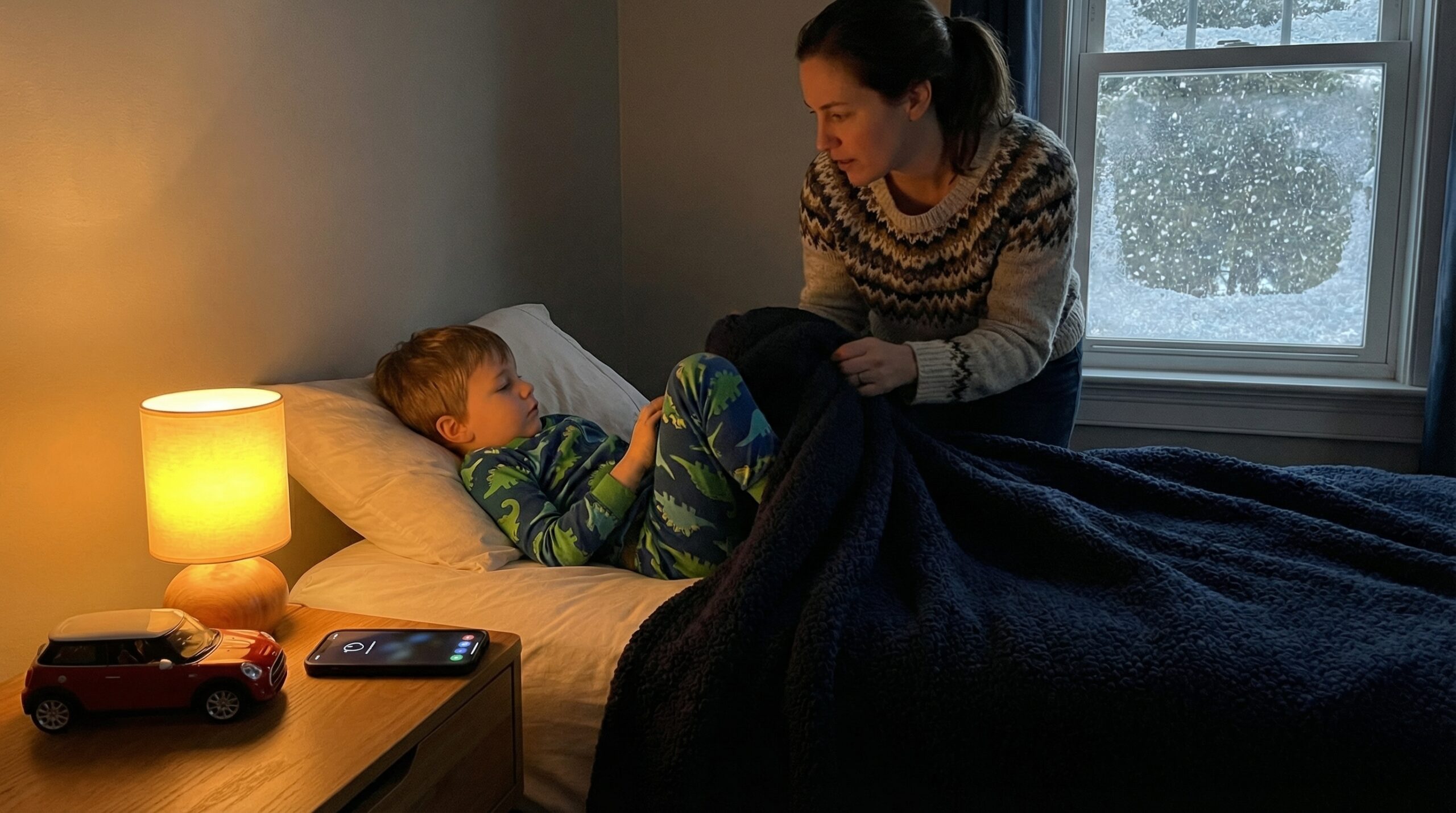
A bedtime mini story ritual is a short, predictable storytelling moment tucked into your child’s nightly routine. Use 3 to 7 minute tales to cue sleep, calm the body, and build gentle connection. In fact, a 2025 study reported that consistent bedtime routines, including storytelling started as early as 3 months, were associated with fewer night-time awakenings, reduced sleep problems, and longer sleep durations by age 3.
Why a bedtime mini story ritual works
Short and familiar beats long and new. Also, tiny stories lower arousal and create predictability. The ritual supports sleep onset, emotional regulation, and parent-child bonding. In fact, a nationally-representative C.S. Mott Children’s Hospital National Poll published in June 2024 found that 67% of parents of children ages 1–6 reported ‘reading bedtime stories’ as part of their child’s bedtime routine.
Use low warm light and quiet voices. Next, choose calm content with gentle rhythms. Many families find consistency is the secret sauce, aligning with guidance from major pediatric health sources recommending a short, consistent wind-down before bed, including a 20–30 minute bedtime routine with calm activities like reading.
How the ritual works
Start with a steady sequence: bath, pajamas, teeth, mini story, lights out. Then keep timing steady each night. Often a 5 minute story plays 5 to 15 minutes before planned sleep time. Research shows that 71% of parents agree that storytelling helps their children wind down at bedtime, with 49% naming it their preferred method. You can read live, play a parent recording, or use an audio story from Storypie. Audio-only works well in dim light. Also, avoid bright screens in the hour before bed.
Quick bedtime mini story ritual checklist
- Choose calm material: gentle rhythms and familiar characters only.
- Length: 3 to 7 minutes for toddlers and preschoolers. Infants need one line or a lullaby.
- Environment: dim warm light, soft textures, one hero book or one audio track.
- Sequence: repeat the order nightly so the story becomes the sleep cue.
Two simple mini story outlines
The Little Star — 3 minute outline
Intro: Whisper hello to a star. Scene: the star floats over a quiet town. Calm event: the star helps a sleepy mouse find a cozy bed. Closing line: Now the star sleeps. We sleep too. Good night.
Bear’s Slow Walk — 5 minute outline
Intro: Meet a slow bear with big paws. Sensory detail: the bear smells pine and hears soft river water. Gentle action: the bear walks and breathes while counting three stones. Closing exercise: breathe with the bear. One, two, three. Sleep.
Age notes and small troubleshooting
If your toddler gets fired up, shorten the story. If a preschooler needs more time, string two mini stories together. Traveling families can play a familiar audio file to keep the cue steady.
If screens are tempting, use audio-only or dim the screen to its lowest setting. For persistent sleep problems, adjust timing and consult pediatric guidance. A 2025 study found that a two-week nightly bedtime reading routine improved empathy and creativity in children aged 6–8, showing significant gains in cognitive empathy and creative fluency.
Try a playful finishing line tonight: “Breathe like a sleepy bear. Nose breath in. Slow out. Night night.” Tiny, silly, effective.
Want ready-made audio? Explore Storypie audio stories or get the Storypie app for calm, short tales that fit this ritual.