
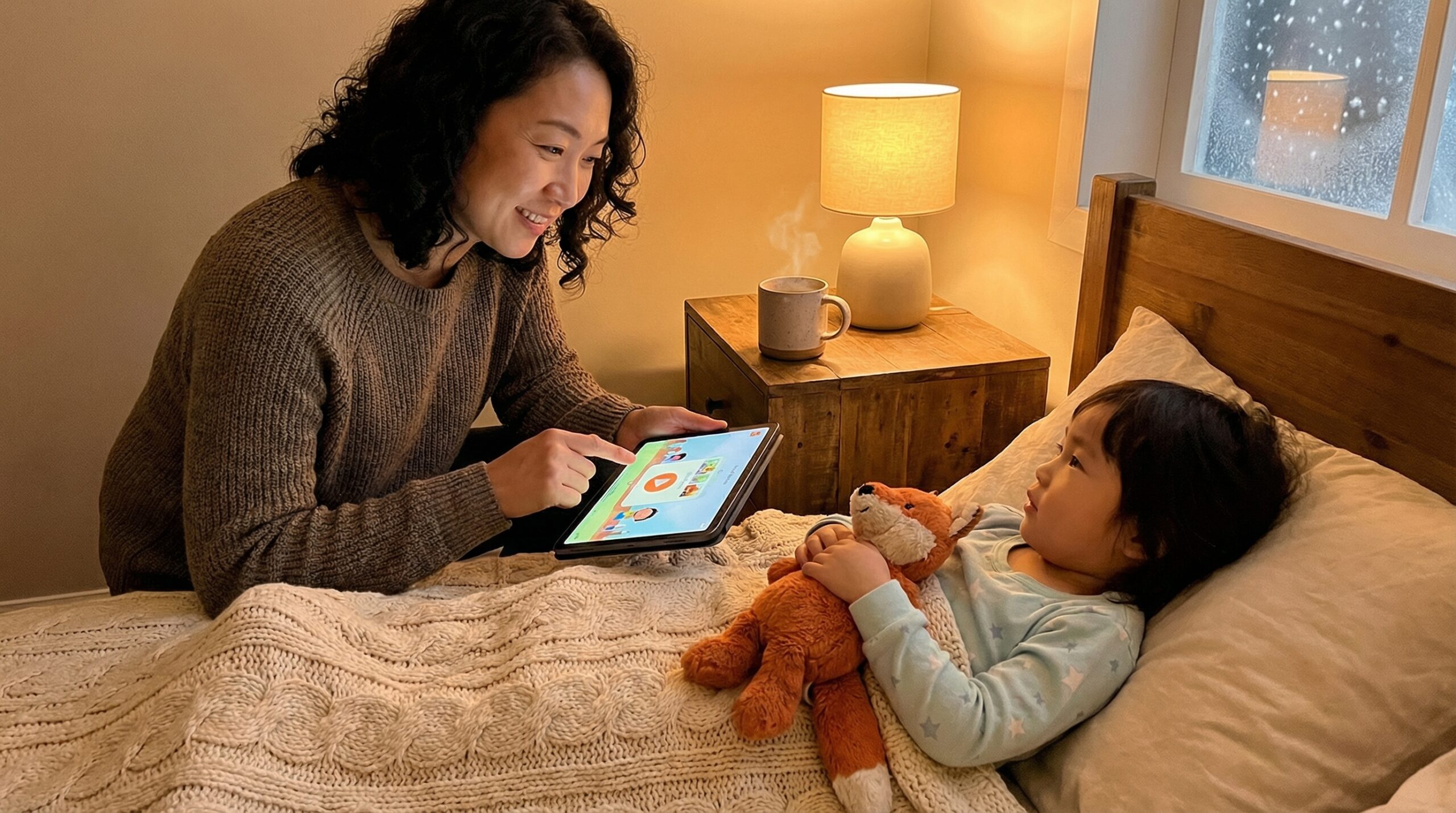
Bedtime mini story ritual is a tiny, powerful routine that signals the day is ending.
Why the bedtime mini story ritual works
Storytelling at night has roots across cultures. Also, the mini story is a modern, time-friendly version. Short, repeated stories give children the calm and predictability they need. Because of that, breathing slows and arousal drops. Research and pediatric advice both favor consistent routines. In short, a simple ritual reduces resistance and speeds sleep onset. A 2024 policy statement from the American Academy of Pediatrics recommends shared reading starting at birth as part of a bedtime routine to help children connect and wind down, supporting relationships, language, and early development.
What makes it so small and mighty
Mini stories last three to ten minutes. Seven minutes is a popular sweet spot for busy families. Repetition helps condition calmer bedtime reactions. Moreover, keeping the same order nightly turns the sequence into a sleep cue. Parents often see faster eyes closing and fewer delays. A longitudinal study (STRONG Kids 2) found that greater frequency of bedtime ‘adaptive activities’ like book reading at 3 months predicted longer sleep duration at 12 months, with a significant association, indicating that bedtime storytelling can lead to improved sleep duration in infants.
How to run a 7 minute ritual
Keep the sequence short and predictable. Try a reliable order: bath or wash up, pajamas, calm story, lights out. Also, dim lights early and speak softly. Next, use audio only to avoid blue light. Then set a sleep timer so playback stops after your child is likely asleep. Choose gentle themes and steady narration. Avoid intense plots or anything that spikes excitement. On some nights, share the story together for bonding. Other nights, let the child listen alone to learn self settling. A randomized trial of hospitalized children found that storytelling increased salivary oxytocin and reduced salivary cortisol, indicating a calming physiological response compared to a control condition, illustrating the biological benefits of storytelling as a calming bedtime ritual.
Practical tips for the mini story ritual
Consistency is key. Because a predictable order becomes a cue, stick with it. Also remember these quick tips:
- Keep stories three to ten minutes. Seven minutes often works best.
- Use low volume and a sleep timer for safety.
- Pick slow paced, reassuring tales.
- Keep the room dim, comfy, and cool.
Seasonal ideas and signs it is working
Frame stories as cozy winter evenings or summer starlight to make the ritual feel special. Moreover, real signs it helps include calmer mornings and less bedtime negotiation. Over time, a single short, familiar story can replace nightly bargaining. It really can feel like a tiny piece of magic. A 2023 CDC report found that 34.7% of children aged 3–17 experienced short sleep duration, with 57.3% of those with inconsistent bedtimes reporting insufficient sleep, highlighting the importance of a regular bedtime routine.
Tools and options
You can read aloud or use short audio stories from apps for a screen free option. For example, try Storypie short audio stories for gentle, parent-friendly choices. Also use a sleep timer and keep volume low. Finally, adjust length to fit your family rhythm. A 2025 study reported that consistent bedtime routines, including storytelling started as early as 3 months, were associated with fewer night-time awakenings and longer sleep durations by age 3, reinforcing the importance of the mini story ritual.
Quick checklist
- Bath or wash up
- Pajamas
- Seven minute story
- Lights dim, low volume, sleep timer
- Gentle narration and consistent order
Final thought
Start small and be playful. With a calm sequence and a seven minute mini story, bedtime becomes less of a battle. Instead, it becomes a cozy, shared close to the day. Try one tonight and watch the ritual work its gentle charm.