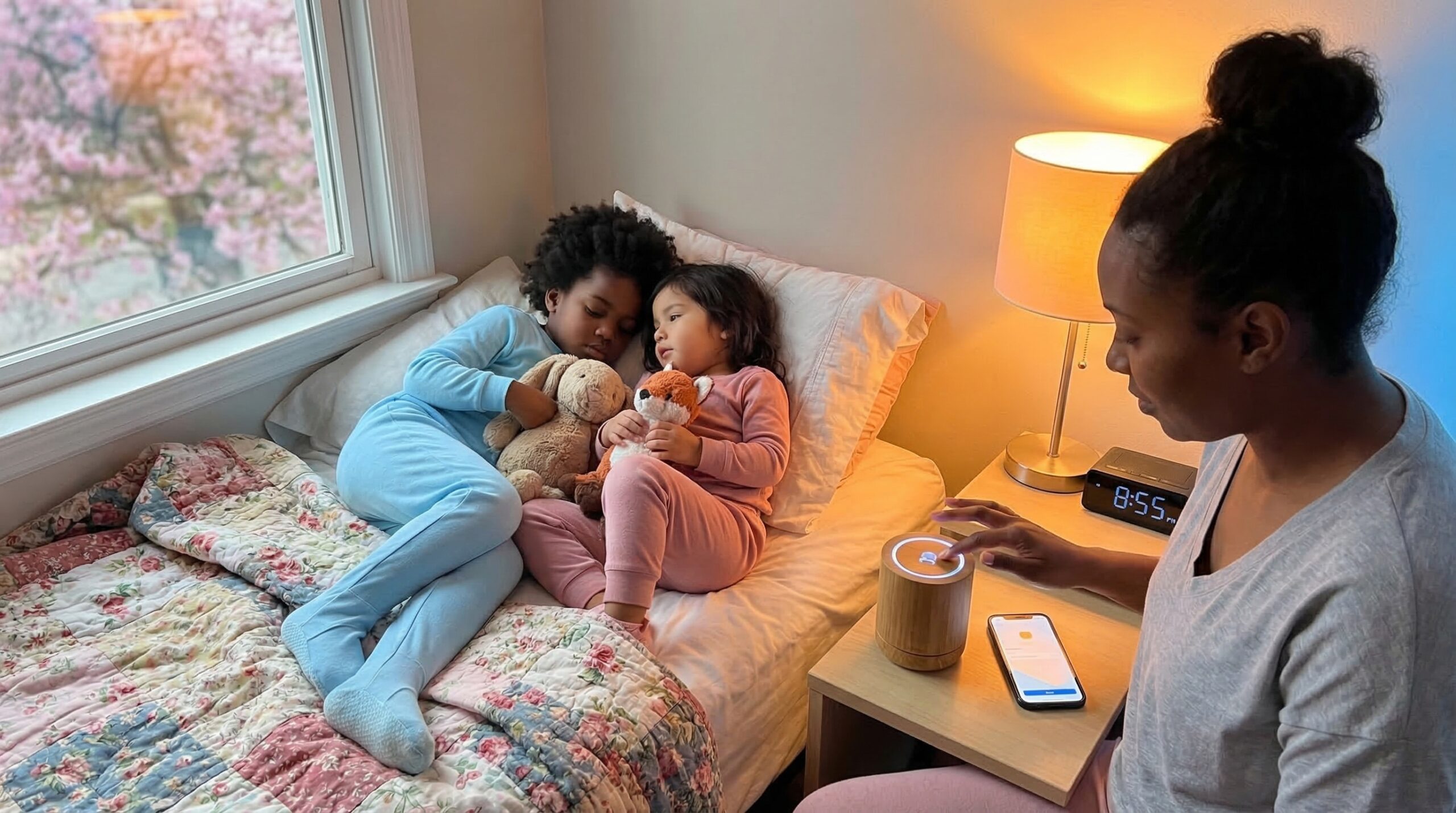
The bedtime mini story ritual is a short, repeatable tale used as the final cue in a child’s sleep routine. It creates calm, marks transition, and comforts both child and grown up. This small ritual is simple and mighty.
What the ritual is
A bedtime mini story ritual is a brief, reliable story used right before lights out. Families often keep it to three to ten minutes. The ritual signals the switch from play to rest. Over time the story itself becomes the cue to relax. In fact, a nationally representative poll conducted by C.S. Mott Children’s Hospital revealed that 90% of parents of children ages 1–6 reported having a bedtime routine for their child, with 67% indicating that their routine includes reading bedtime stories.
How the ritual looks
Parents and caregivers use the mini story ritual in many ways. Often it follows hygiene, dimming lights, and a single calming cue. Adults keep the format steady so the child knows what comes next. Predictability matters.
Common formats and ages
- Infants: rhymes and humming for about three minutes.
- Toddlers: short spoken tales of three to five minutes.
- Preschoolers: slightly longer mini-tales of five to seven minutes.
- Delivery options: live voice, audio-only, or a tiny printed board book.
Why the bedtime mini story ritual helps
Short, calm stories lower arousal more than active play. Because the ritual repeats, the nervous system learns the cue. Over time a child may relax within the first lines. Research shows that a 2025 study found that 71% of parents agreed that storytelling helps their children wind down at bedtime, with 49% naming it their preferred method. The ritual also supports language exposure and connection every night.
Adaptations and accessibility
The mini story ritual adapts to sensory and developmental needs. For neurodiverse children, keep volume steady and pacing clear. For bilingual families, rotate languages across nights. If spoken prompts are challenging, a recorded parent voice works well. Consistency is more important than length.
Characteristics that make it work
- Short and predictable. Stick to a narrow time window.
- Repeatable ending line. A consistent closing strengthens the cue.
- Sensory-safe. Use one calming cue like a soft chime or low night light.
- Flexible delivery. Choose live reading or audio-only to avoid screens.
Quick start ideas
Keep the mini story ritual low fuss and joyful. Pick two familiar tales so choices stay easy. Try one steady closing line. Timebox the story to keep it short and consistent. For busy nights, play a five minute Storypie tale as lights dim to cue sleep.
Want ready-made short stories? Find a selection in the Storypie app. These tiny tales make the ritual easy to keep night after night.
Final note
Across cultures, tiny tales and lullabies have soothed children for centuries. The bedtime mini story ritual is the modern, time-saving version. It is low fuss and high impact. Repeat for a few nights and celebrate the small, magical shift toward sleep. Furthermore, a 2025 study reported that consistent bedtime routines, including storytelling, started as early as 3 months, were associated with fewer night-time awakenings, reduced sleep problems, and longer sleep durations by age 3, emphasizing the long-term benefits of this beautiful ritual.