
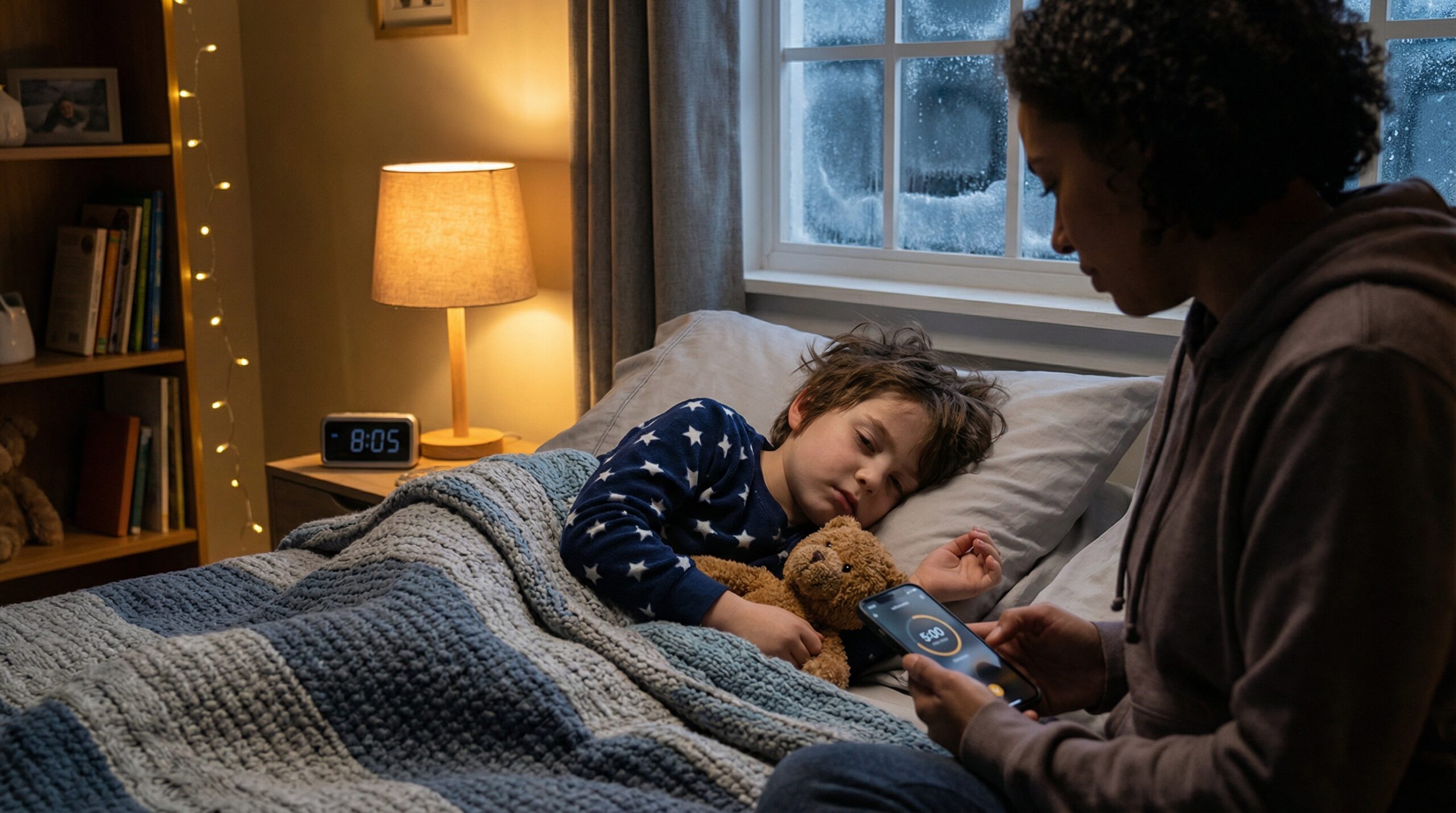
Bedtime mini story ritual is a short, repeatable narrated story that cues sleep for young children. In practice, families use the ritual for calm evenings and easier sleep transitions. For many, it becomes a tiny nightly spell. According to a 2025 survey, 71% of parents agreed that storytelling helps their children wind down at bedtime, with 49% naming it their preferred method.
What the bedtime mini story ritual is
This ritual is a concise audio story that repeats nightly. It usually runs three to ten minutes. For infants, clips can be much shorter. The pattern is simple and gentle. Moreover, the ritual acts as a consistent sensory cue for rest.
Common characteristics
Families and caregivers often notice a few shared features. First, audio-only delivery is common to avoid bright screens. Second, a calm, steady voice is typical. Third, the story uses repeating phrases and soft rhythm. These traits help the ritual feel familiar and safe. Research from a 2024 longitudinal analysis found that substituting 50% of screen time with book reading could improve overall sleep and halve the odds of reporting fear of sleeping alone or fear of the dark in preschoolers, emphasizing the importance of storytelling as part of the bedtime routine.
Why parents and teachers value it
People use a bedtime mini story ritual because it soothes and signals rest. It often shortens time to sleep and reduces night waking. Also, caregivers report smoother emotional transitions after upset moments. A 2025 study reported that consistent bedtime routines, including storytelling started as early as 3 months, were associated with fewer night-time awakenings, reduced sleep problems, and longer sleep durations by age 3. Finally, repeated vocabulary supports language growth over time.
Age and length patterns
Typical lengths fit the child’s age and attention. Toddlers commonly hear three to seven minutes. Early-school kids may prefer five to ten minutes. Infants do best with brief 30 to 90 second clips. In short, the ritual adapts to a child’s needs.
Technology, safety, and consistency
Devices usually play a single, repeatable track. Therefore, families set timers or volume limits. Also, many caregivers choose airplane mode to prevent interruptions. For neurodiverse children, consistent tracks and visual supports help maintain the cue’s reliability.
Typical benefits and outcomes
- Faster sleep onset for many children
- Fewer night wakings in some households
- Improved emotional regulation through predictability
- Language exposure via repeated phrases and rhythm
Short history and cultural notes
Short bedtime narratives have roots in ancient oral traditions. Over time, they evolved into compact, audio-first rituals. Today, digital platforms often host these tracks. Storypie offers many short narrated stories suited to this ritual. In fact, a 2025 survey indicated that 90% of parents of 1–6-year-olds reported having a bedtime routine, and 67% reported that their child’s bedtime routine includes reading a bedtime story.
Explore Storypie for short narrated tracks that fit busy nights. For a gentle introduction, visit our app page. Visit our app page.
Final thought: a tiny nightly ritual can steady evenings. Over days, the track becomes a reliable signal of rest and calm. A large multinational study found a dose-dependent association between frequency of a nightly bedtime routine and better child sleep outcomes, with children having a routine every night sleeping over one hour longer than those without, highlighting the ritual’s significance.