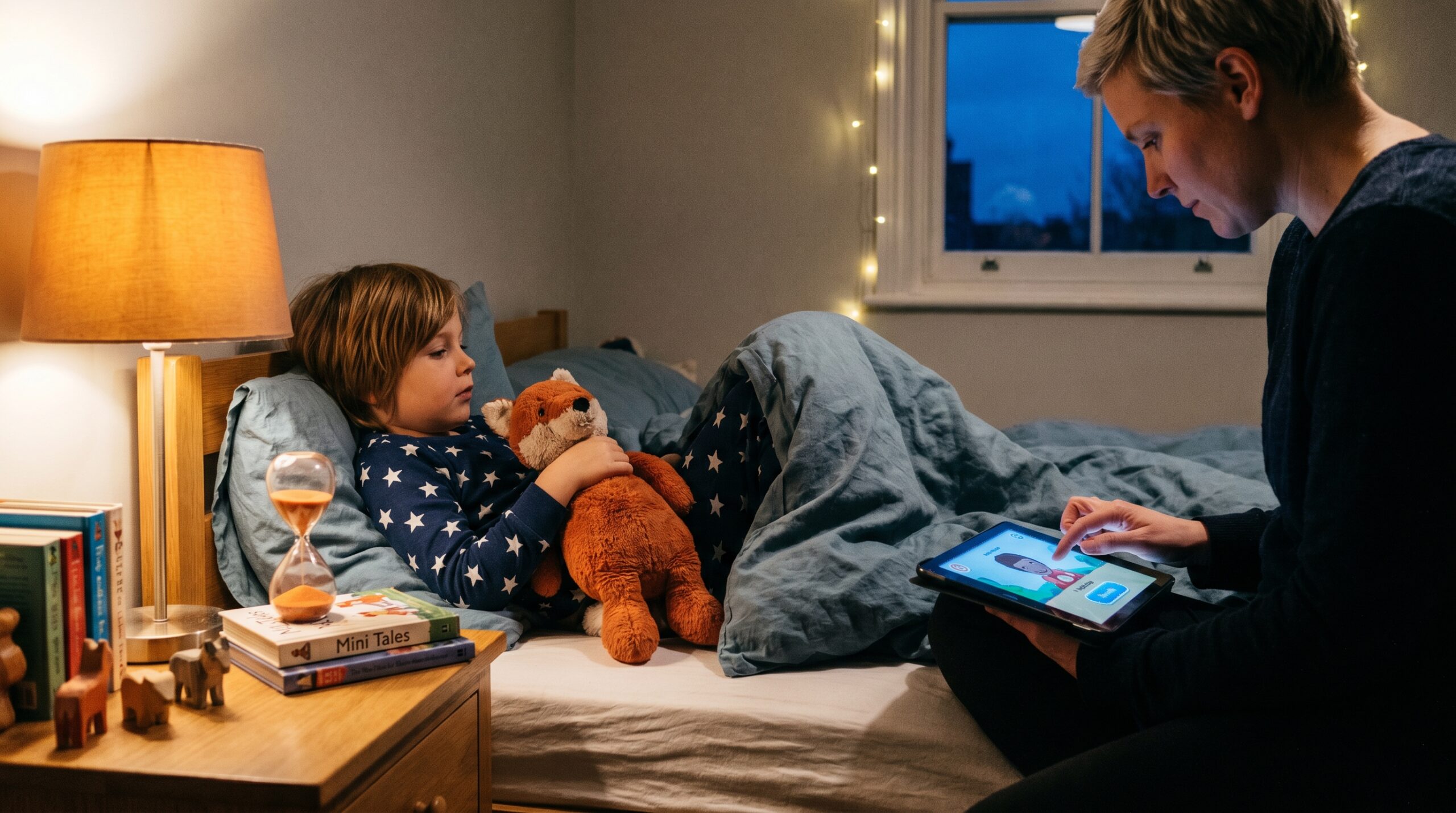
What is a bedtime mini story ritual?
A bedtime mini story ritual is a tiny, predictable moment before lights out. It is a short, calming story that signals sleep. Families call it pocket-sized magic. It usually lasts under five minutes. Also, it favors predictability and small, repeated cues.
Why the bedtime mini story ritual works
The bedtime mini story ritual lowers stress and supports steady sleep cues. Predictable routines calm the nervous system. Short spans prevent renewed attention and excitement. Physical closeness and a soft voice help emotional regulation. For many families, that mix feels quietly powerful. In fact, a 2025 study reported that consistent bedtime routines, including storytelling started as early as 3 months, were associated with fewer night-time awakenings, reduced sleep problems, and longer sleep durations by age 3.
Key characteristics
- Short length. Most rituals stay under five minutes.
- High predictability. The same start or closing cue repeats nightly.
- Simple content. One image or one sentence often suffices.
- Gentle delivery. A low voice, dim lights, and slow pacing are common.
- Portable. Many families keep a single short recording for travel.
Age-friendly traits of the ritual
The bedtime mini story ritual shifts with age. For infants, it tends to be a whispered line or soft lullaby. For toddlers, it often becomes a tiny vignette about a sleepy animal. For school-age children, the ritual can be a brief first-person scene that models calm choices. In every case, the ritual stays short and familiar.
Evidence and everyday results
Research links consistent bedtime cues to faster sleep onset and longer sleep. In practice, small routines reduce bedtime resistance. For example, one caregiver reported quicker eye closure after a week of the same three lines. Families often describe the change as mildly magical and reliable. Notably, a 2025 survey indicated that 90% of parents of 1–6-year-olds reported having a bedtime routine for their child, with 67% including reading bedtime stories. Additionally, another 2025 survey found that 71% of parents agreed that storytelling helps their children wind down at bedtime, with 49% naming it their preferred method.
Tech and travel characteristics
When audio is used, files are brief and offline-ready. Night mode and low brightness are typical. Families often use a single downloaded file for travel. Also, the same closing phrase travels well between caregivers, grandparents, and nannies.
Common checklist of features
- Under five minutes in length.
- Calm voice and dim room lighting.
- A repeating closing sentence or small touch.
- Low-brightness audio or a downloaded file for portability.
If you want a simple place to store short recordings or tiny stories, consider the Storypie app for families. The Storypie app keeps files handy for home and travel. It also lets caregivers share the same closing cue across households.
In short, the bedtime mini story ritual is tiny, gentle, and dependable. Try it nightly for a week. Many families notice smoother bedtimes and softer goodnights. Furthermore, data from the Ulm SPATZ cohort suggests that replacing just 50% of preschoolers’ screen time with book reading would yield an improvement in overall sleep quality. This reinforces the idea that integrating stories into bedtime routines can significantly enhance sleep quality, further supporting the bedtime mini story ritual as a beneficial practice.