
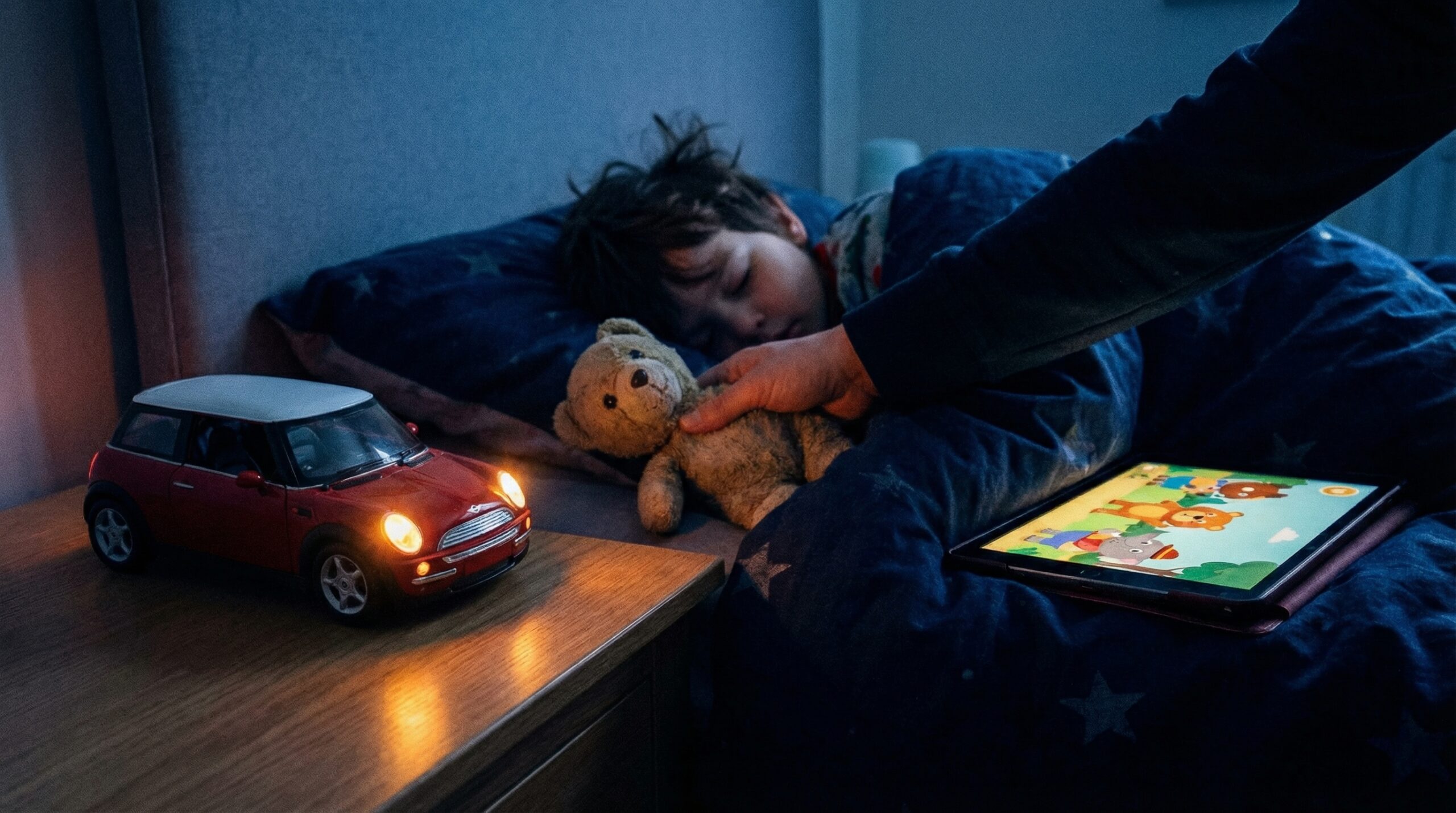
Bedtime mini story ritual is a short, consistent pre-sleep habit. It usually lasts three to seven minutes. Parents and teachers use it to cue calm and sleep. Night after night, the tiny ritual becomes a gentle signal. In fact, a 2025 study found that 71% of parents agreed that storytelling helps their children wind down at bedtime, with 49% naming it their preferred method.
Why this tiny ritual works
Predictability is the secret. Because children learn by association, the same short story becomes a sleep cue. Therefore the tale, dim lights, and quiet form a linked routine. Over time, bedtime resistance falls. As a result, kids fall asleep faster and wake less often. This outcome aligns with pediatric sleep guidance and common parent experience. Research indicates that consistent bedtime routines, including storytelling started as early as 3 months, are associated with fewer night-time awakenings and longer sleep durations by age 3.
Typical elements of a bedtime mini story ritual
- Fixed time, often a few minutes before lights out.
- The same short story or audio repeated nightly.
- Dim lights, calm voice, and a quiet room.
- Brief parent-child touch or audio for independent sleepers.
- Duration usually three to seven minutes.
Age notes and who benefits
Infants and toddlers, about six months to three years, love rhythm and soothing voices. Preschoolers enjoy predictable plots. Early school-age children up to eight years still appreciate the ritual. Also, children with sensory sensitivities often respond well to a consistent audio cue. A 2025 survey indicated that 90% of parents of 1–6-year-olds reported having a bedtime routine for their child, with 67% including reading bedtime stories, reflecting the widespread adoption of this practice and its importance in child development.
Formats and accessibility
The bedtime mini story ritual works in many formats. Live reading, a gentle recording, or a short app story all work fine. For audio-only nights, try a rhythmic rhyme or a calm countdown. However avoid bright screens near bedtime to protect melatonin levels. A 2024 randomized clinical trial showed that removing screen time in the hour before bed resulted in small-to-medium improvements in sleep efficiency and reductions in night awakenings. For themed options, see the Storypie bedtime collection.
Measuring small wins
Track bedtime wins for two weeks. Use a simple chart with columns for bedtime, time to sleep, and night wakings. Then note trends and celebrate small shifts. Even tiny improvements mean real progress.
Common pitfalls
Too bright, too exciting, or changing the story defeats the cue. Also, heavy reliance on a parent voice may require a gradual change for independent sleep. If problems persist, consult a pediatrician or sleep specialist.
Try the ritual for a week
Commit to the same short tale for seven nights. Dim the lights and keep your voice steady. Next, watch for calmer bedtimes and quieter nights. For an easy start, Get the Storypie app and queue a five-minute tale.
Final thought
A bedtime mini story ritual is a small habit with big payoff. It soothes, signals, and makes nights gentler. In a recent report, Scholastic’s Kids & Family Reading Report found that 51% of preschoolers (ages 0–5) are read aloud to at home 5–7 days per week, underscoring the frequency of reading aloud to young children, which can enhance bedtime rituals. For more ideas and home resources, return to Storypie home. Sweet, starry nights await.