Audio-first benefits for children free up mental space and invite vivid imagination. When families swap a flickering screen for a calm 10 to 15 minute audio story, kids settle faster and follow plots more easily. In fact, a 2024 study revealed that viewers reported higher cognitive load when watching subtitled videos without sound, suggesting that audio significantly reduces cognitive load compared to visual stimuli.
How listening lowers cognitive load
Listening uses a clear channel. Because audio does not compete with moving pictures, children avoid split attention. As a result, working memory can focus on meaning. Research on learning supports this idea. A 2024 study demonstrated that cognitive load can impair brain functioning during auditory and linguistic stimuli processing, emphasizing the importance of managing cognitive load to enhance engagement with audio content. In practice, a spoken sentence can prompt a child to build a dragon, a whole forest, or a tiny hero inside their head.
Why imagination grows with sound
When children hear narration, language sparks sensory images. Their brains connect words with sight, smell, and motion. In other words, they internally see what they hear. This mental construction is creative practice. Research indicates that listening to narratives engages a wide, bilateral set of cortical regions, providing evidence that audio narratives support active meaning construction. A child who imagines a dragon chooses color, size, and voice. Those choices build creative muscles over time.
Listening helps language and attention
Audio-first benefits for children support vocabulary and sentence processing. Because audio removes decoding, kids focus on meaning. Regular listening trains auditory memory and sequence skills. Over time, children get better at predicting plot turns and remembering event order. That attention practice often transfers to classroom listening and story retells. According to a 2024 study, cognitive load was significantly higher when watching subtitled videos without sound, providing quantitative evidence that audio aids in reducing cognitive load.
Screens, sleep, and calm routines
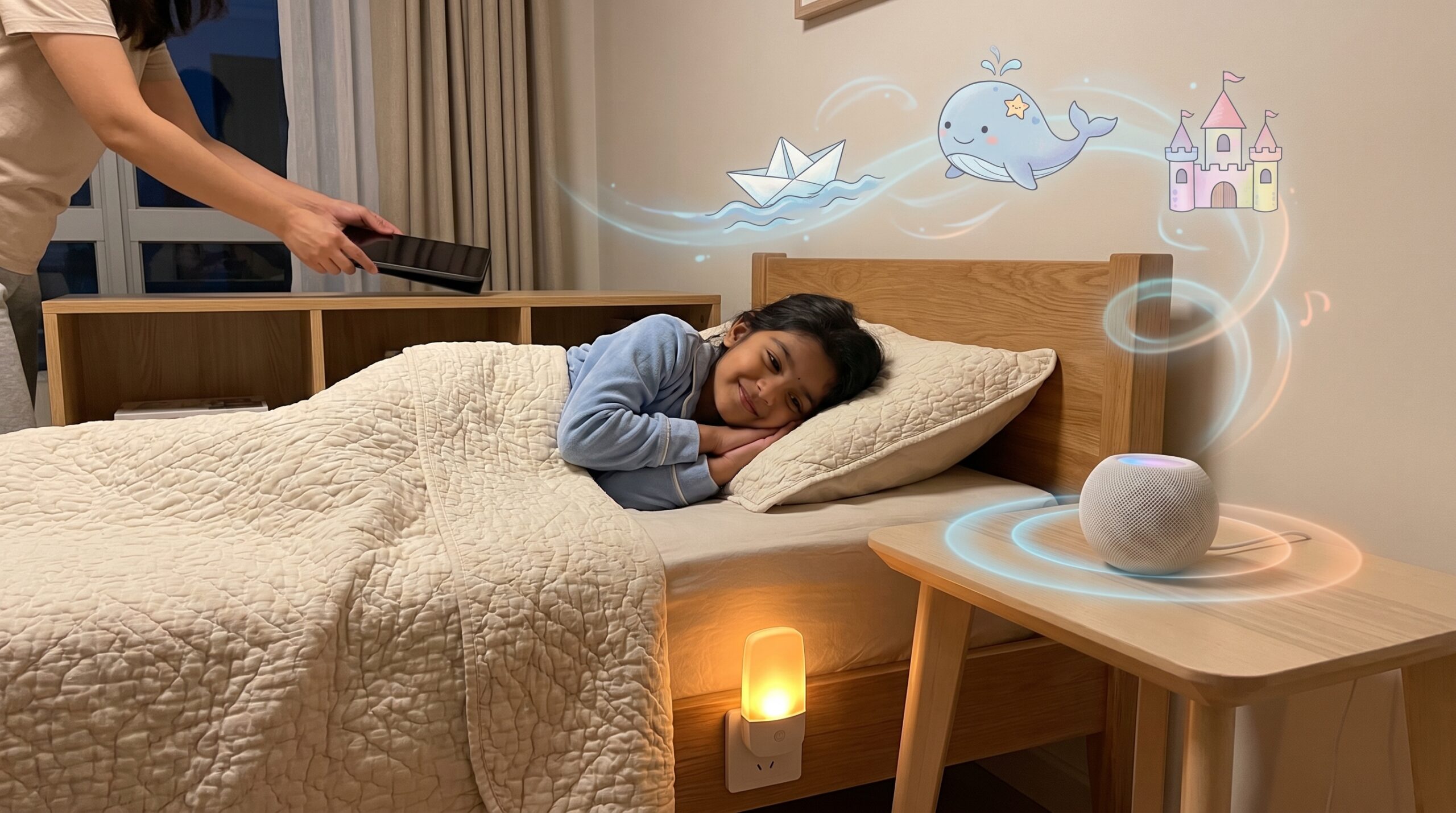
Screens near bedtime can delay sleep because of bright light and fast visuals. Instead, a short calm audio before bed reduces visual stimulation and cues relaxation. Keep narration slow and voice tone warm. Also, avoid loud effects that can wake a child. For many families, a 10 to 15 minute audio fits a predictable lights-out routine.
Quick tips that fit busy days
- Keep it short. Ten to twenty minutes works well.
- Choose calm narration. Prefer warm tone and few effects.
- Turn off screens and notifications. Make the moment screen-free.
- Make it shared. Listen together and ask one question.
Practical, playful examples
At bedtime, play a short Storypie tale and ask for a one-sentence recap in the morning. During a quiet transition, use audio to cue clean-up time. For multilingual homes, audio builds listening fluency without decoding demands.
Audio-first benefits for children are inclusive and rooted in oral tradition. Small calm audio habits build language, focus, and imagination. Try a Storypie audio tonight and listen for that familiar request, “just one more.” For a gentle start, visit the Storypie app to explore short, calm tales.