Audio first cognitive load is not a slogan. It is a practical choice for parents and teachers. Also, audio removes screen clutter. That lightens what a child must hold in working memory. A 2024 mixed-methods study found that viewers reported significantly higher cognitive load when sound was turned off while watching subtitled videos, with mean Effort scores of 3.07 (sound ON) vs. 4.84 (sound OFF) on a 1–7 scale (p < .001). Short sentence. Clear result.
Audio first cognitive load: how sound frees imagination
Keep it tactile. When we remove images we let children build their own worlds. For example, fewer visuals mean less to juggle in short term memory. Therefore children can invent scenes from voice and sound. Magic happens in quiet heads. Also, imagination grows when the visual channel stays free. Research from a 2023 neuroimaging study indicates that listening to narratives engages a wide, bilateral set of cortical regions, providing evidence that audio narratives support active meaning construction.
A short history
Oral storytelling is ancient. Before print and screens people learned by listening. Radio drama later brought stories into living rooms. Modern audiobooks and apps extend that long tradition. Listening remains a time tested way to teach language, values, and imagination. It is delightfully simple and powerfully effective.
How audio helps attention and language
Listening builds vocabulary and syntax. Neuroscience shows that imagining while listening engages brain networks for imagery and memory. That supports empathy and social understanding. Additionally, a 2024 study found that EEG-based cognitive load estimation achieved a peak F1-score of 0.98 when assessing psychoacoustic parameters, indicating a strong correlation between audio characteristics and cognitive load. Also, audio first cognitive load helps children who struggle with decoding. For kids with dyslexia, visual impairment, or attention differences, audio removes decoding pressure. As a result, narrative becomes immediately accessible. Inclusive and kind, hooray.
Calmer nights and routines
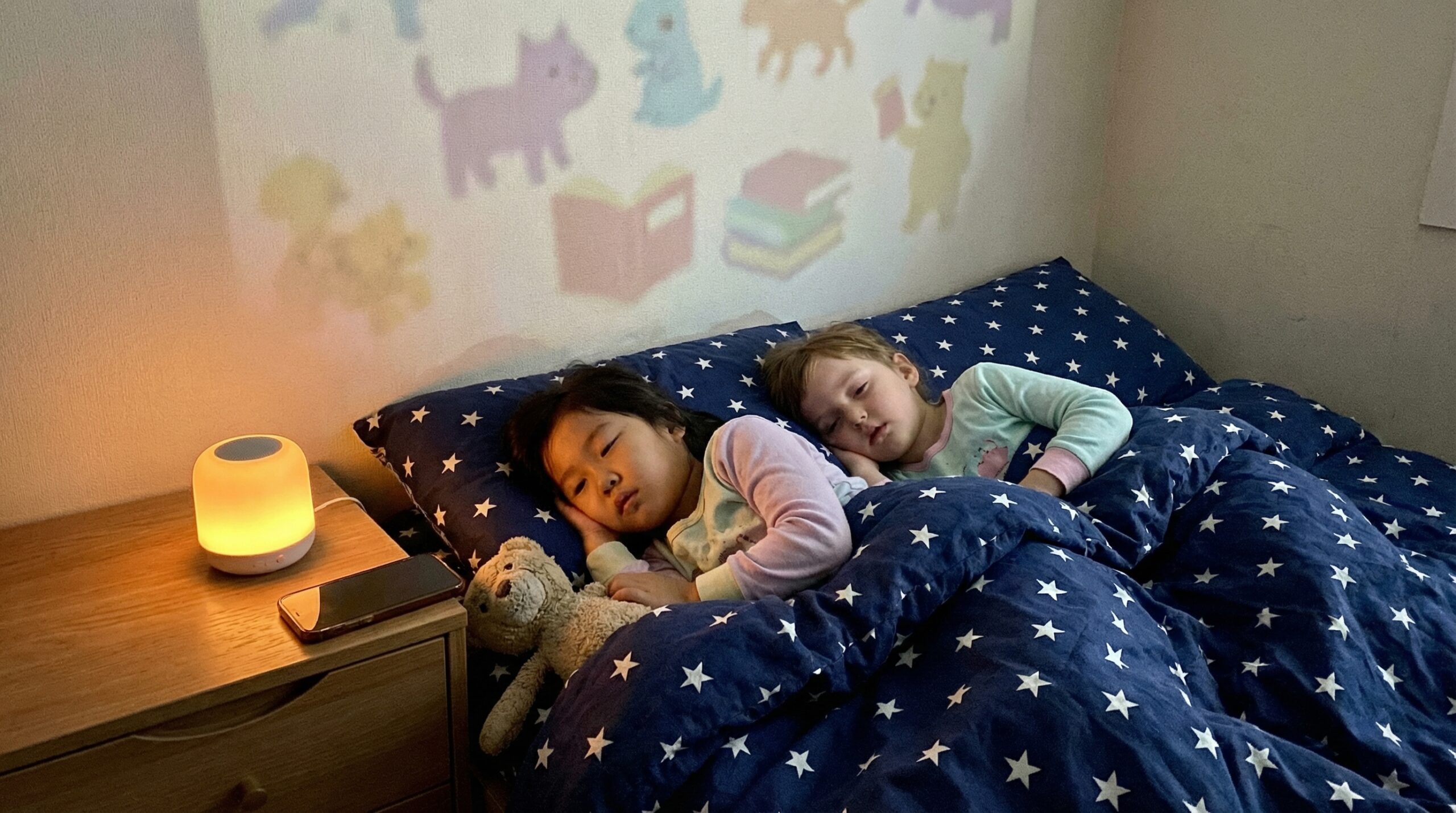
Screens before bed often hurt sleep. Blue light and busy images delay rest. However, audio works well in low light. Try dimming the room and playing a short Storypie story. Keep volume gentle and pacing slow. That tiny ritual often calms children and boosts imagination. It feels lovely and cozy.
Practical tips
Choose high quality content. Also, pace and volume matter. Adult guidance matters too. Not all audio is calming or educational. Fast, loud, or mature content can raise cognitive and emotional load. Pick age appropriate stories. Sit with very young children. Turn listening into a shared ritual when possible.
Where audio shines:
- Reduces visual clutter and extraneous cognitive load
- Encourages imaginative visualization rather than passive viewing
- Builds language skills that transfer to reading
- Is accessible for diverse learners
- Fits into car rides, quiet play, and bedtime
A tiny test you can try tonight
Dim the lights. Queue a short Storypie story. Let the room stay warm and low. Listen for ten minutes. Watch what your child imagines. If they drift into their own world, the experiment worked.
Want more? Try a gentle listen with Storypie. Get the app and explore lovely titles for kids.