
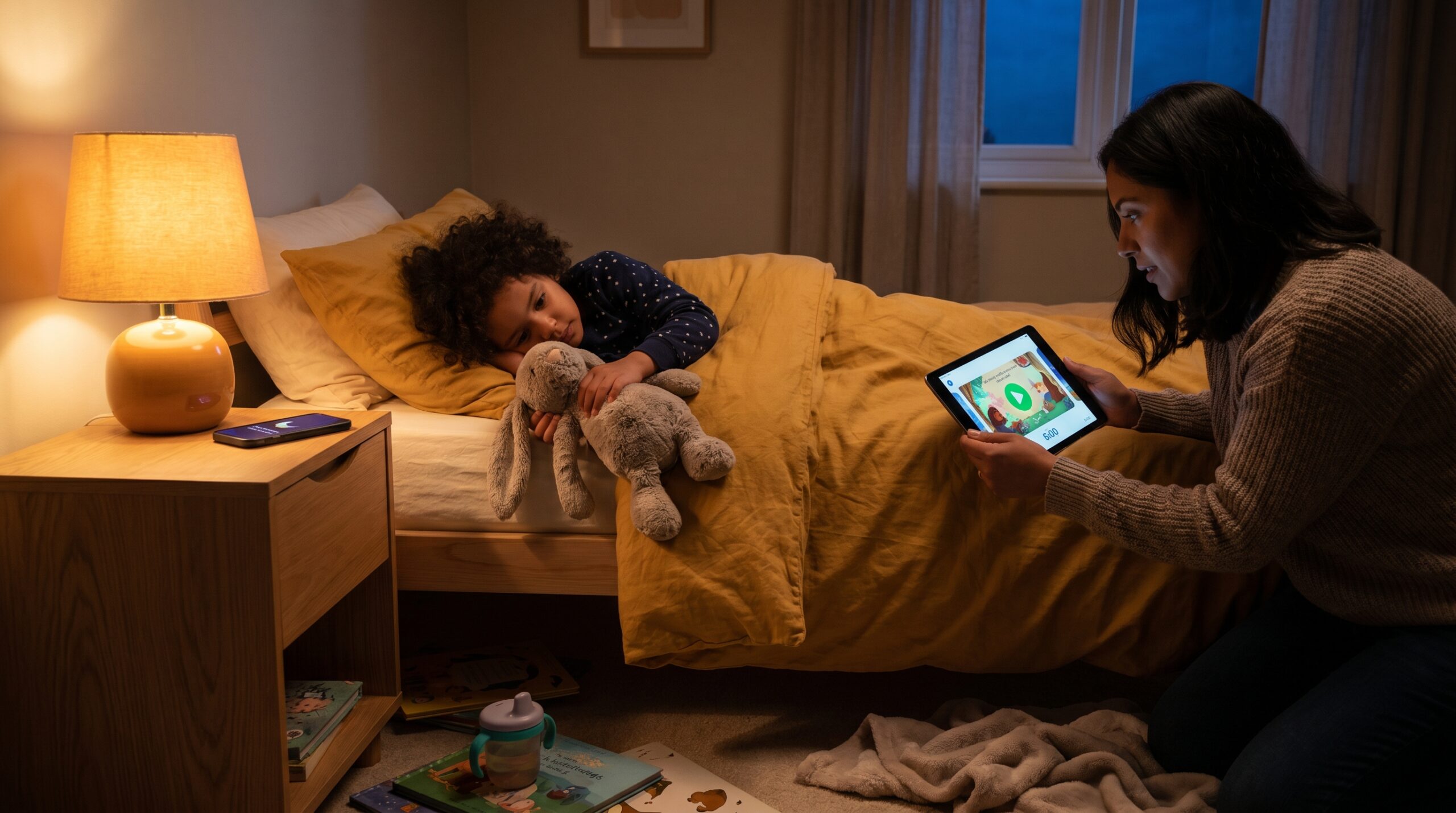
The bedtime mini story ritual is a tiny, predictable cue that tells a child their day is done. Parents use this short, calming routine to mark bedtime and lower arousal. It is soothingly simple and surprisingly powerful. In fact, a 2025 study reported that consistent bedtime routines, including storytelling started as early as 3 months, were associated with fewer night-time awakenings, reduced sleep problems, and longer sleep durations by age 3.
Why the bedtime mini story ritual works
Predictability helps the brain shift toward rest. When families repeat the same quiet cue nightly, the child learns to expect sleep. For many children, a three to seven minute cue reduces fussing and speeds sleep onset. Moreover, short calm sounds ease the nervous system. For infants, very brief cues work best. For toddlers and preschoolers, aim for three to seven minutes. For school-age children, seven to fifteen minutes can be helpful. Above all, consistency matters more than length. Research shows that a 2024 randomized clinical trial demonstrated that removing screen time in the hour before bed resulted in small-to-medium improvements in sleep efficiency and reductions in night awakenings.
Moreover, a 2025 survey found that 71% of parents agreed that storytelling helps their children wind down at bedtime, with 49% naming it their preferred method, highlighting the popularity and effectiveness of this soothing practice.
Key characteristics of the ritual
- Short and consistent: one brief cue each night.
- Predictable order: the same steps signal the end of the day.
- Calming content: familiar voices and neutral endings work best.
- Audio-first: audio-only tracks reduce screen stimulation.
Ritual ingredients
Set a calm environment. Dim the lights and keep the room cozy. Use a soft blanket and a low lamp glow. Follow a steady sequence like bath, teeth, pajamas, mini story, lights-out. Choose one cue name, such as quiet cue or night whisper. Then use it each night. Over time, the cue becomes a gentle signal the brain recognizes.
Technology and practical notes
Prefer audio-only playback whenever possible. Avoid bright screens and interactive content near bedtime. You can create a timed playlist that stops at lights-out. For easy access, try the Storypie app to queue short tracks and use offline mode and parental controls.
Inclusive and flexible options
Adapt the ritual to your family. Change the length, language, or voice as needed. In multilingual homes, rotate languages across nights or blend lines. For neurodiverse children, keep phrasing very predictable and volume low. Small changes often work better than big ones.
How to know if the ritual helps
Track three simple measures for one to two weeks. Note how long it takes to fall asleep, night wakings, and morning mood. Also watch for bedtime resistance. A realistic win is five to ten minutes less time to fall asleep and calmer goodbyes. A 2023 randomized-trial secondary analysis showed that infants whose caregivers received a responsive-parenting intervention (including bedtime routine guidance) had a mean increase in nighttime sleep of 40 minutes and 0.4 fewer nighttime wakings, demonstrating the significant impact of structured bedtime routines on infant sleep patterns. Parents often find a sticky note on the nightstand makes tracking quick and painless. Celebrate small wins, like one calm night in a row. Those tiny victories add up.
Sample evening schedule
7:00 bath. Then 7:15 pajamas and teeth. Next 7:25 mini story for five minutes. Finally, 7:30 lights-out. This steady, short sequence fits busy nights.
Small style notes
Name the cue and keep the end neutral. Over time, the nightly mini story ritual becomes a tiny Pavlovian helper. It is a small practice with big benefits. Try it tonight and notice the softer goodbyes and easier mornings.
Want a gentle library of short tracks? Visit Storypie home or try the Storypie app to find and queue mini stories for your bedtime wind-down.