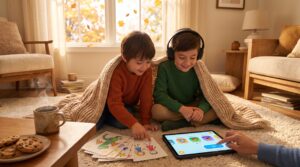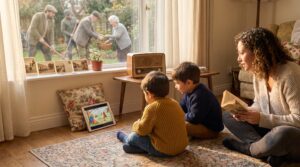
What audio-first for imagination means
Audio-first for imagination is a simple idea with big effects. It favors listening over watching to spark mental pictures and creative play. Because the voice delivers rhythm and language, the child builds the scene inside their mind.
How audio reduces cognitive load
Listening asks the brain to create rather than to process rapid images. As a result, it lowers extraneous cognitive load. Screens add flashing images, buttons, and notifications. Those elements compete for limited working memory. In fact, a 2024 study found that cognitive load was significantly higher when watching subtitled videos without sound compared to with sound, with mean Difficulty scores of 3.70 (sound-off) vs. 2.34 (sound-on) on a 1–7 scale. In contrast, audio frees space for vocabulary, narrative structure, and mental imagery.
Brain and learning links
Research shows listening activates visual brain areas tied to imagination. In other words, hearing descriptive language helps kids picture a dragon or a moonlit pond. A 2024 MEG study found that during audiobook listening, both syntactic and statistical features of spoken language shaped cross-frequency neural dynamics, indicating that auditory narrative processing engages precise predictive neural mechanisms. Also, babies and toddlers learn language primarily by ear. Audio aligns with those early pathways.
Why audio-first for imagination helps development
Audio-first supports several developmental skills. It boosts vocabulary and narrative comprehension. It also builds phonological awareness and listening stamina. Moreover, audio is accessible. Children with low vision or sensory differences can fully take part. Bilingual homes often find audio helpful for exposure to another language.
Characteristics of effective audio
Quality matters. Pick a natural human voice with steady pacing and gentle pauses. Too many sound effects add cognitive load. A 2024 dual-task study revealed that participants had significantly longer response times when listening to a hoarse lecturer’s voice, indicating increased cognitive load under challenging audio conditions. A clear narrator leaves room for a child to imagine details. For many families, simple, warm narration works best.
Age differences and pacing
Age shapes attention. Toddlers prefer short, simple stories with clear cues. School-age children enjoy longer, layered tales that invite deeper imagery. Thus, content length and language should match the child’s stage.
Nighttime and routines
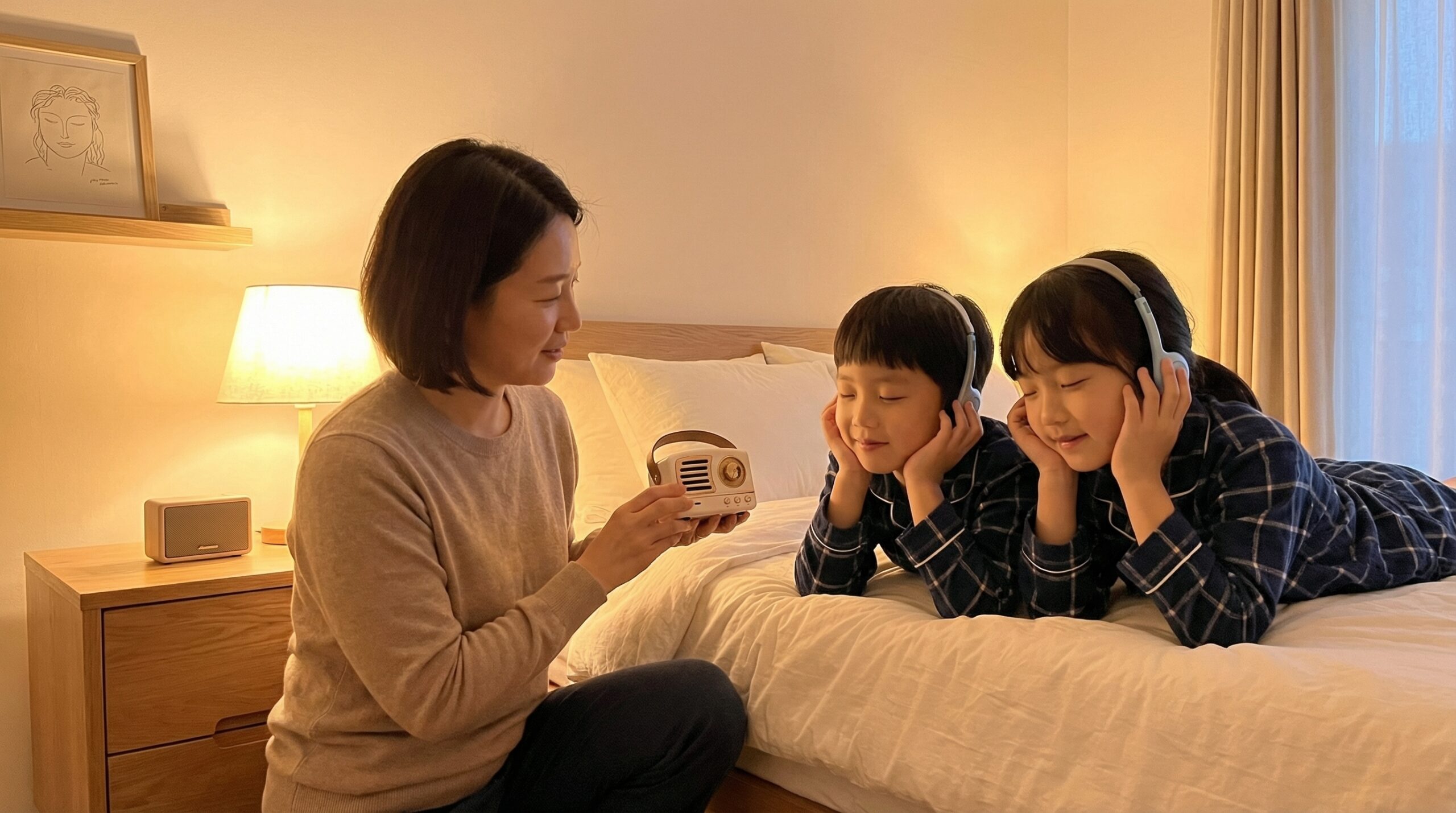
At night, audio can support calmer routines and easier sleep onset. Screens near bed raise arousal with bright light and motion. By contrast, a calm voice reduces stimulation and soothes the nervous system. Over time, families often notice calmer transitions and richer pretend-play the next day.
Practical benefits and evidence
In short, audio-first for imagination offers two gifts: quieter routines and stronger imaginative play. It aligns with how children learn by ear. A study using fMRI data showed that listening to an audiobook produced increased inter-subject correlation in visual/imagery-related brain areas, supporting the idea that audio narratives can enhance mental imagery and cognitive engagement. It reduces competing visual input and preserves working memory for creative thinking.
Try a gentle step
For a friendly starting point, explore age-appropriate audio options. Storypie offers a curated library of human-narrated tales and short pieces that match different ages. Visit Storypie to learn more and find a suitable story.
Summary
Audio-first for imagination centers listening as a path to creativity. It lowers cognitive load, supports language, and invites mental imagery. In turn, the room grows quiet and the mind grows loud. It is a small change with delightful imaginative payoffs.