
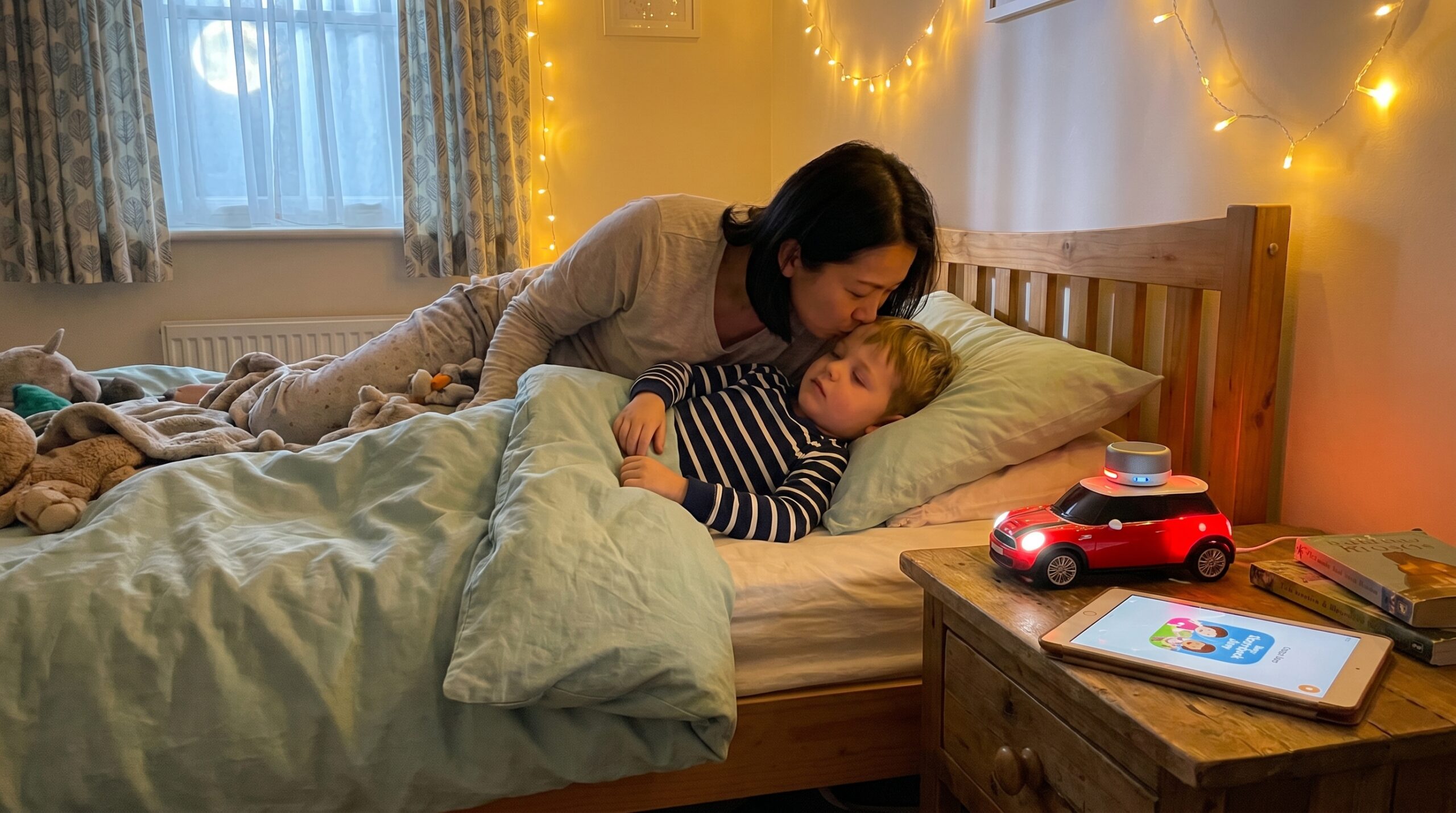
The bedtime mini story ritual is a short, repeatable tradition. It signals the end of daytime activity and nudges children toward sleep. At Storypie, we call this a tiny bedtime superpower. Try a five-minute Storypie mini story to end the day gently.
Why the bedtime mini story ritual works
Predictability helps the brain switch gears. First, familiar cues create a simple sequence. For example, dim lights, pajamas, and a short calm story tell the mind: it is time to rest. Sleep experts and pediatric guidance support regular pre-sleep rituals. They improve sleep onset and reduce night wakings. In fact, according to a report from the National Center for Health Statistics, in 2024, about 85.6% of U.S. children ages 2–17 had a regular bedtime “most days or every day,” highlighting the prevalence of bedtime routines among children. Moreover, routines help daytime mood and behaviour over time.
For children, the bedtime mini story ritual builds emotional regulation and language exposure. Short nightly listening adds real mileage to vocabulary and listening skills. A 2025 study reported that consistent bedtime routines, including storytelling started as early as 3 months, were associated with fewer nighttime awakenings and longer sleep durations by age 3. Audio-only stories preserve the cue while avoiding bright screens. In short, steady routines make bedtime kinder and calmer.
Quick recipe to try tonight
This mini story ritual lasts three to seven minutes. It fits busy schedules and sleepy heads. First, set a wind-down window 15 to 30 minutes before ideal sleep time. Then, dim the lights and use low voices. Next, choose a calm audio track or a short read aloud. Finally, finish with the same phrase or a kiss, then lights out.
- Wind-down window: 15 to 30 minutes before sleep.
- Set cues: dim lights, pajamas, gentle voices.
- Mini story: 3 to 7 minutes, calm and steady.
- Close: same line or kiss, then lights out.
When you repeat this small ritual, kids start to expect sleep. After a few nights, calm arrives faster. Moreover, recorded tracks let older kids play a story themselves. Also, audio-first modes help families who avoid screen light. If you want a ready collection, see the Storypie app for short bedtime tracks.
Age-friendly traits of a good mini story
Different ages need different tweaks. Babies need sensory focus and very brief lines. Toddlers respond to repetition and a quiet closing phrase. Preschoolers like gentle imagination but low action. School-age children can listen to 5 to 7 minute tracks for independence. Across ages, choose calm tone and clear duration labels.
What to look for in a mini story offering
Pick tracks with clear duration labels. Also, prefer audio-only options and multilingual choices when needed. Safety matters. Avoid high-action plots near bedtime. Check privacy settings in any app you use. Accessibility counts too. Audio stories support low literacy and multilingual homes alike.
A ritual, not a performance
Rituals vary by culture and family. What matters is calm and consistency. Tiny rituals feel quietly magical. A five-minute story is a pocket of calm. It creates connection, supports sleep, and builds language over months and years. A 2026 study found that a two-week nightly bedtime reading routine improved empathy and creativity in children aged 6–8, showing significant gains in cognitive empathy and creative fluency. Try this bedtime mini story ritual for a week and watch predictable nights grow kinder.
For a gentle collection of short tracks, visit the Storypie app and explore the bedtime mini story playlist.