
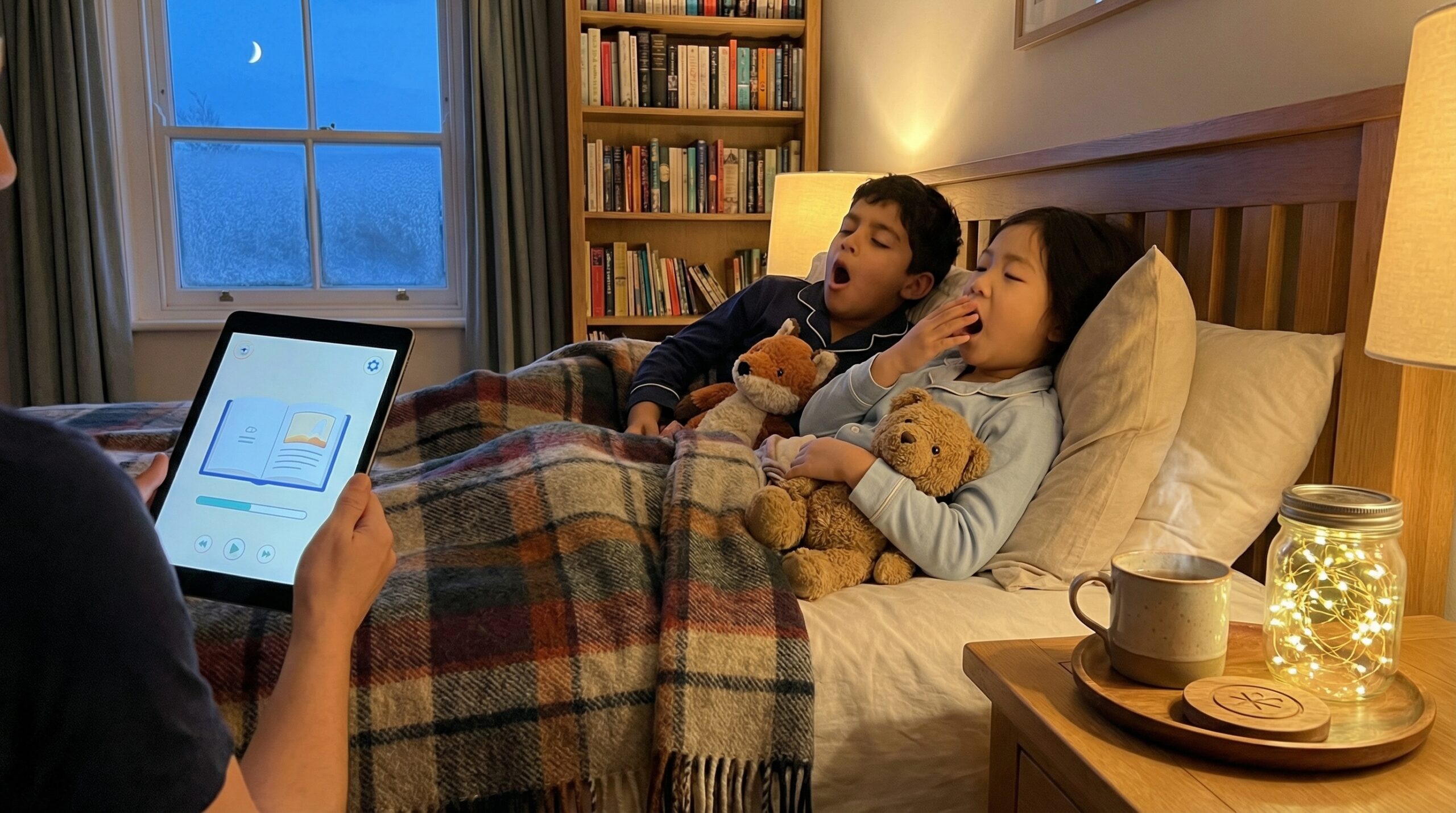
A bedtime wind-down mini story ritual helps children slow down in five minutes. It uses the same opener each night. Warm light, a soft voice, and a steady line cue sleep. Tiny ritual, huge calm.
Why the bedtime wind-down mini story ritual works
Consistent routines signal the brain that sleep is near. Also, short stories keep arousal low. Research shows routines with storytelling lead to earlier sleep and fewer night wakings. A 2025 study reported that consistent bedtime routines, including storytelling started as early as 3 months, were associated with fewer night-time awakenings, reduced sleep problems, and longer sleep durations by age 3. The mini story ritual updates old habits like lullabies and short prayers. It supports language and deepens the parent-child bond. In fact, a 2025 survey found that 71% of parents agreed that storytelling helps their children wind down at bedtime, with 49% naming it their preferred method.
Keep it simple
Start small. Aim for three to seven minutes. Five minutes makes a friendly target. Major pediatric guidance recommends keeping a child’s bedtime routine brief—generally no longer than about 30 minutes—and limited to a few calming activities, including one or two stories, to avoid prolonging bedtime and increasing resistance, according to the American Academy of Pediatrics.
- Keep it small and predictable.
- Keep it calm with gentle themes and steady pacing.
- Keep a repeated opener and a clear ending cue for sleep.
Formats that fit modern life
Micro stories work on paper, in audio tracks, and inside apps. Many families prefer audio or low-light printed tales to avoid screen glare. Also, five-minute micro stories now appear as short audio clips and app collections. Try five-minute micro stories on Storypie for a quick test tonight. For collections and themed sets, visit Storypie’s story collections.
Age notes and curation tips
Match the mini story ritual to your child’s age. Also, change one hero pick each week to keep rotation fresh. A 2024 cross-sectional web survey of 700 caregivers of preschoolers in Japan reported that reading/sharing a story before bed had a significant positive association with sleep quality, as indicated by the Children’s Sleep Habits Questionnaire.
- Infants: thirty to sixty seconds of a soothing rhyme.
- Toddlers: two to four minutes with repetition and one hero character.
- Preschoolers: four to six minutes with a tiny problem and a soft resolution.
Texture matters. Soft blankets, a muted lamp, and a low, warm tone invite sleep.
A tiny sample script
Start the same way each night. Try this opener: “Once, in a quiet pocket of the sky, a small lantern blinked awake.” Pause. Then continue: “It yawned, tucked its light around the stars, and whispered, ‘Time for rest.'” Pause again. Close the book or stop the audio. Say your cue line: “Night now.” Blink. Breathe.
Quick cue – one-week tracking tip
Try the ritual for seven nights. Note how long until your child settles. Look for small wins like fewer calls and shorter fussing. This ritual is not a cure-all. However, it is a gentle, research-backed tool to add to good sleep habits. A 2025 survey indicated that 90% of parents of 1–6-year-olds reported having a bedtime routine for their child, with 67% including reading bedtime stories.
Gentle next steps
If you want short stories and curated collections, learn about Storypie and our story collections. Find five-minute micro stories on Storypie and try one tonight.
Night now. Sweet, simple, and steady. That is the power of a bedtime wind-down mini story ritual.