
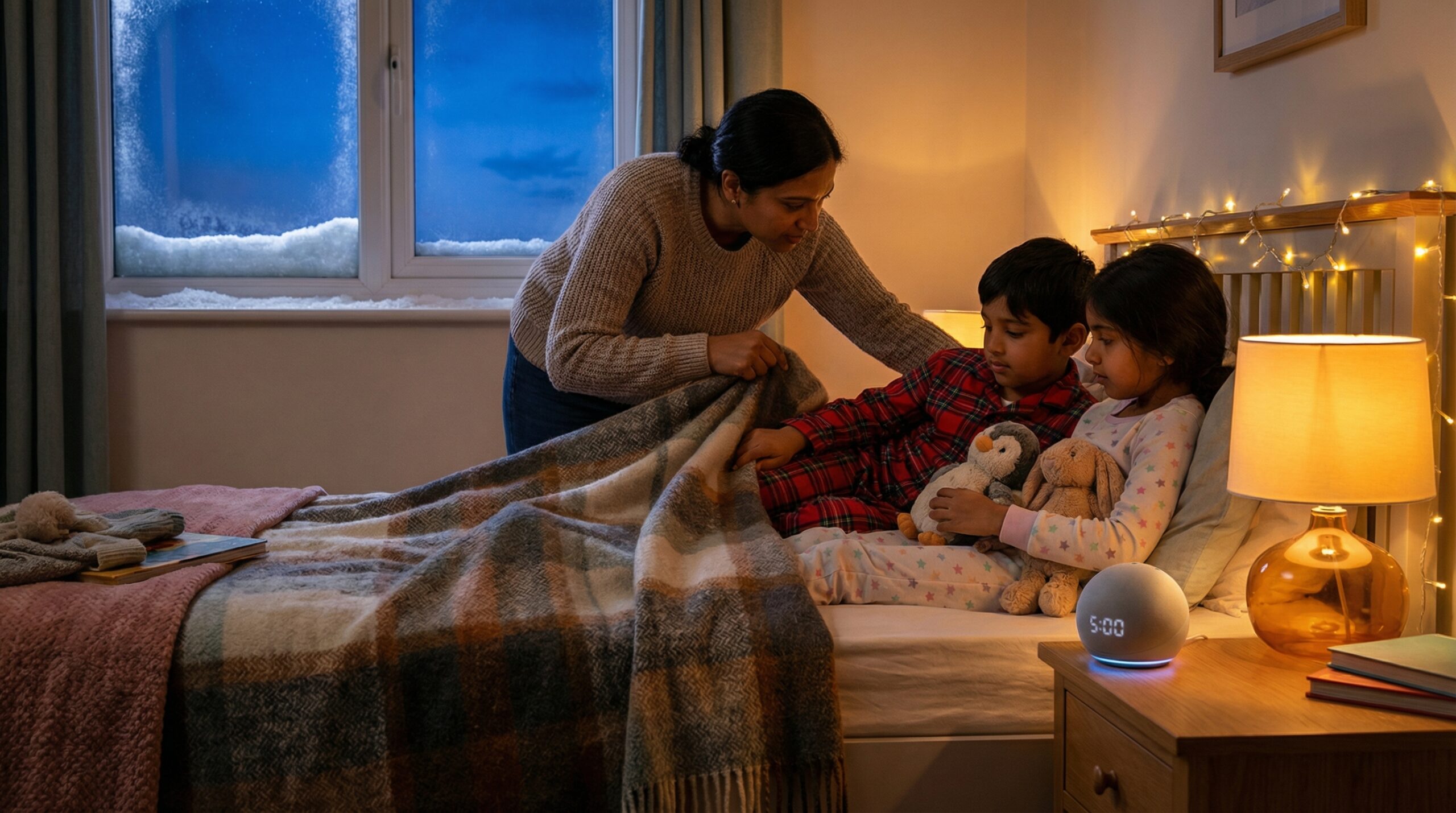
The bedtime wind-down mini story ritual is a short, consistent way to end the day. I use it after bath, pajamas, and teeth. Five minutes feels just right. It cues calm and signals sleep. A 2025 study reported that consistent bedtime routines, including storytelling started as early as 3 months, were associated with fewer night-time awakenings, reduced sleep problems, and longer sleep durations by age 3.
Why the bedtime wind-down mini story ritual works
First, it builds empathy. A tiny first-person tale connects feelings before facts. Next, it brings predictability. Same place, same order, and the same length help the brain read the cue. Also, it lowers arousal. A soft voice, dim light, and a quiet story settle the body for sleep. According to a nationally representative C.S. Mott Children’s Hospital poll, 90% of parents of 1–6-year-olds report having a bedtime routine, and 67% report that their child’s bedtime routine includes reading a bedtime story.
How to use the bedtime wind-down mini story ritual tonight
Use these steps to try it tonight. Keep each step short and sweet.
- Pick a spark. Choose a person, small problem, or cozy place.
- Set a timer. Aim for five minutes. Timeboxing keeps things calm.
- Tell or play the story. Use your live voice if you can. Otherwise, play a gentle recording.
- End with the cue. Try a soft whisper, a quiet touch, or a lights-out phrase.
A tiny example you can borrow
I say: “I found a tiny lantern in the snow. I tried to make it glow, and it sputtered. Then I breathed warm air on it and it shone like a tiny sun. I tucked it under my blanket and it kept me cozy.” Simple, calm, and child-facing.
Practical notes from the bedside
I use audio-only stories when screens are off limits. Bright screens can delay sleep. A randomized clinical trial published Dec 1, 2024, found that removing screen time in the hour before toddler bedtime and replacing it with bedtime activities (e.g., reading, puzzles) produced small-to-medium improvements in objectively measured sleep efficiency. So, choose recordings that stay calm and avoid sudden sounds. Over time, the same tiny sequence becomes a bedtime beacon your child trusts.
Research shows routines help kids fall asleep faster, sleep longer, and wake less at night. Also, shared short stories boost vocabulary and closeness. In fact, a 2025 survey found that 71% of parents agreed that storytelling helps their children wind down at bedtime, with 49% naming it their preferred method.
For ready-made audio, Explore the Storypie app. Or visit the Storypie home to see calming options.
Age tweaks that actually work
- Infants: sing a one-sentence version and hold skin contact.
- Toddlers: 3 to 5 minutes with a simple problem and solution.
- Preschool: 4 to 6 minutes with a tiny arc and a reassuring end.
- School-age: up to 10 minutes. Let them co-create the ending.
Try the bedtime wind-down mini story ritual for three nights in a row. Then notice the change. Small rituals make evenings calmer. They are tiny habits with big rewards. Sweetly simple and so worth it.