
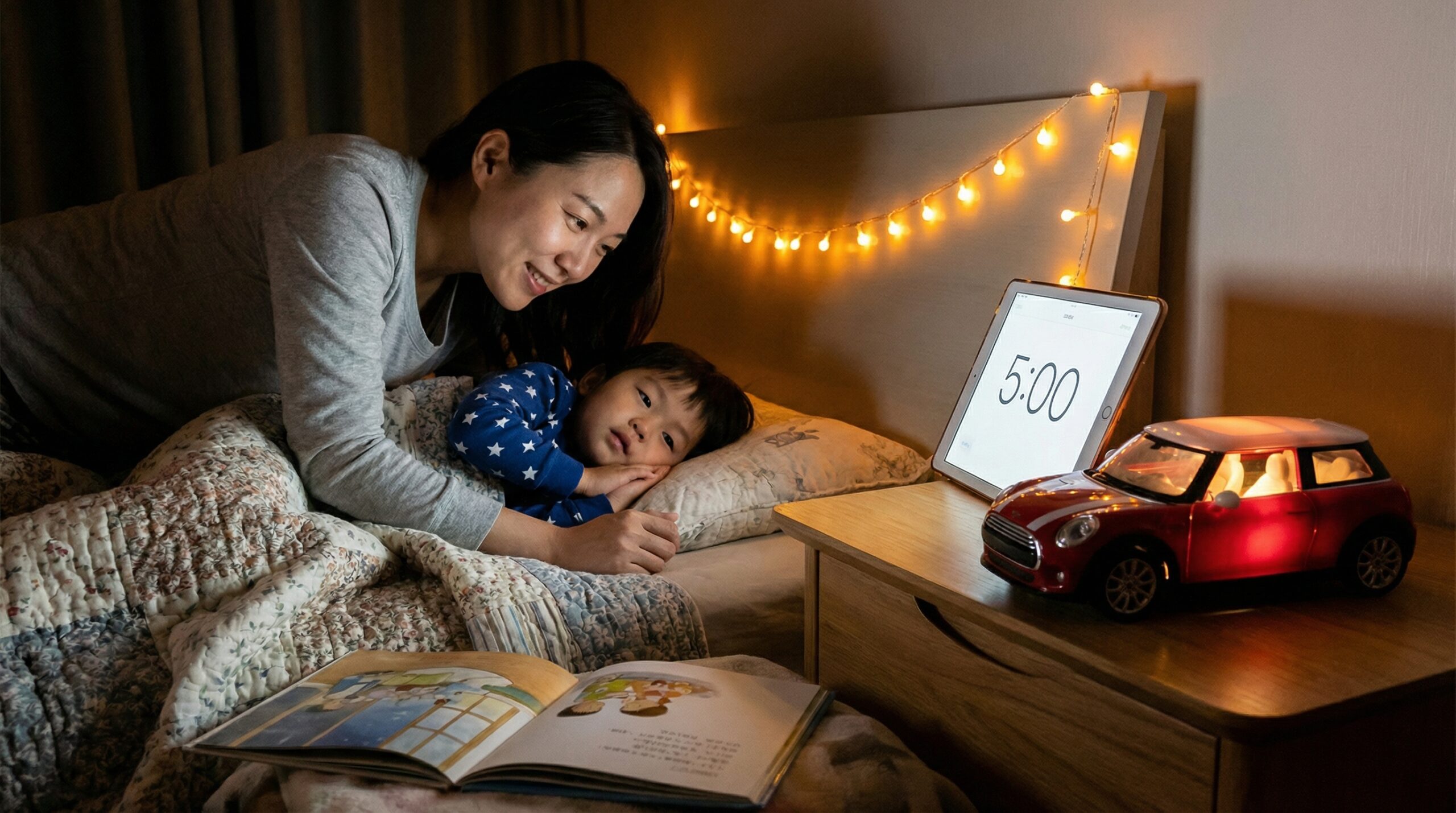
Bedtime wind-down mini story ritual signals the end of the day. It is a tiny nightly miracle. In three to ten minutes, it soothes and settles bodies and minds. Many families pick five minutes. That clear cue helps kids relax. In fact, a 2025 survey found that 71% of parents agreed that storytelling helps their children wind down at bedtime, with 49% naming it their preferred method.
Why the bedtime wind-down mini story ritual works
This ritual is ancient and also modern. People told short tales at dusk for centuries. Today, families use picture books, short retellings, or audio stories. Audio-only works well. It avoids bright screens and keeps the mood soft. Research shows that consistent bedtime routines, including storytelling started as early as 3 months, were associated with fewer night-time awakenings and longer sleep durations by age 3.
The benefits are plain and surprising. Regular mini rituals lower arousal and help sleep start sooner. They build language and listening skills. They also create a pocket of attachment and calm. Repetition helps new words stick. Calm endings reduce bedtime resistance. That is small, useful magic. Notably, 90% of parents of 1–6-year-olds reported having a bedtime routine, with 67% incorporating reading a bedtime story into it.
How to run a five-minute bedtime wind-down mini story ritual
Keep the ritual short and steady. Here is an easy five-step routine you can try tonight.
- Lights low. Use warm, soft light.
- Choose a short tale or a five-minute audio. Keep it familiar.
- Sit close. Hold a hand or rest a palm on a shoulder.
- Read or press play. Use a quiet, steady voice.
- Tuck, whisper, and end with a single sentence cue like Good night.
A practical five-step routine
Step 1: Bath and teeth. Keep them short and warm.
Step 2: Pajamas and a soft blanket.
Step 3: Mini story. Three to seven minutes, voice low.
Step 4: A two-line tuck. One kiss, one wish.
Step 5: Lights out. Use a small, consistent cue.
Example night
It is early winter. The room smells like cocoa. You dim the lamp. You pick a short picture book or a five-minute Storypie tale. You read slowly. The child yawns. You close the book. You say, See you in the morning. The light goes off. Sleep comes sooner. A 2025 study indicated that substituting 50% of screen time with book reading could improve overall sleep and reduce fears of sleeping alone in preschoolers.
Tech, safety, and accessibility
Prefer audio to screens near bedtime. Apps with offline playback and narrator-only modes work best. Choose age-appropriate content. For little ones, pick rhythmic, simple stories. For older kids, try short chapter vignettes. In a 2024 cross-sectional survey, 43.29% of caregivers reported ‘reading/sharing a story before bed’; this practice was significantly associated with better sleep habits.
Mini rituals can be inclusive. Use stories in another household language. Use audio for children with visual impairment. Slow playback if that helps. Keep content gentle and familiar.
Seasonal cues and small design tips
In winter, add a warm throw and dim light. In summer, try a balcony seat and a soft fan hum. Keep sensory cues consistent. A single ritual invites the child back night after night.
A tiny closing
A mini story ritual is beautifully simple. It does a lot with a little. Try a five-minute Storypie tale tonight and watch comfort grow. For gentle, narrator-led stories, explore Storypie and try a short tale in the app.
Helpful link: Get the Storypie app