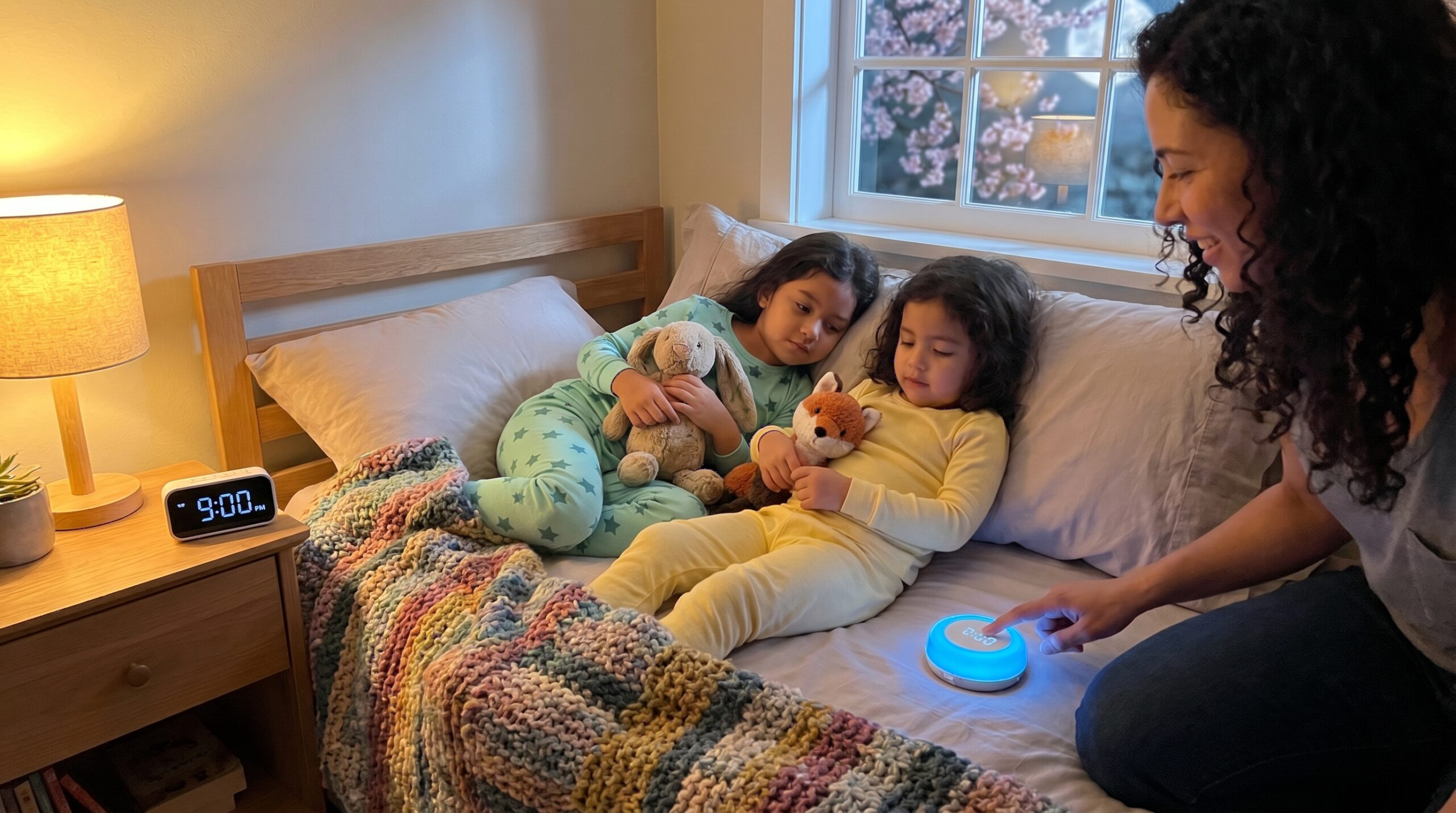
Bedtime wind-down: mini story ritual names a tiny, reliable bedtime cue. It lasts about five minutes. Families use it to signal calm and sleep.
What the bedtime wind-down mini story ritual is
The mini story ritual is a compact pre-sleep moment. It uses one short, familiar story to mark the end of the day. For many families it becomes the single most predictable cue before sleep. According to a 2025 study, consistent bedtime routines, including storytelling started as early as 3 months, were associated with fewer night-time awakenings, reduced sleep problems, and longer sleep durations by age 3.
Why the mini story ritual helps
Research links brief, consistent pre-sleep routines to lower arousal and stronger attachment. For example, a steady five-minute ritual reduces evening fuss and makes sleep feel safe. Also, the short length cuts negotiation and decision fatigue. A 2025 survey indicated that 90% of parents of 1–6-year-olds reported having a bedtime routine for their child, with 67% including reading bedtime stories, underscoring the popularity of incorporating storytelling into these routines.
Core characteristics of the ritual
The ritual has a few clear traits that repeat across households. First, it stays compact. Second, it keeps tone calm and steady. Third, it stays consistent night after night.
- Length: typically three to seven minutes, with five minutes as the sweet spot.
- Tone: soothing voice and simple structure, not dramatic or cliffhanger-driven.
- Predictability: the same story or recording each night to build the cue.
Age and adaptability
Families adapt the mini story ritual from infancy to school age. For infants the ritual often feels like a soft chant. For older kids it names the day and tomorrow in calm language. In all cases the ritual stays brief and reassuring.
Delivery options and tools
Parents deliver the ritual in different ways. Live reading offers warmth and presence. A recorded voice offers consistency for busy nights. Also, apps can schedule a single short story at the same time each night. Supporting this approach, a 2024 randomized clinical trial showed that removing screen time in the hour before bed resulted in small-to-medium improvements in sleep efficiency and reductions in night awakenings, emphasizing the importance of creating a calm bedtime environment, which can be complemented by storytelling.
For curated five-minute stories and a simple way to keep the cue steady, explore the Storypie app or visit Storypie for bedtime ideas.
Practical cautions
The mini story ritual works best when content stays gentle. Avoid scary plots and sudden loud moments. Also, limit bright screens right before the ritual so the cue stays calm and clear.
Benefits and results
Over time the mini story ritual lowers evening stress for parents. It creates a predictable end to the day for children. In many homes it becomes the calmest, most reliable part of the evening. Additionally, the American Academy of Pediatrics, in a 2024 policy update, recommends shared reading beginning at birth and continuing at least through kindergarten, explicitly encouraging using books as part of a nightly bedtime routine because shared reading supports language, social-emotional development, and early relational health.
A brief example
Storypie shares a small scene. For example, a five-minute recording uses a steady voice, a single, simple image, and a short quiet pause at the end. Families often report that wiggles fade and sleep follows more easily. In a randomized two-week bedtime reading study, researchers found that after two weeks of daily picture-book reading, the sample showed statistically significant improvements in cognitive empathy and measures of creativity, reinforcing the value of storytelling.
Why it is worth trying
In short, the bedtime wind-down: mini story ritual is a tiny habit with mighty results. It reduces decisions, strengthens predictability, and supports calmer nights. Try a focused five-minute cue and watch the routine settle in.