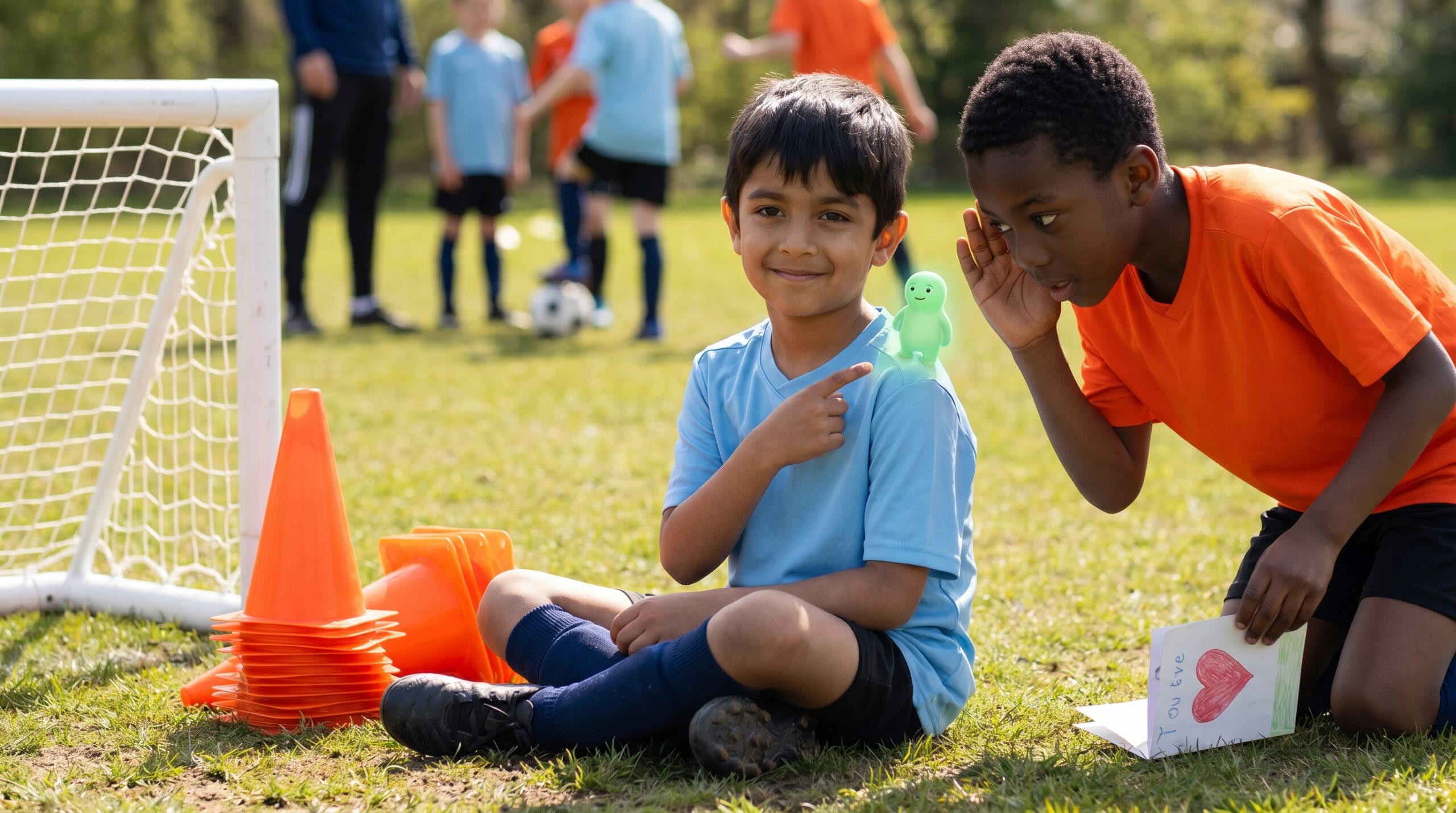
On a spring afternoon at soccer camp I watched Leo meet jealousy. That moment showed jealousy in children clearly. I sat close. Then I asked him to name the feeling. Next he told his friend one thing he liked about them. They smiled. Their bond grew.
Understanding jealousy in children
Jealousy in children is the fear of losing a valued relationship or resource. It differs from envy. Envy wants what another person has. Jealousy fears losing what you already have. Roots include attachment worries, insecurity, and social comparison. Also, triggers can include a new sibling, a praised peer, lost games, toys, or adult attention. For older kids, social media can make feelings louder, and a 2024 online poll found that Gen Z reports the highest levels of jealousy among age groups. Physically, children may show tantrums, clinging, stomachaches, anger, or withdrawal. They might say it feels “not fair” or act out. Yet jealousy often points to what a child values most.
Signs by age
Infants and toddlers often show distress when caregivers engage another baby. This signals early attachment worry. Preschoolers notice differences and compete for attention. Expect crying, name-calling, and dramatic displays. School-age kids compare status and friendships more. They may worry about being left out. Adolescents face romantic and peer jealousy, which can be exacerbated by social media. In fact, a 2022 CDC report indicated that jealousy was listed as a precipitating circumstance in 346 homicides, highlighting the serious implications jealousy can have on interpersonal relationships and violence, especially among youth.
Quick emotion coaching steps
Use five short moves. These are simple and powerful. First, recognize the feeling. Say, “I see you feel upset.” Then validate it. Try, “That must feel hard.” Next, label the feeling. Say, “You seem jealous.” After that, set limits. State, “You cannot hit.” Finally, problem-solve together. Ask, “What would help next time?” Research shows emotion coaching helps children regulate better than dismissing phrases like “Don’t be jealous.” Understanding the emotional nuances of jealousy can be crucial, as a 2024 study found that men are more likely to be jealous of sexual infidelity, while women tend to feel more jealousy about emotional infidelity, which can inform parents on how to address these feelings in different contexts.
Short scripts parents can use
- “It looks like you feel jealous. That must be tough. Tell me one thing you like about Sam.”
- “I felt sad when you played with Diego and not me.”
- “I need a turn next. How about we take turns?”
Three quick exercises
These mini-activities are playful and practical. Try them tonight.
- Name it and appreciate it. Child names the feeling and tells the friend one thing they like. Quick bonding and big impact.
- Feelings thermometer. Use a 1 to 5 scale to check intensity. Breathe at 3. Pause at 4. Ask for help at 5.
- One-on-one time calendar. Block a short weekly slot for each child. Even ten minutes helps prevent chronic jealousy.
Prevention, repair, and when to seek help
Praise effort and uniqueness. Avoid constant comparisons. Also, give special tasks to an older sibling when a baby arrives. Teach “I feel” statements to repair friendships. Encourage perspective taking and simple gratitude. If jealousy causes ongoing aggression, withdrawal, school avoidance, bullying, or low mood, seek professional help. Consult your pediatrician, school counselor, or a child psychologist for more support. Research from 2024 studies indicates that individuals in interracial relationships report experiencing jealousy more frequently and intensely than those in same-race relationships, emphasizing the need for tailored support in diverse contexts.
Read or listen to a story about Jealousy now: For 3-5 year olds, For 6-8 year olds, For 8-10 year olds, and For 10-12 year olds.
A final parent line
I noticed small moves make big change. Try this mini-script tonight: “I see you. I hear you. Tell me one thing you liked about them.” Then breathe together. Turn jealousy into connection and learning. For more stories and ideas visit Storypie.