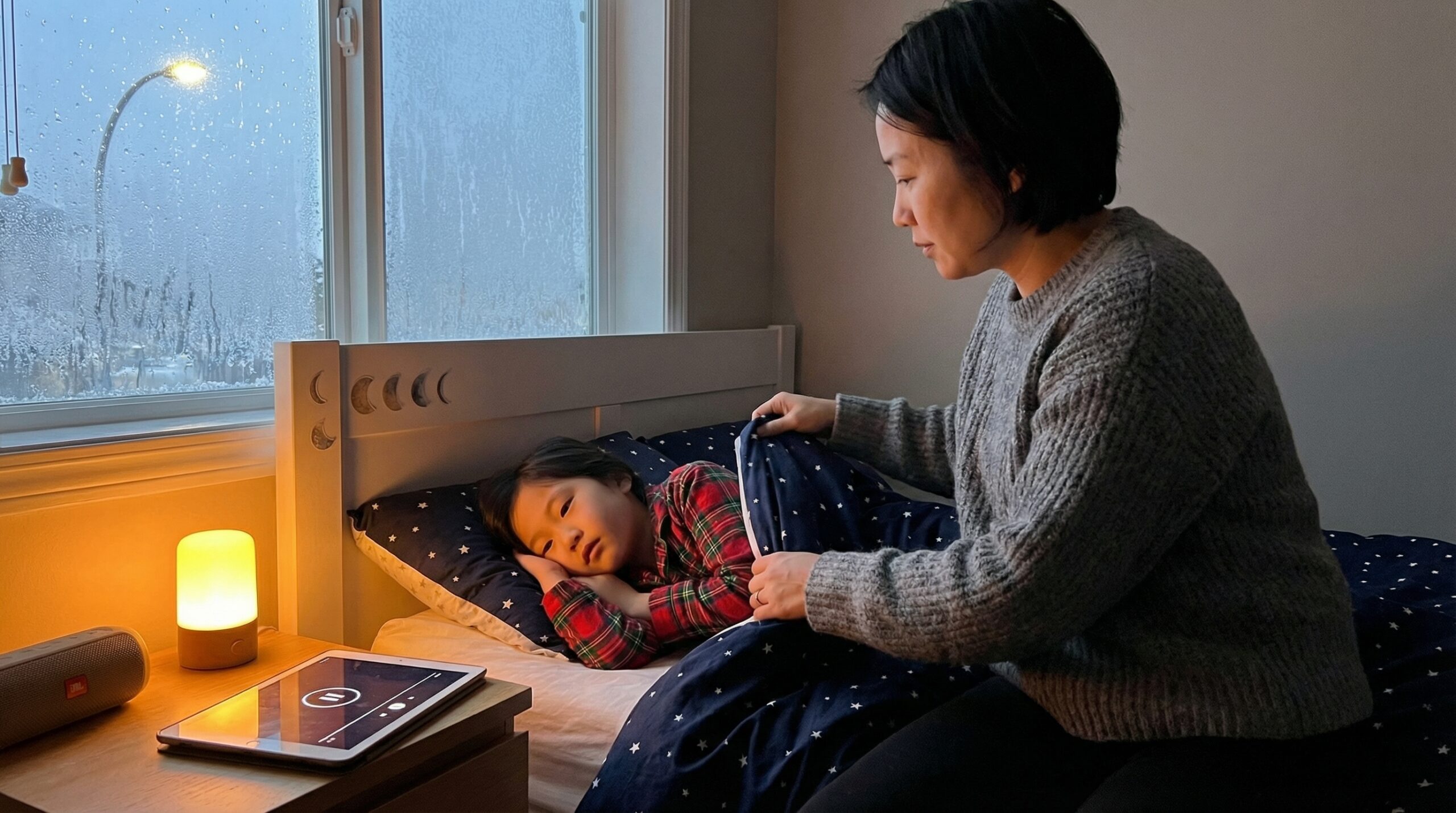
A bedtime wind-down mini story ritual is a short, repeatable audio cue that signals sleep. It shows up at the end of a calm evening. Parents and teachers use it to quiet minds and ease the transition to rest. In fact, according to a 2025 survey, 71% of parents agreed that storytelling helps their children wind down at bedtime, with 49% naming it their preferred method.
What is a bedtime wind-down mini story ritual?
This ritual is a 2 to 5 minute calming story or clip. Often it is audio-first. Repetition makes it a clear sleep cue for children. Over time, the brain links the tale with falling asleep.
Why this ritual works
Children detect patterns quickly. Therefore a single, familiar mini story becomes a gentle signal. In short, predictability lowers alertness and supports emotional calm. Research shows that consistent bedtime routines, including storytelling started as early as 3 months, are associated with fewer night-time awakenings, reduced sleep problems, and longer sleep durations by age 3, as reported in a 2025 study.
Key characteristics
- Short length: usually 2 to 5 minutes. For babies, clips can be even shorter.
- Calm tone: quiet voice and simple language help soothe.
- Repeatability: the same piece plays across several nights.
- Audio-first design: playback without bright screens keeps the mood soft.
- Consistent ending: a steady close, like a phrase or chime, strengthens the cue.
Benefits beyond sleep
The bedtime wind-down mini story ritual does more than help sleep. It boosts nightly language exposure. Also, it supports emotional regulation and warm family connection. Most caregivers report calmer evenings and steadier bedtime moods. Notably, a C.S. Mott Poll released in June 2024 found that 90% of parents of 1–6-year-olds say they have a bedtime routine for their child, and 67% report reading bedtime stories as part of that routine, reinforcing its importance in child development.
Troubleshooting and safety notes
If the ritual seems less effective, check the overall evening rhythm. Nighttime stimulation and long naps can affect results. If you notice breathing pauses or loud snoring, consult a pediatrician. Additionally, a 2025 survey found that 70% of primary school-aged children have difficulty falling asleep at night, with the average child waking up five times a month, highlighting the prevalence of sleep difficulties among children.
Keep playback volume low and use timers or auto-off. Also, keep devices out of reach and on low light settings when possible.
Where to find gentle recordings
Storypie has a library of short, calm audio stories. For example, explore the Storypie library to sample mini tales. Also, use the Storypie app for low-volume playback and timer controls.
Small rituals can have big effects. Try a simple, repeatable mini story tonight. Watch the calm arrive, one soft voice at a time. With research from the National Literacy Trust showing that 3 in 5 children and young people (59.4%) reported that reading helped them relax, this reinforces the idea that a short story at bedtime can act as a calming wind-down activity.