
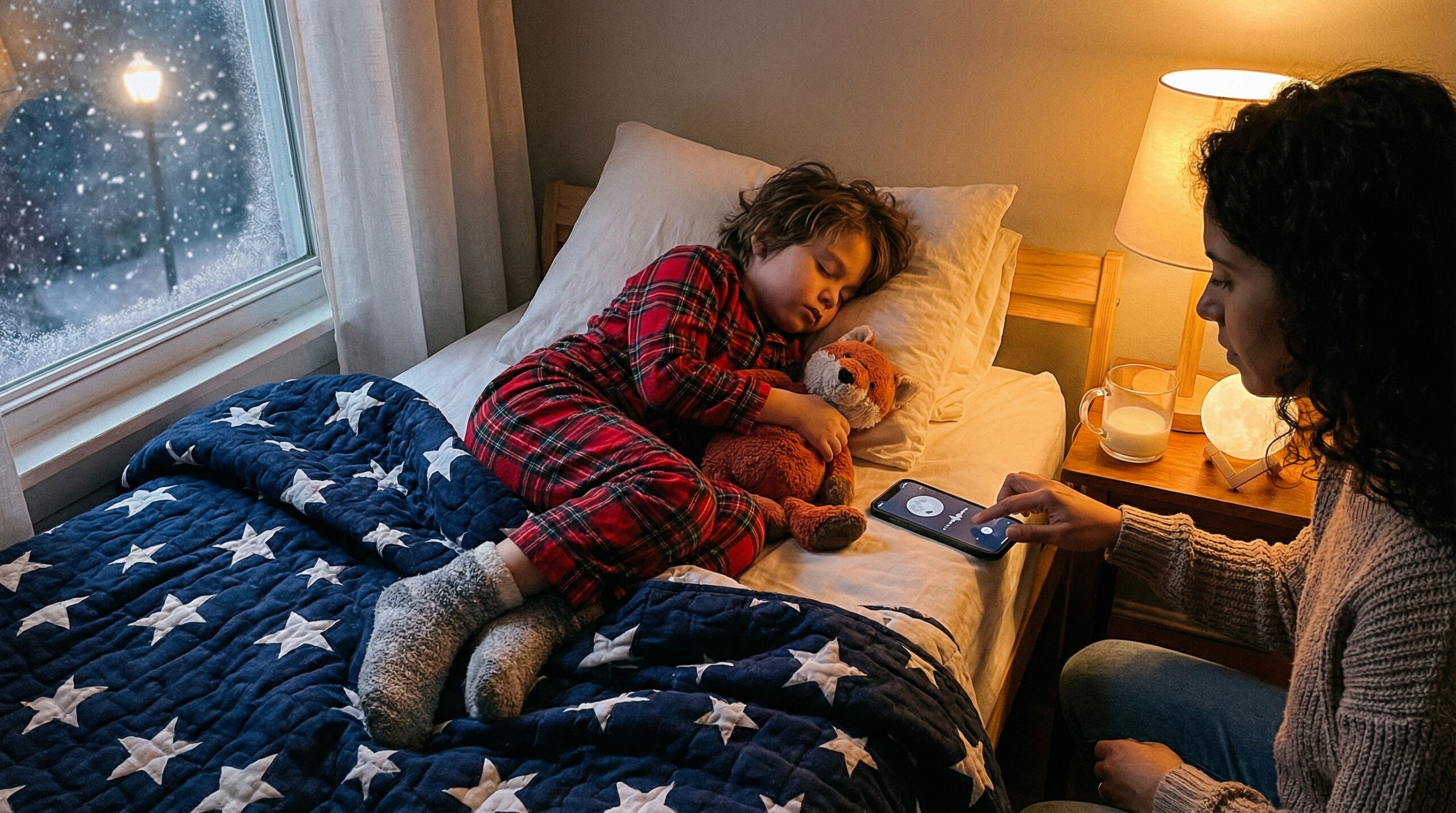
Bedtime wind-down mini story ritual gives kids a tiny, cozy cue for sleep. Use a short tale of three to ten calm minutes. The routine trains the brain to relax and settle. In fact, a 2025 survey found that 71% of parents agreed that storytelling helps their children wind down at bedtime, with 49% naming it their preferred method.
What is a bedtime wind-down mini story ritual?
A bedtime wind-down mini story ritual is a short, repeatable pre-sleep routine built around a tiny tale. It works like a gentle signal. Over time, the same brief story tells the child it is time to unwind. According to the C.S. Mott Children’s Hospital poll, 90% of parents of 1–6-year-olds report having a bedtime routine, and 67% report that their child’s bedtime routine includes reading a bedtime story, reinforcing the ritual’s importance.
Why the bedtime wind-down mini story ritual works
Repetition shapes expectation and calms the body. First, predictability lowers arousal. Next, the brain learns to link the tale with sleep. Research shows regular routines help children fall asleep faster and sleep longer. A 2025 study reported that consistent bedtime routines, including storytelling started as early as 3 months, were associated with fewer night-time awakenings, reduced sleep problems, and longer sleep durations by age 3.
How to shape your mini story ritual
Keep it short and curated. Choose a calm environment, a consistent signal, and a brief gentle narrative. Also, limit the selection. Pick 12 to 20 short tales and rotate them slowly. That prevents overstimulation. For audio, prefer playback with the screen dimmed. For live moments, use a whisper or soft tone. Finally, use a single phrase as the cue. Say it the same way each night so the phrase becomes the signal. It’s important to note that removing all screen time in the hour before bed can produce small-to-moderate improvements in sleep efficiency and fewer night awakenings, making the calming environment even more effective.
Typical characteristics of the ritual
- Length: 3 to 10 minutes, five minutes is common.
- Timing: place the mini story at the end of the routine.
- Tone: slow, comforting, and low action.
- Structure: a short, gentle plot with a reassuring ending.
Age-appropriate notes
Infants respond best to sing-like, rhythmic cues. Toddlers prefer predictable short stories with repetition. Preschoolers enjoy slightly longer tales with the same ending. Early school-age children can handle short but richer stories. Adjust length to attention span and sleep needs. The American Academy of Pediatrics recommends that pediatricians encourage shared reading beginning at birth and continuing at least through kindergarten, emphasizing the importance of storytelling in early childhood development.
Benefits backed by research
Regular bedtime routines that include short stories link to shorter time to fall asleep. They also cut down bedtime battles. Also, shared stories boost language and attachment. In short, the ritual supports sleep and closeness.
Formats and gentle cautions
Formats include live reading, recorded audio, or a hybrid approach. Audio-only can help when the caregiver is not bedside. However, avoid bright screens, interactive games, and cliffhangers before lights out. Irregular timing reduces the ritual’s power.
Practical tip and quick ritual idea
Pick a single line as your signal. For example: “One short story, then sleep.” Use it nightly. Try a five-minute tale and watch bedtime change over a week. Share your tiny wins and ideas with Storypie for more inspiration.
Want a simple way to try this? Visit the Storypie home page or get the Storypie app for friendly examples and gentle audio tales.
Try this tonight. Make the ritual small, sensory, and repeatable. Notice the hush, the tiny magic, and the softer goodnight.