
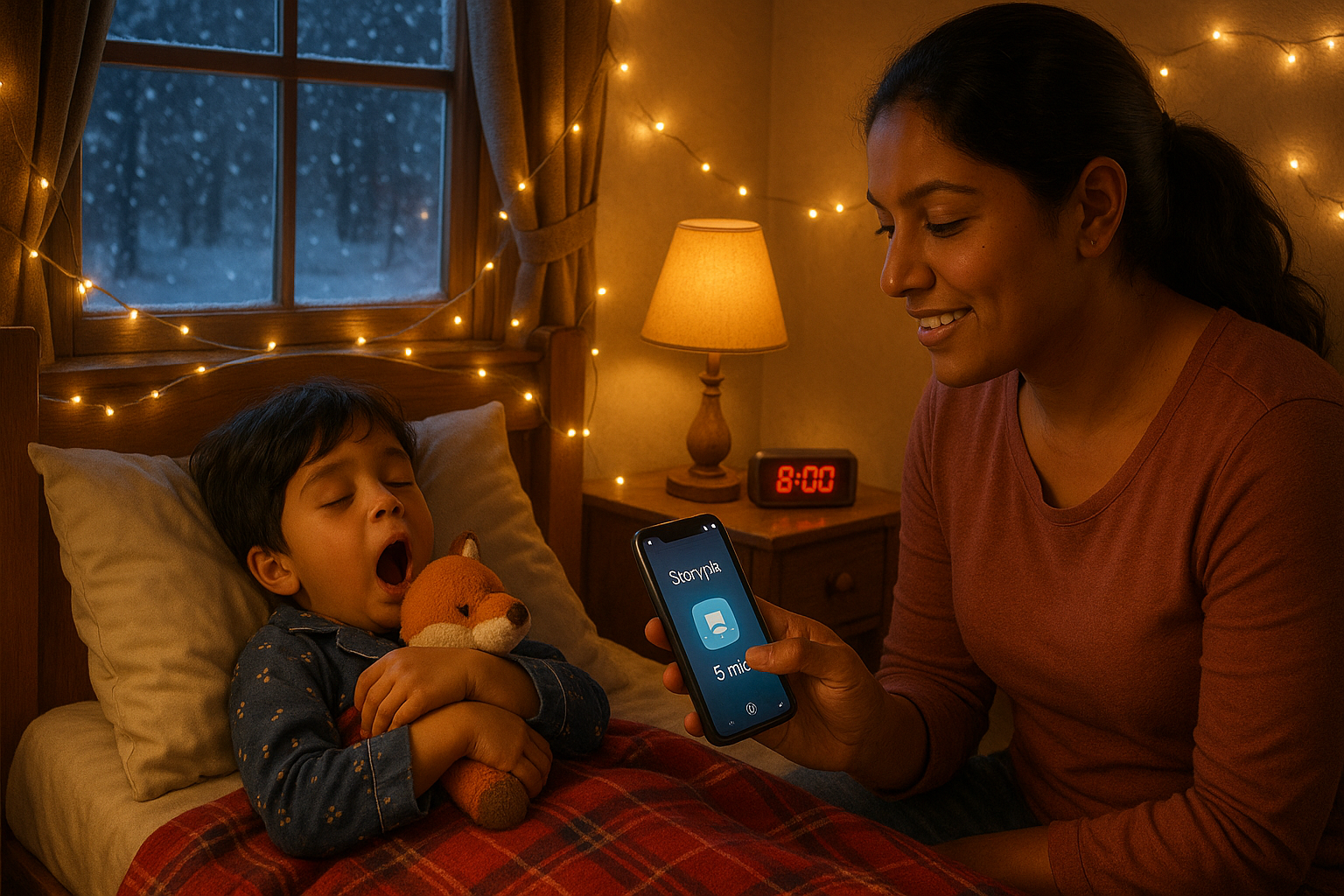
Bedtime wind-down mini story ritual is a short, nightly routine built around a tiny tale. It signals calm and sleep in a gentle, repeatable way. Families often find it quiet, comforting, and reliable. Telling bedtime stories has long been a pre-sleep ritual across cultures, typically narrated by an adult or older sibling, placing the mini-story practice within a familiar, time-honored tradition documented in the literature on bedtime narratives and family rituals (research on bedtime stories).
Why the bedtime wind-down mini story ritual works
Short, predictable routines form strong associations in a child’s mind. For example, dim lights plus a soft story tell the brain that sleep is next. Pediatric and sleep experts support consistency because it often means earlier sleep onset and fewer night wakings. A peer-reviewed effort has even worked to define and measure what optimal bedtime routines look like for families with young children, underscoring that routines like a mini story are a focus of scientific study (Defining and measuring bedtime routines). In addition, a 2021 study summary found that consistent bedtime routines—including storytelling started as early as three months—were associated with fewer night-time awakenings, reduced sleep problems, and longer sleep durations by age three, giving real-world evidence that short, repeatable story-based rituals can produce measurable benefits (Psychreg study summary). Also, audio-only stories help. They remove blue light and keep the room cozy while a soft voice guides the end of day.
Core components of the ritual
The ritual stays simple and repeatable. Keep the elements the same each night. That predictability helps children relax and trust the sequence.
- Fixed clock time. For example winter evenings at 8:00 PM give a reliable anchor.
- Low light and reduced stimulation. Turn off screens and use a small lamp or nightlight.
- A 3 to 10 minute mini story. Audio or live reading both work well.
- A closing cue. A two-line goodnight phrase, a short song, or a soft hug marks the end.
Practical notes for families
Choose a clock time you can keep most nights. Then try the sequence for one to two weeks. This allows the association to form. Match story length to age. Infants and toddlers need briefer, sensory-rich tales. Preschool and school-age children can enjoy a fuller three to ten minute arc. If evenings feel busy, prerecorded audio keeps the ritual steady. For a simple way to try this, consider the Storypie app for short mini tales.
Safety and sensory considerations
Keep volumes low and follow sleep-safety guidance for infants. Also, adapt to sensory needs for neurodiverse children. Some prefer extra tactile comfort like a weighted blanket or a clear visual schedule. Avoid interactive apps that demand engagement at bedtime. Finally, pick calming themes and slow pacing to keep the wind-down peaceful.
Measuring success and seasonal charm
Look for signs the ritual is working. Families often see reduced bedtime protests, faster sleep onset, and calmer pre-sleep behavior. If problems persist, talk with a pediatrician or sleep specialist. In winter, tiny rituals feel extra cozy. Dim lights earlier, add a warm blanket, and keep the same clock time. Small habits can bring big payoff.
In short, a bedtime wind-down mini story ritual offers narrative closure, gentle routine, and warm parent-child bonding. Try a five-minute Storypie mini tale tonight to cue calm. For more ideas and short audio tales, visit the Storypie app.