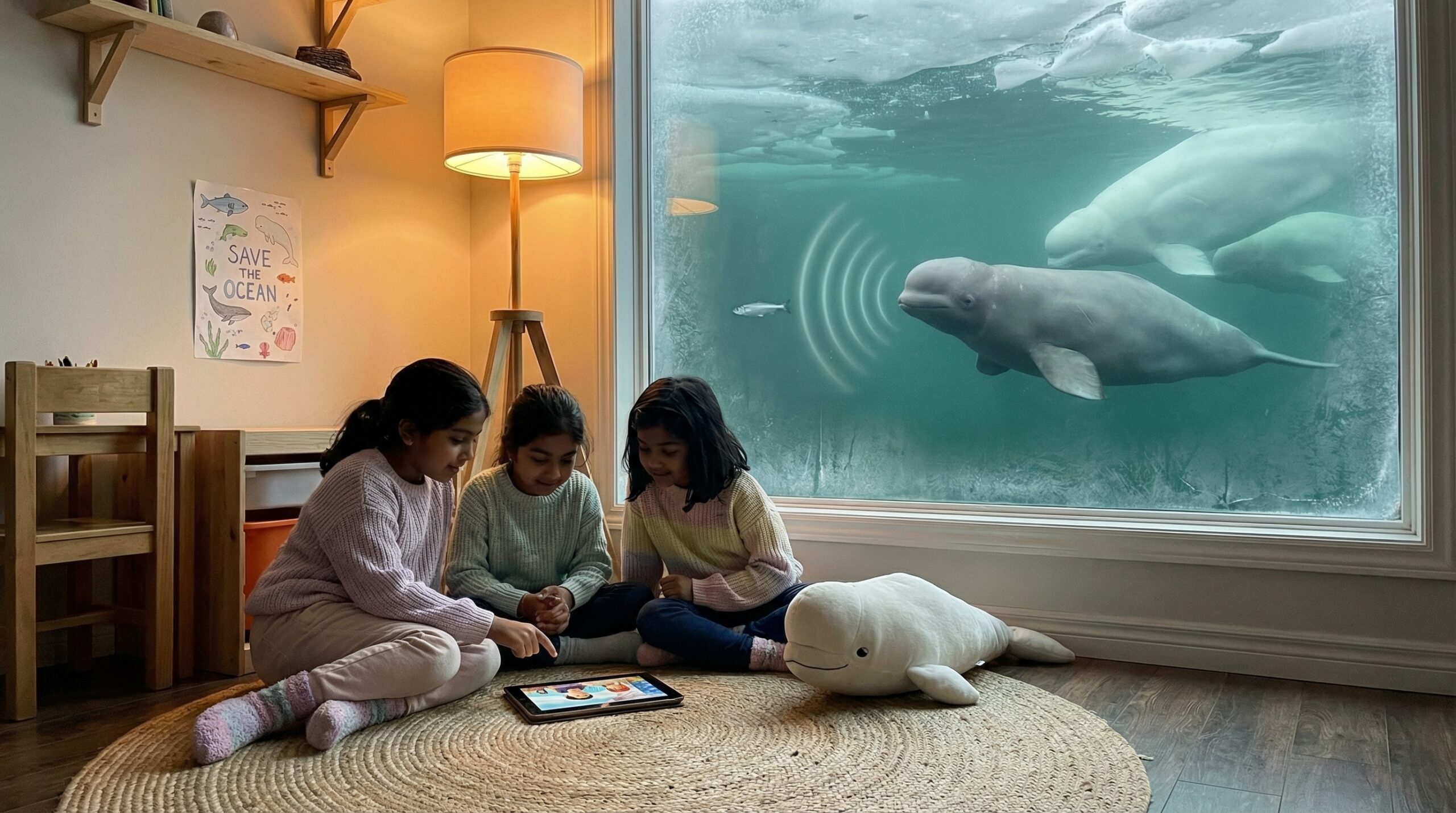
Beluga whale for kids: new on Storypie is a cozy late-winter listen about a single beluga’s life. It opens curiosity about oceans, climate, and conservation in a warm, simple way.
Read or listen to a story about Beluga Whale now: Read or listen to a story about Beluga Whale now: For 3-5 year olds, For 6-8 year olds, For 8-10 year olds, and For 10-12 year olds.
Beluga Whale for Kids: A Quick Introduction
Imagine a calf born gray and soft against the ice. Over about eight years it becomes the familiar white adult. Beluga whales, Delphinapterus leucas, have round heads and friendly faces. Also, they look like bright, bubbly companions up close. The global population of beluga whales is estimated to be between 150,000 and 200,000 individuals, which highlights their significance in marine ecosystems and the importance of conservation efforts according to the International Fund for Animal Welfare.
Appearance
Calves arrive gray or brownish. Then they slowly turn white over five to eight years. Adults are stout and a few meters long. They have peg-like teeth to hold prey. Their thick blubber keeps them warm in icy water. Also, they have no dorsal fin. Therefore they swim easily under ice. Their forehead, called a melon, helps shape sound. As a result, they echolocate and talk like tiny ocean canaries.
Where They Live
Beluga whales live across Arctic and sub-Arctic waters. They use coastal estuaries, shallow bays, and open sea. Some groups stay year-round in places like Cook Inlet and the St. Lawrence. The most recent abundance estimate for the Cook Inlet beluga whale population, as of June 15, 2023, is 331 whales, suggesting the population may be stabilizing and possibly increasing according to NOAA Fisheries. Many move with the ice when seasons change. In summer, they gather in shallow lagoons to molt and rest.
How They Talk
Beluga whales make many sounds. They click, whistle, chirp, and squeak. Scientists call them the canaries of the sea. They also use echolocation to find food and to navigate beneath ice. The melon helps focus those sounds. In quiet moments, their calls sound playful and curious.
What They Eat
Beluga whales eat fish like Arctic cod and salmon. They also take crustaceans, squid, and marine worms. Often, pods use sound and teamwork to find and corral prey. For example, some groups hunt cooperatively to catch schools of fish.
Life Cycle and Behavior
Females mature before males. Gestation lasts about 14 to 15 months. Usually one calf is born. Mothers nurse for many months. Belugas often live 30 to 50 years. They are social and playful. In summer they rub on gravel to shed old skin. Also, they show curiosity toward boats and people at a careful distance.
Threats and Conservation
Orcas and polar bears are natural predators. However, human threats also matter. Noise, pollution, ship strikes, and warming seas all change habitat. The Cook Inlet beluga whale population declined by nearly 80% between 1979 and 2018, from approximately 1,300 whales to an estimated 279 whales, underscoring the challenges faced by beluga populations according to NOAA Fisheries. Some local populations are small and protected. Fisheries and Oceans Canada estimated the St. Lawrence Estuary beluga population’s 2022 abundance at a point estimate of 1,850 individuals, with a carrying capacity of approximately 6,700 belugas under current conditions in their research document. Scientists, Indigenous communities, and conservation groups monitor and help at-risk groups.
How Families Can Help
Families can explore and learn together. For example, listen to beluga calls from trusted Storypie resources. Also, draw a calf and an adult, and label the melon and blubber. Finally, make a simple conservation pledge poster for your home.
- Safe watching tips: go with licensed guides.
- Keep distance from pods and never feed or chase whales.
- Share gentle curiosity with children.
Explore Storypie for cozy audio narration and family-friendly stories that bring ocean life into quiet time. Visit Storypie to find more nature tales and listening moments.