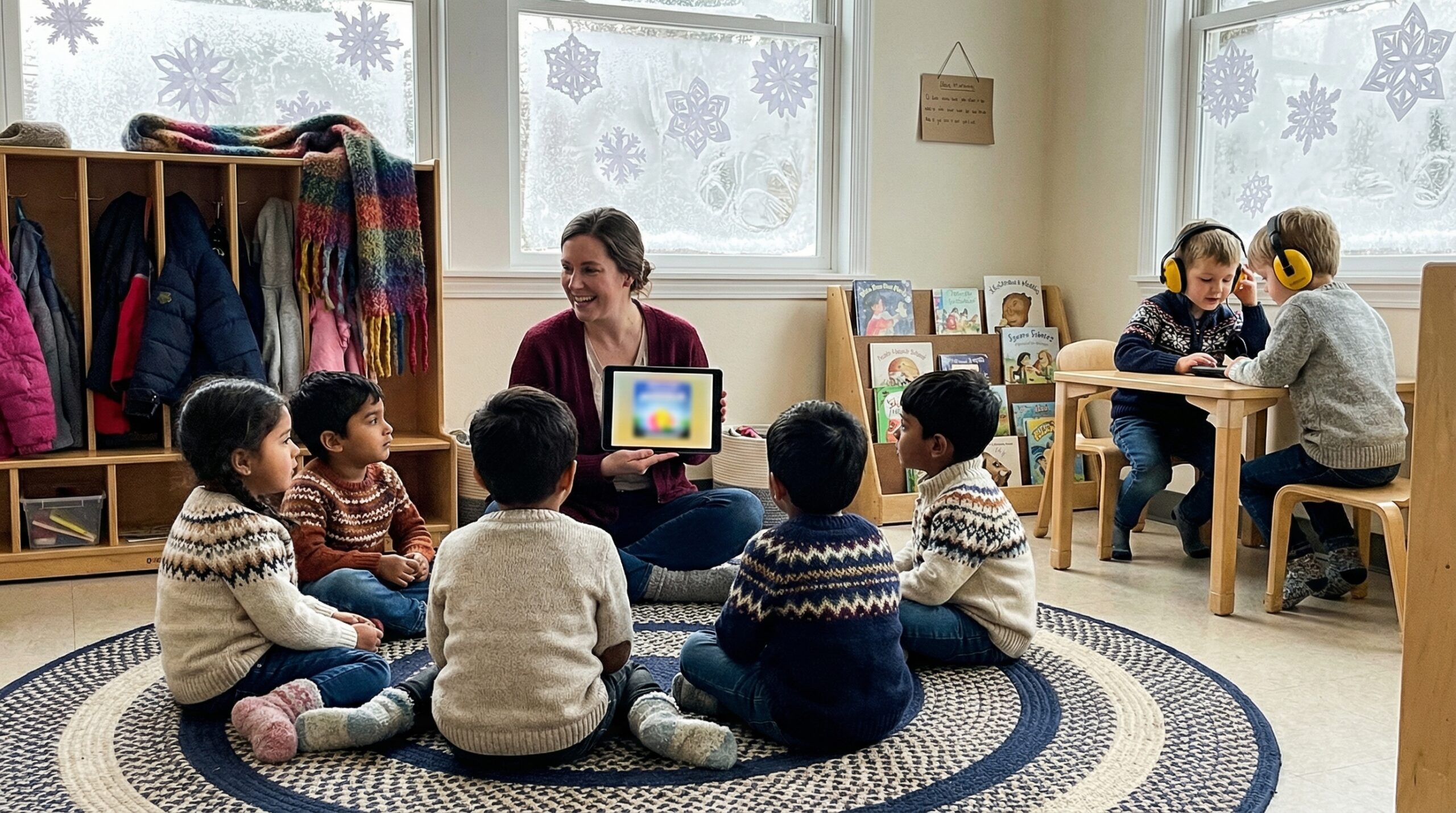
circle-time listening centers are short, shared audio moments during group time. They help language, attention, routines, and calm. For busy teachers, they are low-fuss magic that pays big dividends.
circle-time listening centers: a short history and modern shift
Listening centers have a long classroom life. First they were phonograph corners. Then cassette and CD stations appeared. Today they live on tablets and curated apps.
Because technology changed, teachers now consider content selection, licensing, and safety. Also, streaming and apps make management simpler. For example, curated platforms let educators pick age-appropriate audio quickly. In a national survey of 276 U.S. preschool Montessori teachers, 92% reported having circle time every day or most days, and most respondents said their circle-time sessions last 20 minutes or less.
What circle-time listening centers look like
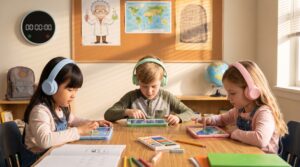
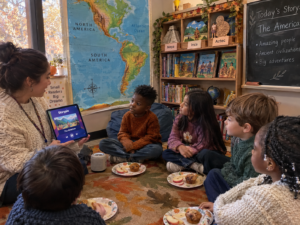
These centers are compact and calm. They often include a cozy spot, picture books, and a central audio source.
- Comfortable seating and clear signage
- One device or speaker with spare headphones
- Short, age-appropriate audio: songs, short stories, or nonfiction mini-segments
- Accessibility supports: transcripts, picture prompts, bilingual audio
Also, practical hygiene matters. Washable headphone covers and volume limits keep listening safe.
Classroom characteristics and practical rhythm
Typical circle-time listening centers run five to fifteen minutes. For preschool, ten minutes often fits the attention span.
Teachers use the routine to build vocabulary, attention, and social calm. Next, they take quick notes on engagement and recall. These tiny observations guide instruction.
Benefits and quick assessment
Shared listening supports vocabulary growth and emergent literacy. It also fosters attention and turn-taking. A 2024 randomized listening-comprehension intervention with 27 four- and five-year-old children found that those who received embodied/simulation listening training showed significantly higher listening-comprehension performance than controls.
For assessment, teachers watch a few simple signs. For example: attention, sharing, recall of one detail, and use of a focus word. These micro-observations are practical and powerful.
Home and family connections
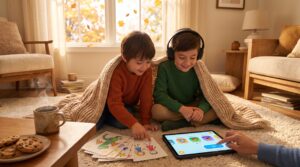
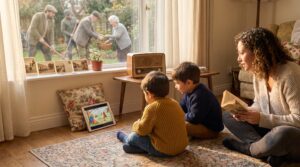
At home, circle-time listening centers translate into short shared listens before bed or during quiet time. Families enjoy a calm, language-rich routine that boosts vocabulary. Research shows that 53% of audiobook listeners who have children say their kids also listen to audiobooks, indicating the growing popularity of this medium among young listeners.
For classroom-ready audio and simple discovery, consider the Storypie app. It offers curated audio and safe settings for young listeners.
A playful close
Circle-time listening centers are a small file drawer of calm. They give classrooms routine, language, and a little magic. Try them next week and celebrate tiny wins.