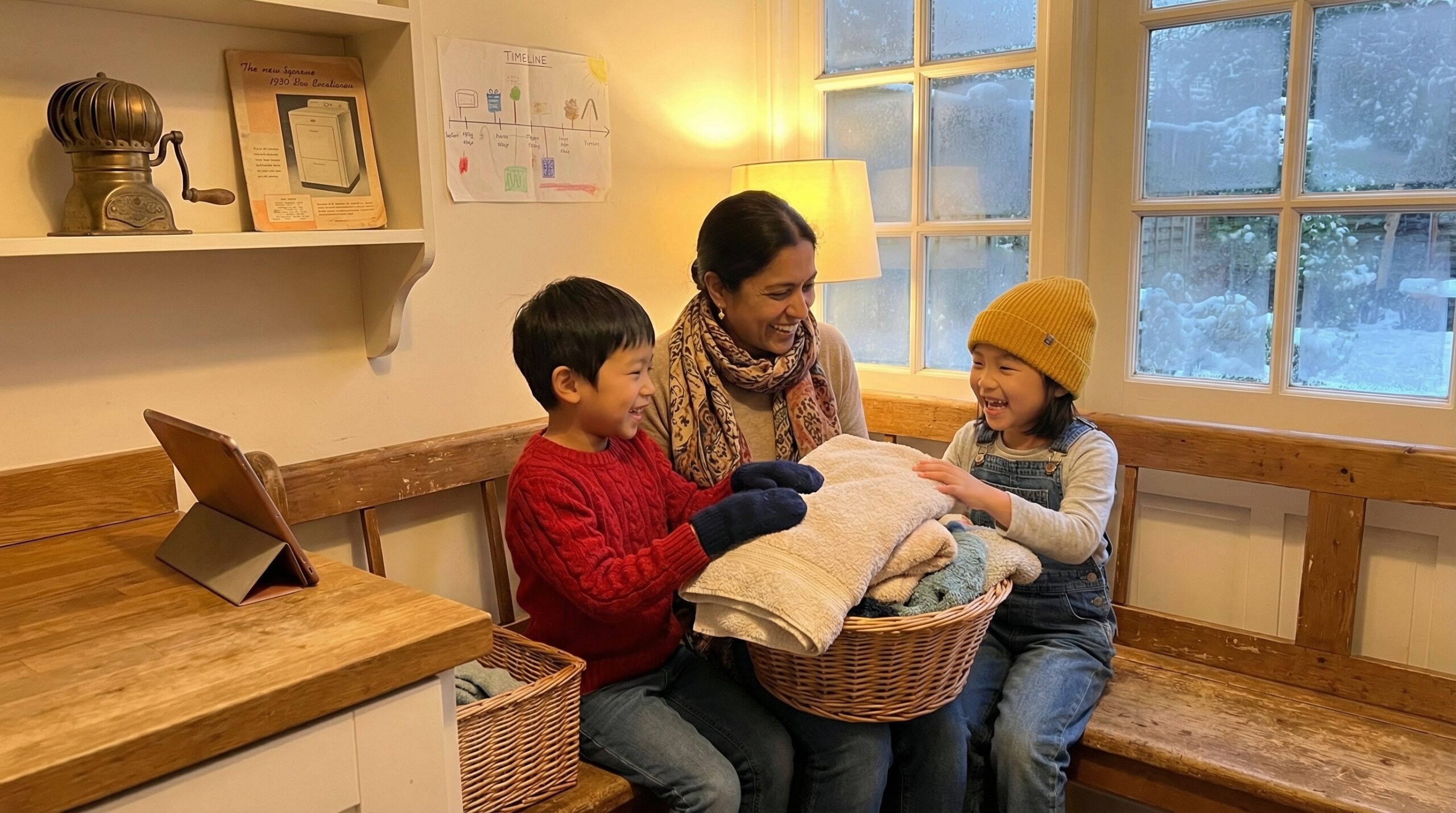
Clothes dryer safety matters in every home. Parents and teachers will find practical tips here. Also, these ideas make laundry safer and cozier. In fact, approximately 80% of U.S. households have a clothes dryer, with about 80% of those being electric models, highlighting the importance of safety measures.
Clothes Dryer Safety Basics
A clothes dryer pulls water from fabric by using warm air and tumbling. Vented dryers push moist air outside. Condenser and heat pump models collect water inside. Heat pump dryers reuse warmth and often use less electricity; in fact, they use around 70% less energy than conventional clothes dryers, making them a more efficient option.
Types matter when you shop. Vented, condenser, heat pump, gas, electric resistance, and washer dryer combos are common. Also, look for moisture sensors and quieter models. Next, check capacity in cubic feet and stackable designs for tight spaces.
Energy and the planet
Electric resistance dryers often use one to four kilowatt hours per cycle. However, heat pump models cut that use significantly. Line drying uses no electricity and is the lowest impact option. To save energy, run full loads, use sensor cycles, and choose lower heat when possible. The U.S. Department of Energy finalized updated residential clothes-dryer efficiency standards on February 29, 2024, projecting 2.7 quadrillion Btu of energy savings over 30 years and over $21 billion in consumer energy bill savings.
Safety and maintenance
Cleaning and care are non negotiable. Clean the lint filter after every load. Also, vacuum the lint trap housing now and then. Inspect and clean the exhaust duct at least once a year. Use smooth metal ducts, not flexible foil or vinyl. Make sure the outdoor vent is clear. If you smell burning or dry times grow long, stop the machine and inspect. Never let children climb into the drum. Clothes dryers are responsible for about 92% of home appliance fires annually, with failure to clean the lint filter involved in about 34% of those cases. This emphasizes the critical safety risks associated with clothes dryers and the importance of regular maintenance.
Simple, clear chores help kids learn. Teach safe tasks like emptying the lint trap, sorting socks, and folding clean clothes. Turn chores into tiny science experiments. For instance, compare a damp towel air drying to one dried by heat. Kids enjoy the surprise.
Fabric care and buying notes
Read fabric care labels and use low heat for delicates. Avoid over drying to reduce shrinkage and fiber wear. Moisture sensors stop the cycle when clothes are dry, which saves energy and protects fabrics. Consider expected lifespan of ten to thirteen years when you buy. Also, factor installation costs for gas lines or vent runs. Heat pump models may cost more up front but can save money long term.
Read or listen to a story about Clothes Dryer now: Read or listen to a story about Clothes Dryer now: For 3-5 year olds, For 6-8 year olds, For 8-10 year olds, and For 10-12 year olds.
Quick safety checklist
Post this checklist near your washer to keep laundry safe and a bit more delightful.
- Clean lint filter after every load.
- Schedule vent cleaning yearly.
- Use smooth metal ducts and proper fittings.
- Check fabric labels before drying.
- Teach kids to empty pockets and avoid climbing into the drum.
Finally, small rituals make chores gentler. Tell a short dryer story while folding. Also, add a tiny sticker with these tips near the washer. For more cozy learning and short invention stories, visit Storypie.