Create your own hero is a joyful weekend imagination challenge families can do in 20 to 60 minutes. It turns quiet time into a tiny studio where kids lead and adults guide.
Why this weekend imagination challenge works
First, kids speak through a character. Therefore their language grows naturally and playfully. Also, limits spark invention. A small, playful weakness forces clever choices. Finally, pretend play builds planning, perspective taking, and empathy. These skills last. In fact, research from a 2025 study involving preschool children found that participation in structured play significantly enhances their creative imagination and problem-solving skills over time.
Quick template: make a hero in 5 steps
Try this simple plan tonight. Keep it short, keep it silly, and let kids set the tone.
- Pick the spark: a toy, a place, or a funny problem.
- Set the goal: six sentences or a three minute skit. Timebox it.
- Create the hero: name, origin, one power, one playful weakness, and a mission. Offer two solid choices, not a dozen.
- Play it out: act it, draw it, or record a voice clip.
- Save it: photograph the drawing, upload the voice clip to Storypie, or stash it in a folder.
What to name and define
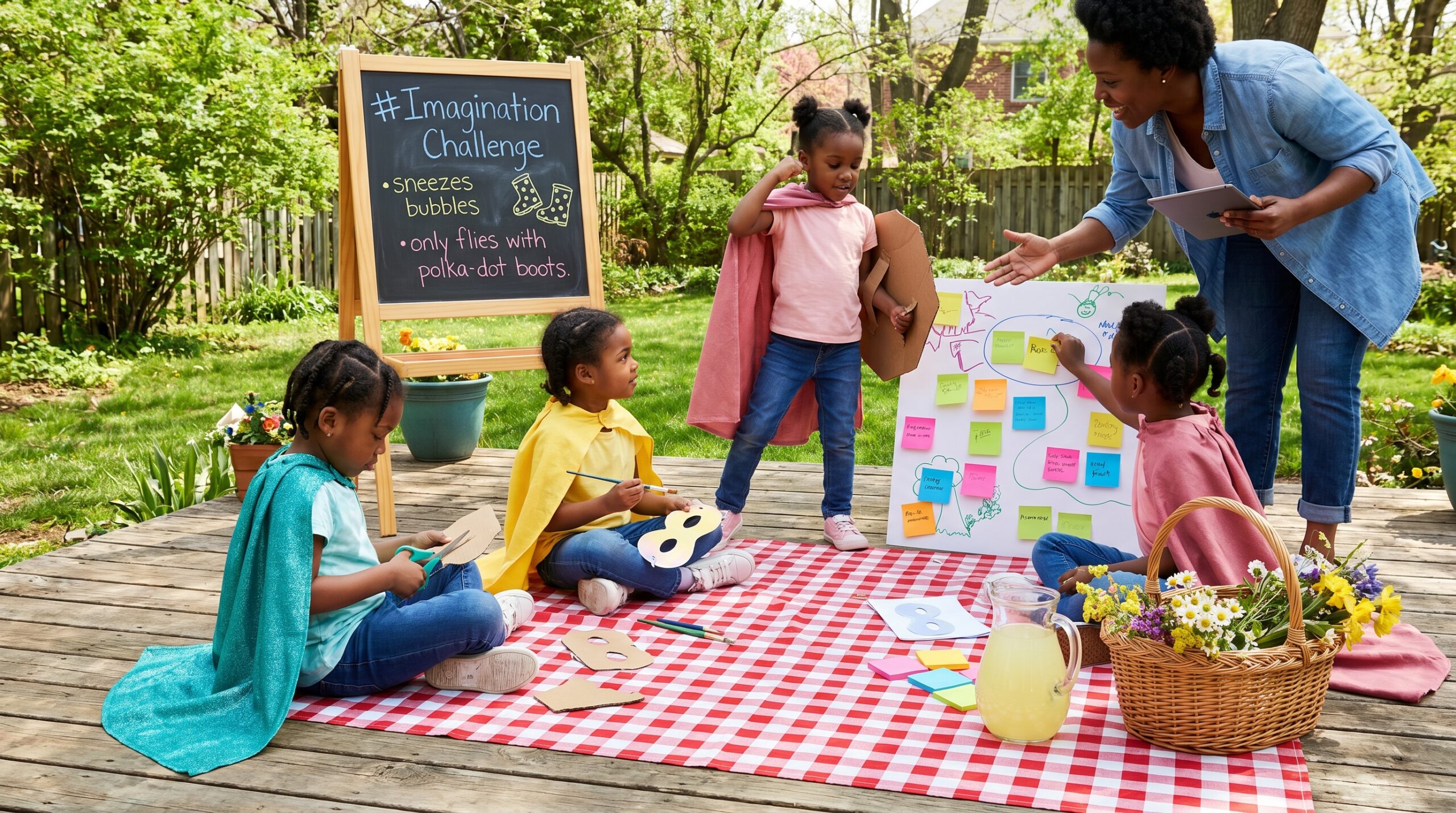
Keep details simple. Name, origin, powers, limitation, look, values, and a sidekick or tool are enough. For powers, think kind and useful. For example, super-speed to help pets, whispering to trees, or glasses that find lost things. For playful weaknesses, choose safe and funny options. For example, sneezes when excited, can only hop, or needs three deep breaths to focus. Weaknesses make heroes human and spark problem solving.
Age tips for the weekend imagination challenge
- Toddlers 2 to 4 years: Focus on a face, a color, and one action. Keep it sensory and very short.
- Preschoolers 4 to 6 years: Add a simple backstory and a costume idea. Use lots of props. Research published in 2023 indicated that children who play collaboratively with siblings or peers exhibit higher imagination flexibility scores.
- School-age 7 to 11 years: Build rules and small missions. Try a 20 minute mini play.
- Tweens and teens: Explore motive, values, and change. Let them write a short scene.
Materials, safety, and sharing
Use paper, crayons, fabric scraps, and rounded scissors. Watch small parts around children under four. Do not use small detachable costume pieces that could be choking hazards. Also use non-toxic glue.
Recordings make great bedtime treats. For instance, I recorded a hero in 90 seconds and replayed it at bedtime. Instant laughter. When you save a clip, you can safely upload it to Storypie for easy replay and family archiving.
Group or solo: both win
Family workshops build collaboration and negotiation skills. Solo challenges support concentration and a clear voice. Either way, hero-making helps kids model identity, practice empathy, and rehearse problem solving. A 2025 study indicates that creativity follows an increasing developmental trend in preschool and early school-age children, highlighting the importance of this type of imaginative engagement.
Inclusivity and values
Invite diverse backgrounds, sizes, and abilities. Avoid tired stereotypes. Instead, ask kids how their hero helps the community. Let values guide the mission.
Make it a ritual
Pick a weekend slot, give it a theme, or run a seasonal series. Document creations with drawings, short videos, or voice notes. Share with care and permission, and keep it delightfully imperfect. Notably, a global LEGO survey reported that children are playing less than before, making initiatives like the ‘Create Your Own Hero’ challenge even more essential to encourage imaginative play.
Ready for a playful weekend? Try the create your own hero challenge. Then save your best bits with Storypie at Storypie or get the app at Storypie get app. Have fun, make a hero, and enjoy the laughter.