Childhood anxiety help starts with listening. That spring morning I heard a small voice say, “My tummy feels fluttery.” I call that feeling butterflies. For parents and teachers, childhood anxiety help means naming the feeling and staying calm. In fact, in 2023, approximately 5.3 million adolescents aged 12-17 in the United States (20.3%) had a current, diagnosed mental or behavioral health condition, with anxiety being the most common at 16.1%.
What anxiety looks like
Anxiety is the body and mind reacting to a perceived threat. For example, a child may have a racing heart or quick breathing. Also they may complain of stomach aches or headaches. Emotionally they can be clingy, irritable, or withdrawn. Cognitively they may expect the worst or lose focus. Behaviorally they might avoid school, friends, or activities. With the increasing prevalence of anxiety disorders, it’s important to recognize these signs early. The prevalence of diagnosed generalized anxiety disorder (GAD) among U.S. adults increased from 5.4% in 2020 to 6.6% in 2023, indicating a growing public health concern.
Common types and risk factors
Common types include separation anxiety, generalized anxiety, social anxiety, and specific fears. In older youth panic attacks can occur. Risk factors include temperament, family history, stressful events, and learned responses from caregivers. Notably, in 2023, about 44% of Asian Americans reported feeling worried about life, the highest level of anxiety among all racial groups in the U.S., which highlights the importance of targeted support efforts for diverse populations.
When to seek help
If worries last for many weeks, seek support. If anxiety gets worse or disrupts school, ask for help. If a child talks about hurting themselves get urgent professional care. Panic attacks are frightening but rarely physically dangerous. However, severe withdrawal or suicidal thinking needs quick action. The U.S. Preventive Services Task Force (USPSTF) has recently emphasized the importance of early detection by issuing a final recommendation that clinicians screen adults younger than 65 for anxiety disorders on June 20, 2023.
What helps most
Evidence supports cognitive behavioral therapy with gradual exposure. Also parent involvement improves results. For some children, medication such as SSRIs may be advised by a specialist alongside therapy. School supports matter too. Simple accommodations, calm transition plans, and a trusted teacher can change a child’s school day. It’s important to note that in 2023, 18.1% of insured U.S. adults experienced anxiety, with women reporting higher rates (23.4%) than men (14.3%), highlighting the need for gender-sensitive approaches in mental health resources.
Try tonight: tiny steps that work
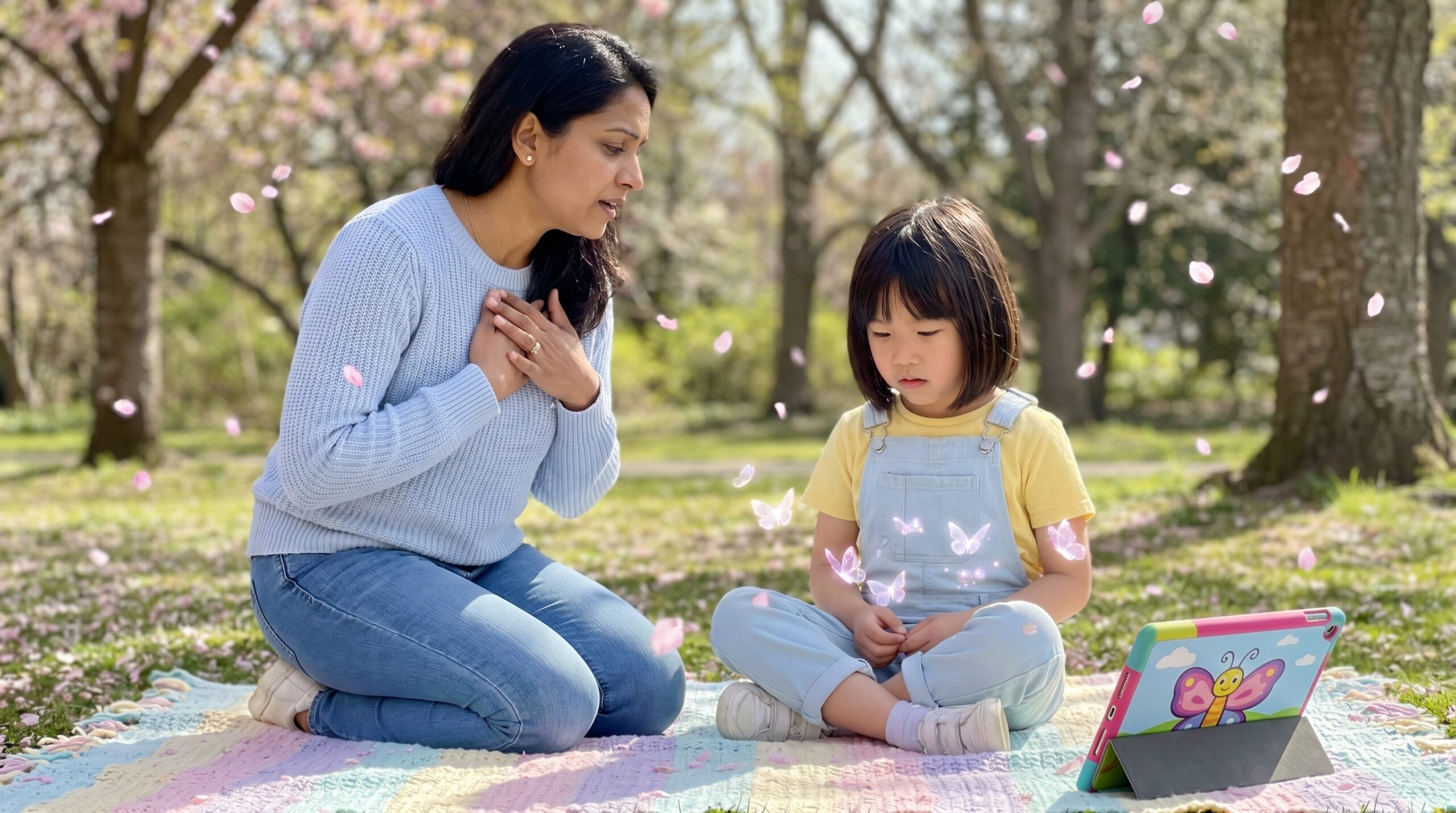
Start small. Name the feeling. Say, “I see your butterflies.” Then validate it. Breathe together with four slow breaths. Next try balloon breathing: breathe in and imagine the tummy as a balloon, breathe out slowly. Also ground with 5-4-3-2-1 senses. Offer one tiny step toward the scary thing. Small, guided exposure beats rescuing every time. Celebrate attempts. Tiny victories rock.
Use this quick micro template tonight:
- Pick the feeling line: “I have butterflies.”
- Choose one tiny step: “Let’s try standing at the classroom door for 30 seconds.”
- Praise and plan the next tiny step.
Playful ideas help too. Make a worry box. Draw the worry and then draw the brave step next to it. Read together and rehearse coping like a short play. On a spring mid-morning we noticed the butterflies. So we made a Storypie story that names that feeling and shows its secret job.
Read or listen to a story about Anxiety now: For 3-5 year olds, For 6-8 year olds, For 8-10 year olds, and For 10-12 year olds.
If you are unsure, partner with your pediatrician, school, or a child mental health specialist. Early help, steady modeling, and simple practice change trajectories. I have seen calm return and confidence grow. Small wins feel glorious. For gentle stories and tools visit Storypie for more on anxiety and related topics.