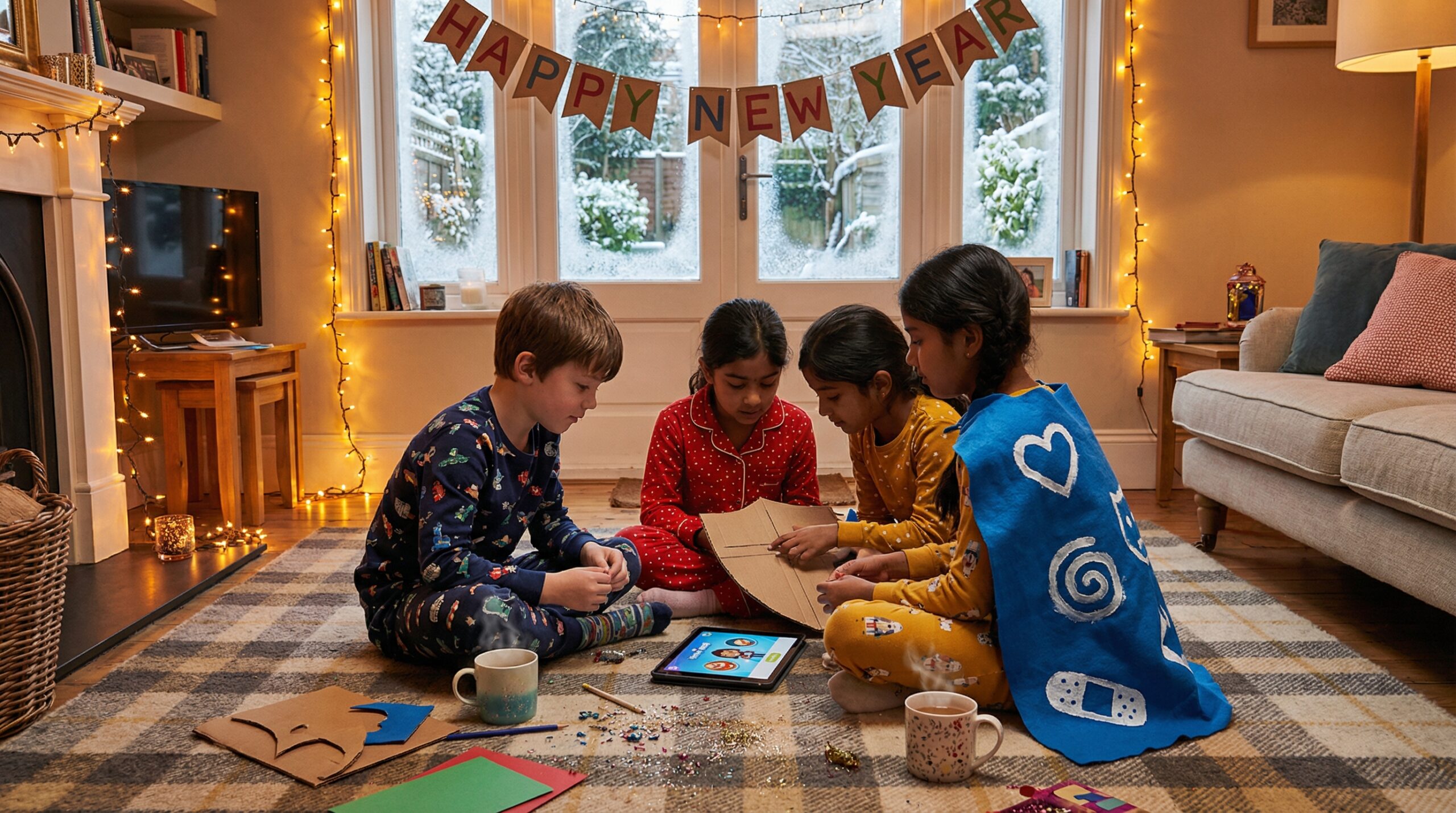
The create your own hero challenge fits a cozy weekend afternoon. A child crowns a paper cape and shouts a new hero name. That bright moment is pure joy and small wonder.
Create your own hero challenge: Core components
Keep the activity short and joyful. Aim for delight and small wins. Ask the child for four simple details:
- Hero name
- Two to four powers or special skills, with how each helps others
- A costume or visual touch, even one sticker or a scrap cape
- A simple motivation: who the hero helps and why
Why the create your own hero challenge helps children
Focused imaginative play supports language and social thinking. In addition, naming three powers nudges descriptive speech and cause and effect thinking. Research shows that a 2024 meta-analysis found a positive relation between pretend play and social competence in children aged 3–8 years, reinforcing the value of this hero creation activity.
For example, a five year old might make “River Repairer” who can clean polluted water. Then the child uses words like filter, flow, and rescue. Next, a seven year old who designs a community team hero practices cooperation and problem solving. The results of a large-scale school intervention indicate that pretend-play based training improved emotion comprehension and decreased aggressive behaviors in children, showing the positive impact of imaginative play on emotional development.
A simple two day schedule
Short sessions fit family rhythms and build tiny triumphs. Try this easy plan:
- Day 1: Brainstorm and draw for 20 to 60 minutes. Talk about names and powers. Use picture prompts for non readers.
- Day 2: Make a prop and share. Role play a one minute mission, take photos, and celebrate with a mini gallery.
Materials and accessibility tips
Low cost supplies spark big ideas. Use paper, crayons, stickers, yarn, and old fabric scraps. Also pack tape and glue.
For fine motor differences use larger crayons or picture choice cards. For multilingual families translate prompts or use picture cues. Swap the term superpowers with special skills to emphasize helpers rather than combat.
Variations and tech friendly options
Try solo hero, sibling teams, or a community helpers theme. Also try sensory friendly versions using tactile materials.
Older kids can add design details or simple tech. For instance, capture photos or record short audio clips. Then save the creation and narration in the Storypie app for a lasting memory. Visit Storypie to add audio and prompts: get the app.
Share ideas and short captions
Short show and tell works best. Try a one minute mission and a quick photo. Then post a friendly caption and celebrate the child.
Mini rubric to notice growth
- New word used: child uses at least one new descriptive word
- Clear power explained: child tells how a power helps others
- Shared one minute mission: child performs a short hero mission aloud
The create your own hero challenge creates laughter, pride, and tiny triumphs. Finally, save the memory with a quick photo or a Storypie audio clip. A 2022 OECD report indicated that fostering creativity is essential for imaginative play, and a 2024 YouGov survey found that 92% of children said being creative boosts their confidence, making this challenge an appealing endeavor for children. Try it this weekend and watch imaginations grow louder and braver.