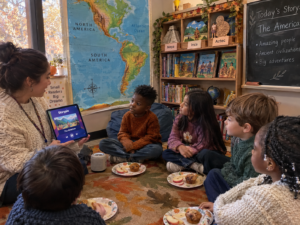

This create your own hero challenge turns a single weekend into a tiny wonder. Try it with your child and watch imagination bloom. Engaging in such creative activities has been shown to significantly enhance children’s creative thinking and skill development. In fact, in 2024, the Institute of Imagination reached 17,620 children and supported 1,071 educators across nearly 100 schools, resulting in a 100% increase in children’s creative thinking and a 92% increase in teachers’ skills.
Create your own hero challenge: what it is
This challenge is a short, playful activity for parent and child. Over one or two short sessions, invent a small hero together. Keep it light and joyful. The goal is a complete little character: name, power, one small flaw, look, origin, tools or sidekick, and a simple setting. Research published in December 2024 indicates that imaginative activities like this can lead to improved performance in various learning phases, as creativity is closely linked to skill acquisition and retention among kindergarten children. This underscores the value of your hero creation challenge.
Core building blocks
Start with a few fun choices. Then let your child lead. Use these quick prompts:
- Name. Make it silly, bold, or sweet.
- Power. Big or quirky: flight, super sight, or fixing broken toys.
- Flaw. A tiny limitation that makes the hero feel real.
- Look. Costume, color, or a signature hat.
- Why they act. One-sentence origin or motivation.
- Tools or friends. Sidekicks, gadgets, or a trusty backpack.
How to play this weekend
First, keep sessions short. Follow your child’s pace. For timing, try about 2 to 3 minutes per year of age. For example, toddlers get very simple choices. Preschoolers enjoy textures or sounds. Early school-age kids can handle motives and little quirks. A study also emphasizes how such creative play supports the development of essential skills in young children.
Play steps
- Prompt. Give one vivid line. For example, We found a glowing button in the garden. What happens next?
- Choose name and power. Let the child decide first.
- Add one flaw. Make the hero adorably stubborn or delightfully forgetful.
- Act it out. Try a tiny skit or sound effects.
- Record and replay. A short audio makes bedtime magic and memory practice.
Quick examples to spark play
For even more fun, try these tiny examples. They are quick and silly.
- Luna Bolt. Power: can talk to bicycles. Flaw: gets stage fright. Micro-skit: Luna calms a crying bike with a lullaby.
- Mango Knight. Power: makes rainy days sunny for one minute. Flaw: always misplaces their cape. Micro-skit: Mango finds the cape in the cookie jar.
Why this helps
Stories build language, empathy, and focus. Pretend play grows vocabulary and perspective taking. Also, it supports emotional regulation and problem solving. Short, repeated play strengthens routines and attachment. Replay at bedtime and notice confidence grow. It is quietly powerful and utterly magical. Furthermore, a 2024 study highlighted the importance of artistic activities in developing creative thinking skills among children, further supporting the benefits of engaging in imaginative play.
Record and replay with Storypie
Then, save these tiny brilliant worlds. Storypie makes it easy to record family voices and replay stories at bedtime. Use private settings and avoid personal details. Check who can access recordings for safety. The LEGO Play Well Study (2024) reported that 73% of children feel that adults don’t take play seriously, and 79% want to play more with their parents, emphasizing the need for engaging activities like the hero creation challenge.
For more, visit the Storypie app page and learn how to save memories: Get the Storypie app. Or go to the main Storypie site for tips: Storypie home.
Practical tips and safety
Keep sessions short and joyful. Include diverse heroes that reflect your child’s world. Also, adapt for nonverbal children with drawings, gestures, or photos. Use hashtags to join the fun, but protect privacy. It’s important to remember that the United Nations has designated June 11 each year as the International Day of Play to “champion and protect” children’s right to play, highlighting the global recognition of the importance of play in child development.
Final thought
A weekend is all you need to make a hero. Tiny flaws, bold powers, and a loving voice turn play into growth. Try the create your own hero challenge this weekend and listen for the laughter. Imagination awaits.