Cuba for kids comes alive this spring mid-morning. Read or listen to a story and spark small wonders at the breakfast table.
Read or listen to a story about Cuba now: Read or listen to a story about Cuba now: For 3-5 year olds, For 6-8 year olds, For 8-10 year olds, and For 10-12 year olds.
Quick Cuba for Kids Snapshot
Cuba is the largest island in the Caribbean. It lies long between the Gulf of Mexico and the Atlantic, like a bright ribbon. The capital city is Havana, and about eleven million people lived across the island until 2024, when the population declined to 9.75 million, a 13% decrease from its peak of 11.2 million in 2012. Spanish fills streets and markets, so words and songs are easy to hear.
People, roots, and history
Before Europeans arrived, the Taíno people lived here. Their crafts and food traditions still flavor Cuban life. Spain colonized Cuba in the early 1500s. As a result, Spanish language, religion, and plazas shaped towns.
Enslaved Africans arrived to work on sugar and tobacco. Their music and rhythms blended with Spanish forms. This blending created powerful new music styles and beliefs like Santería.
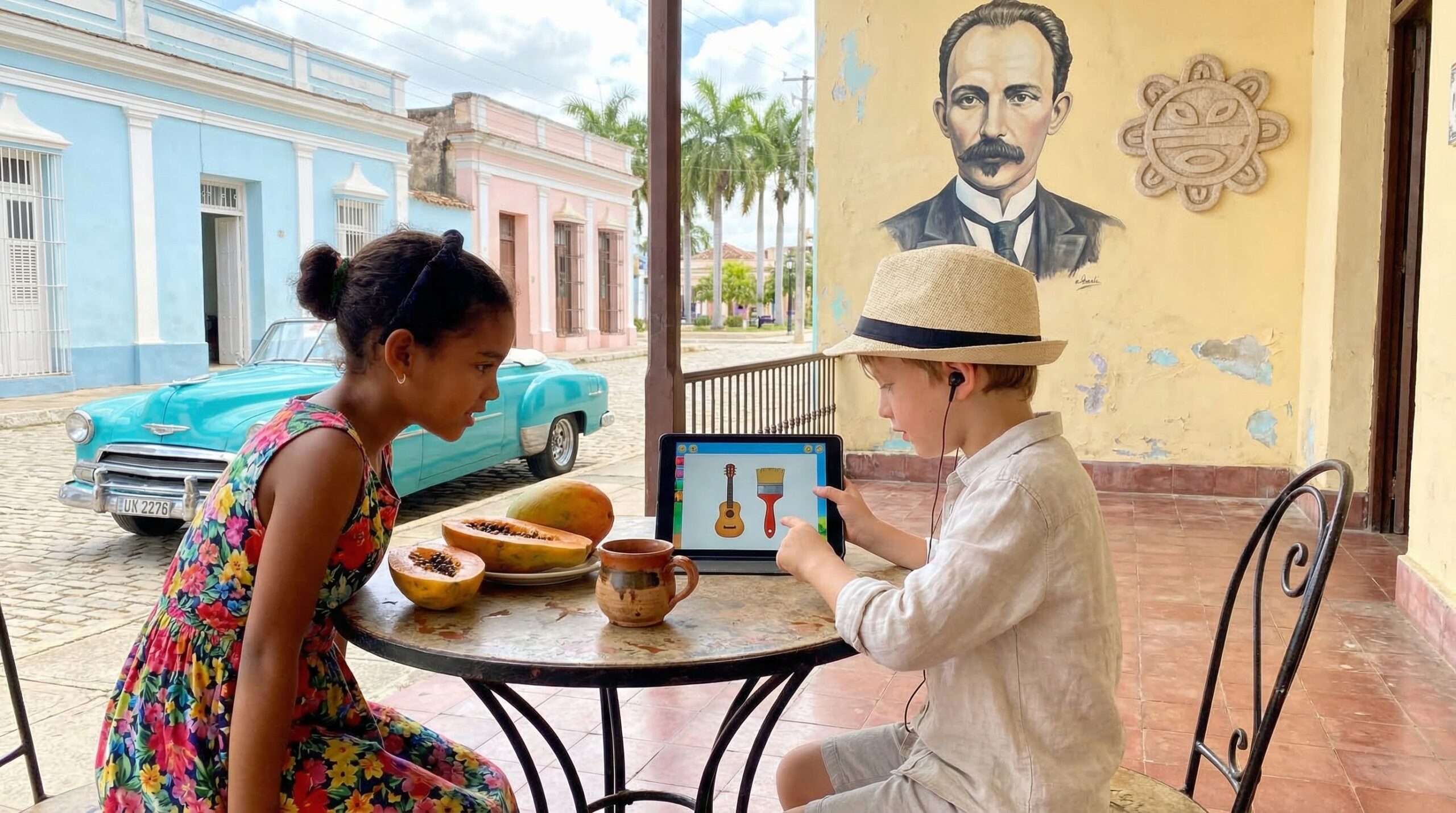
In the 1800s Cubans fought for independence. José Martí became a strong voice for freedom. He wrote poems and inspired many people to seek a nation of their own. Later, the 20th century brought major changes. In 1959 a revolution reshaped daily life and culture. For young listeners, focus on how history changed routines and songs.
Music, art, and colorful cars
Music is the heartbeat of Cuba. Son, rumba, and salsa fill plazas. The Buena Vista sound feels warm and lively. Artists paint bright murals on old walls. Plus, you will spot classic American cars from the 1950s. Those cars run by careful creativity, and they make Havana very colorful indeed.
Food, nature, and everyday life
Food in Cuba tastes comforting. Rice and beans, plantains, ropa vieja, and strong coffee appear at many tables. Baseball stands as the favorite sport for kids and families. Nature shows beaches, coral reefs, mangroves, and the Viñales hills. Also, the Zapata wetlands host many birds and wildlife.
Cuba holds UNESCO sites like Old Havana, Trinidad, and Alejandro de Humboldt. The island has high literacy and strong public healthcare. In fact, in 2023, Cuba’s under-five mortality rate was 5.73 deaths per 1,000 live births, reflecting a 5.17% decrease from the previous year. Historically, sugar and tobacco mattered most. Today, tourism, biotech, and nickel help the economy, although Cuba faced economic challenges with a nominal GDP of $201.99 billion and a growth rate of -1.9% in 2023.
Interestingly, as of 2023, 71% of Cuba’s population were Internet users, highlighting the digital engagement of the Cuban population.
Tiny activities to try at breakfast
Try a short routine to spark curiosity. Play a two-minute son song. Then ask, “What instrument do you hear?” Draw a paper classic car and color the flag blue, white, and red. Make simple percussion shakers from paper cups and rice. These small actions turn a few minutes into joyful discovery.
Get the app: https://mystorypie.com/get-app. Also, try a short map tour to find Havana, Viñales, Trinidad, and Santiago. Play a modern Cuban tune and a classic son. Celebrate sounds, colors, and tiny discoveries. Try it tomorrow morning. You will hear a question and a smile.