Ecosystems for kids are living neighborhoods where plants, animals, soil, water and sunlight work together. In simple words, an ecosystem is a team where every member has a job. This idea helps children feel at home in nature and sparks gentle curiosity.
What are ecosystems for kids?
An ecosystem mixes living parts and nonliving parts. For example, plants, insects and birds are living. Sunlight, water, soil and air are nonliving. Together they make a place where life grows, eats and changes.
Core parts
Living pieces are called biotic. They include:
- Producers like plants and algae
- Consumers such as insects, birds and mammals
- Decomposers like fungi and bacteria
Abiotic parts are nonliving. They include sunlight, water, soil, air and temperature. These parts shape where life can live.
Energy and food webs
Sunlight drives most ecosystems. Producers turn light into food with photosynthesis. Then consumers eat producers. Predators eat other consumers. Decomposers recycle leftovers and return nutrients to soil.
Food chains show one path of energy. However, food webs show many paths at once. So food webs feel like a map of who eats whom.
Nutrient cycles
Water, carbon and nitrogen move in loops through ecosystems. For example, the water cycle links ponds to fields and homes. Plants take in carbon dioxide and build leaves. Microbes make nitrogen available to plants. Decomposers return nutrients back to soil. These cycles keep the system running smoothly.
Types, scale and microhabitats in ecosystems for kids
An ecosystem can be tiny or vast. It can be a puddle, a backyard, a pond, a meadow, a forest or an ocean. Within each, tiny rooms for life exist under logs, inside leaf litter, or beneath rocks.
These microhabitats host special communities of insects, worms and fungi. They make every place feel full of small wonders. In fact, soil is home to approximately 59% of all life on Earth, making it the most biodiverse habitat on the planet, according to a 2023 study.
Biodiversity and resilience
More species usually means more resilience. If one species declines, others can sometimes fill its role. That redundancy helps an ecosystem recover after storms, fires or floods. However, in 2023, over one-third of biodiversity in the United States was at risk of disappearing, with 34% of plants and 40% of animals facing potential extinction, as reported by NatureServe.
Ecosystem services are the everyday gifts people get. These include pollination, clean water, soil formation and cooler air in summer. The economic importance of ecosystems is also significant; in 2023, the total asset value of UK natural capital was £1.6 trillion, with £1.4 trillion from biotic services and £162 billion from abiotic services, according to the Office for National Statistics.
Change, human impact and adaptation
Ecosystems change over time. After a disturbance, pioneer species arrive first. Later, longer lived species follow. People shape ecosystems too. For example, habitat loss, pollution and invasive species change where plants and animals can live. One million of the estimated 8 million species of plants and animals are threatened with extinction, and around 3.2 billion people (40% of the global population) are adversely affected by land degradation, as highlighted by the UN Environment Programme.
Many species adapt with camouflage, water-saving features or seasonal behaviors. Small adaptations often make big differences.
Five-minute family activity
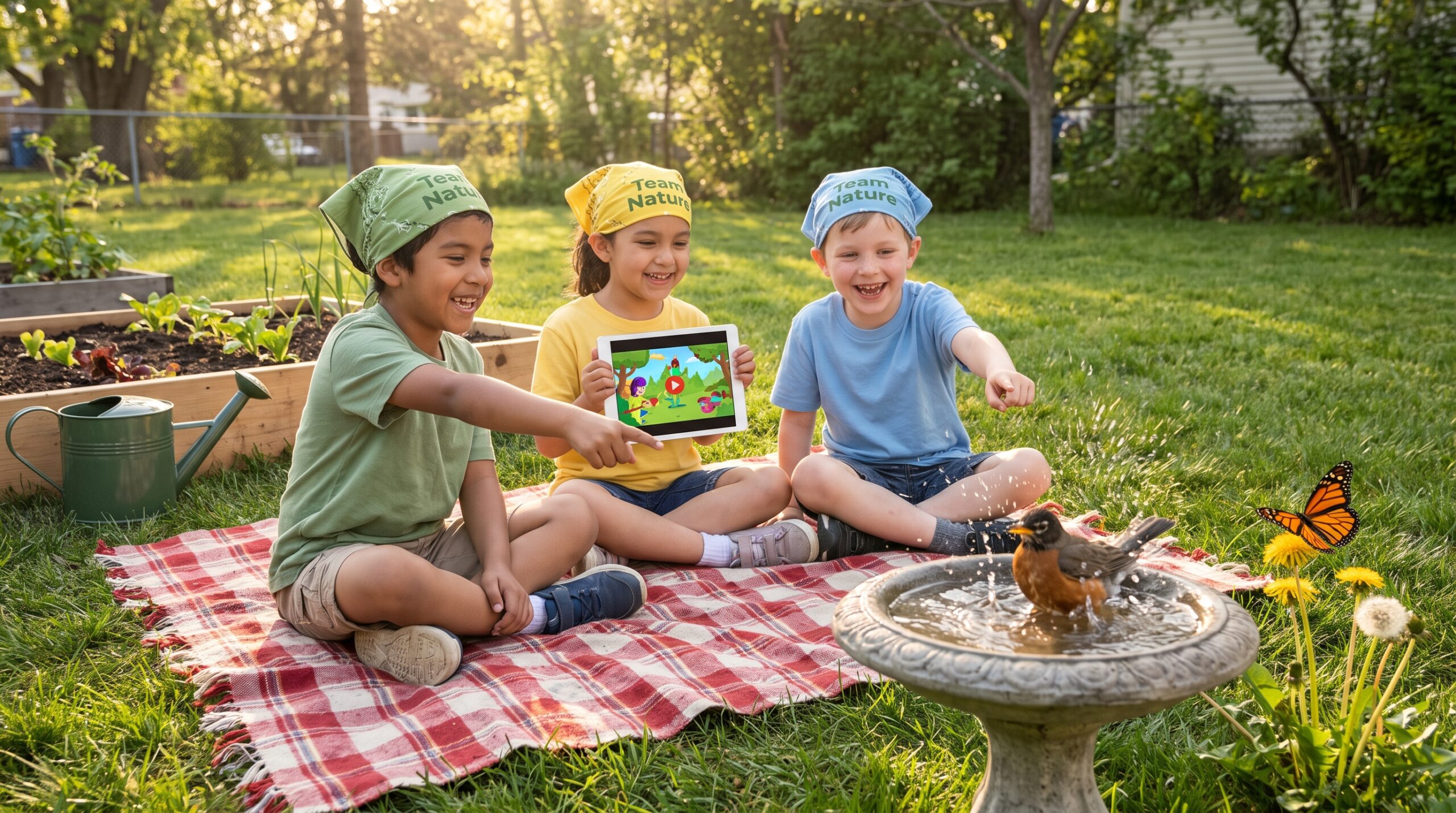
Try a five-minute backyard team walk. Breathe in together. Notice one producer, one consumer and one tiny decomposer. Listen, then name a small thing you spot. This tiny ritual invites quiet curiosity.
Read or listen to a story about Ecosystems now: For 3-5 year olds, For 6-8 year olds, For 8-10 year olds, and For 10-12 year olds.
Explore more ecosystem stories on Storypie: Read or listen to a story about Ecosystems now. This link leads to age-graded tales that match the ideas above.
Simple stewardship
Small actions help ecosystems. For example:
- Plant native flowers
- Leave a safe log pile for insects
- Reduce pesticide use
- Join or organize a local clean-up
Safety first. Do not touch unknown plants or animals. Supervise children near water and wash hands after exploring.
Quiet wonder
The goal is quiet wonder. A short walk, a listened story, and a small change at home help a child feel they belong to a living neighborhood. And best of all, that feeling can grow every sunny morning.