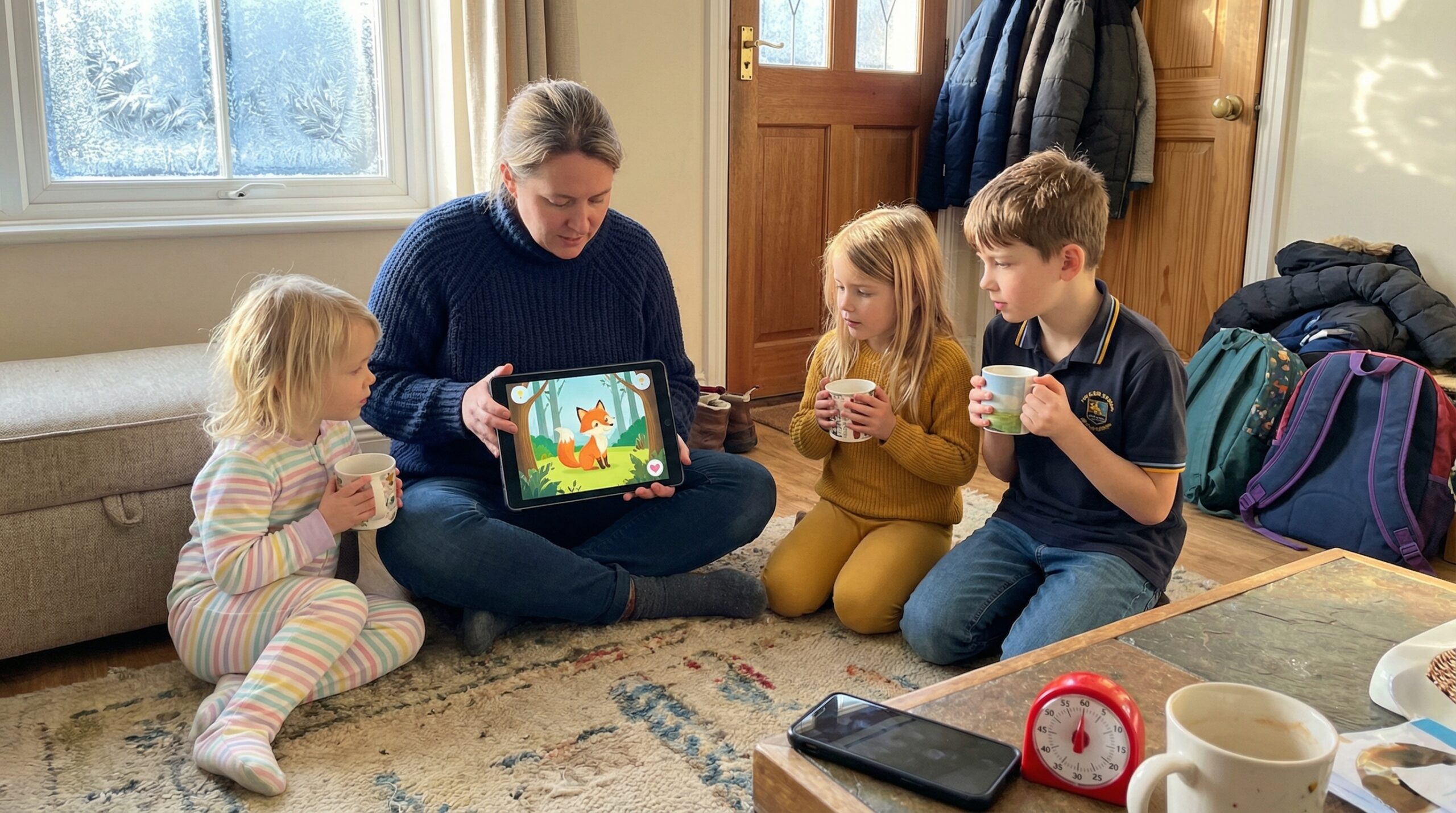
Education through storytelling ages 3-12 sits at the meeting point of ancient practice and modern science. For parents and teachers, Storypie channels that tradition into short, joyful tales. These tales aim to hold attention and build memory.
Why education through storytelling ages 3-12 works
People have taught with stories for thousands of years. For example, communities passed values, skills, and simple truths by telling tales. Research now shows narrative shapes memory and meaning. A large meta-analysis published in January 2021 found that narrative texts are remembered and comprehended better than expository texts, with an average effect size of Hedges’ g = 0.55, indicating that stories are more effective for learning than traditional information presentation.
Stories reduce cognitive load. They place events in a clear sequence. As a result, children link causes and effects. Also, emotional hooks help memory stick. In short, narrative makes facts feel meaningful. Research shows that storytelling contributes 68.2% to the improvement of early childhood empathy skills, especially at the age of 5–6 years, making it a valuable practice for social development.
Storypie: history, mission, and core features
Storypie began with a simple idea. Founders wanted short, well-crafted tales for busy families. Since launch, Storypie has focused on clear narration, vivid illustrations, and age-tailored content.
- Age range: focused content for ages 3 to 12.
- Short, narrated tales built for brief daily moments.
- Rich audio and illustrations to support language and attention.
- Curated themes that align with childhood interests and development.
- Research-informed content that reflects findings from language and memory studies.
Because Storypie blends tradition and evidence, it supports learning in small, repeatable doses. A longitudinal study published in May 2024 found that storytelling connectedness in children ages 5–8 predicted phonological awareness and reading comprehension measured 3–4 months later, demonstrating the long-term benefits of storytelling on literacy skills. Learn more on the Storypie site: Storypie.
Research highlights: narrative and memory
Neuroscience finds that listeners process stories differently than lists. For one, compelling narratives engage emotion centers in the brain. That interaction strengthens recall. Also, a randomized study of augmented-reality storybooks published on October 8, 2024, found that children who experienced AR storybooks scored significantly higher on post-test story-retelling and story-comprehension measures than those who experienced printed books.
Also, studies link shared storytelling to vocabulary gains and social reasoning. Teachers and researchers note that narrative helps children predict motives and see consequences. Thus, education through storytelling ages 3-12 aligns with both brain wiring and classroom goals. A 2024 Early Childhood Research Quarterly study showed that shared book reading with embedded factual questions produced more ‘integration talk’ by caregivers, significantly predicting children’s memory-integration performance.
How Storypie reflects the evidence
Storypie’s short format and sensory writing follow what research values. The app emphasizes repetition, clear heroes, and age-appropriate complexity. Consequently, content feels familiar and memorable.
Age-specific alignment in Storypie content
Storypie organizes tales by developmental traits. For ages 3 to 5, stories use sensory language and repetition. For ages 6 to 8, narratives introduce predictable choices and simple consequences. For ages 9 to 12, tales include layered motives and varied perspectives.
Across these groups, the focus remains the same. Storypie uses narrative to make ideas stick and to support language growth.
Final note and gentle invitation
In short, education through storytelling ages 3-12 combines ancient methods and modern findings. Storypie packages this mix into short, delightful stories for families and classrooms. If you want a low-friction way to bring narrative into the day, visit Storypie: Get the app.