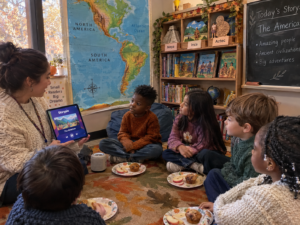
Education through storytelling ages 3-12 brings learning to life. For millennia, oral tales taught children survival, manners, and which plants were safe. Today, stories still turn facts into moments children can feel, sequence, and remember. Research indicates that storytelling increases information retention by 65% compared to traditional verbal instruction methods, making it a compelling teaching tool. According to a longitudinal study published on May 2, 2024, storytelling connectedness in children ages 5–8 predicted phonological awareness and reading comprehension measured 3–4 months later, demonstrating long-term benefits of storytelling on literacy skills.
Why narrative helps the brain
Neuroscience and simple observation point to the same truth. Stories give the brain a tidy sequence: goals, events, and outcomes. Emotion adds glue. For example, a funny fox or a brave child makes vocabulary and concepts stick much better than a dry list of facts. This emotional connection enhances memory retention and makes learning feel relatable.
Age-by-age benefits of education through storytelling ages 3-12
Ages 3 to 5 learn words fast. Short, repeated lines invite imitation and build vocabulary. Also, rhythm and rhyme help memory. Try repeating one phrase three times and clap for a tiny routine. A 2023 meta-analysis of 30 studies found a small but reliable positive association between executive functions and narrative competence across childhood, with a stronger association in preschool and early elementary years, emphasizing the cognitive development fostered by storytelling.
Ages 6 to 8 bridge decoding to comprehension. Character-led tales give meaning to new words. A ten-minute story helps connect sight words to real context. Next, it encourages questions about why characters act a certain way. These discussions not only enhance understanding but also contribute to the development of empathy; research shows that storytelling contributes 68.2% to the improvement of early childhood empathy skills, especially at the age of 5–6 years.
Ages 9 to 12 grow inference and empathy. Longer plots show cause and effect. Therefore, children practice imagining motives and predicting outcomes. These safe plots support moral reasoning and perspective taking. Engaging with stories in various formats, including augmented-reality storybooks, has shown to significantly improve story-retelling and comprehension measures, as indicated by a randomized study published on October 8, 2024.
Core features of effective educational stories
- Character-driven plots. Children remember people, not pages.
- Short and sequenced. Beginning, problem, attempts, resolution helps memory.
- Repetition and predictability. Reuse target words in fresh ways.
- Emotion and relevance. Relatable stakes make learning vivid.
Concrete learning outcomes
Regular narrative exposure boosts vocabulary, listening comprehension, memory retention, and social-emotional skills. Population studies link rich storytelling to stronger literacy later in school. Also, stories teach problem-solving because plots model cause and effect in a memorable chain.
Formats and routines that work
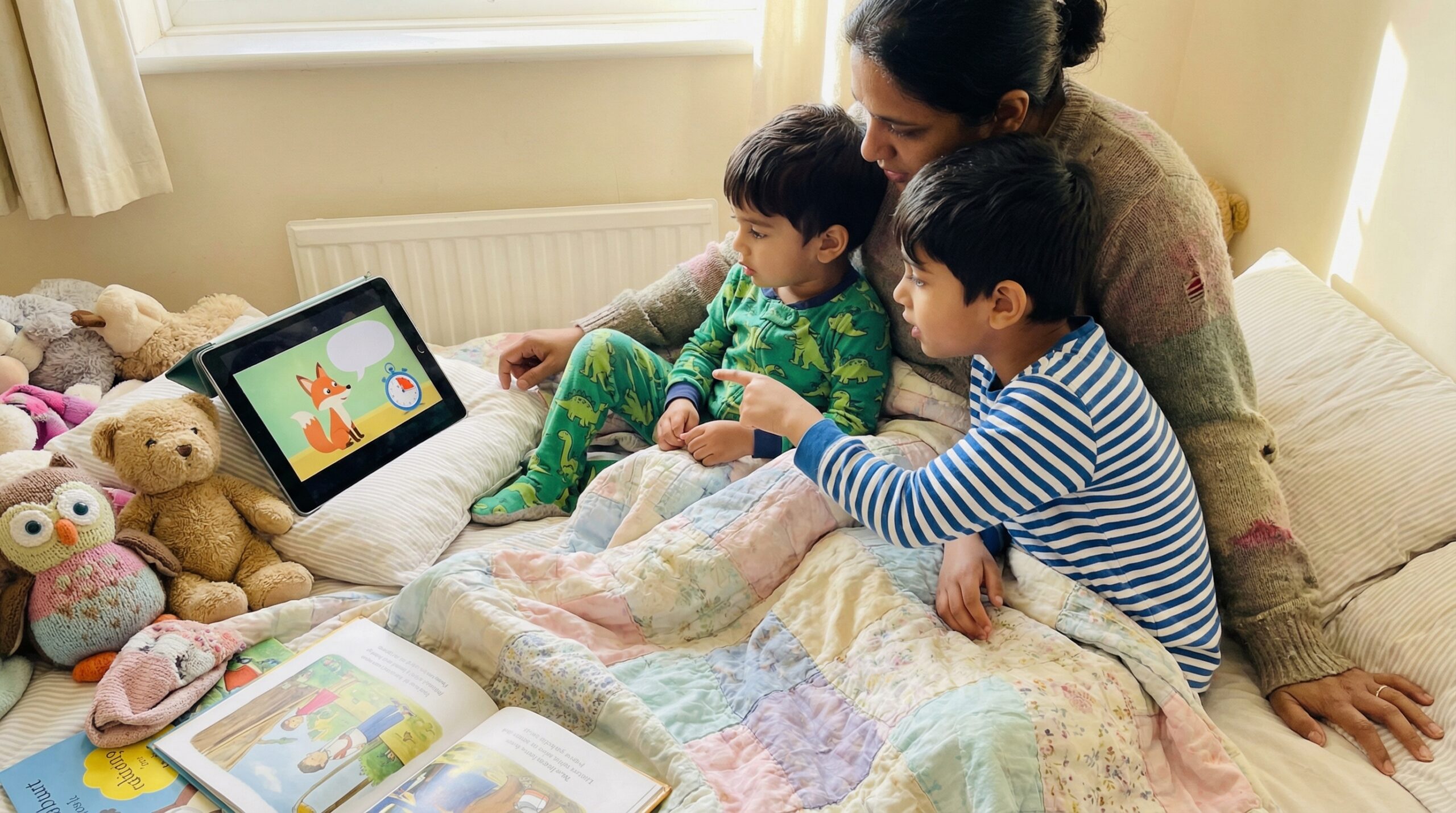
Audio and multimodal tales are perfect for pre-readers. Apps and short audio tales make repetition easy and portable. For example, play a ten-minute Storypie tale during morning snuggles. Then ask one prediction question.
Try tiny moments of magic. Use a commute story recap, a bedtime two-line retell, or a morning word-of-the-day. These routines create low-stress settings where attention and memory thrive.
Simple routines to try
- Morning snuggle script: Play a ten-minute tale, then ask one prediction question.
- One-line prompt: Ask “What if our cat could talk?” Let kids add a sentence.
- Word of the day: Pick one new word from the story and use it twice.
- Bedtime recap: Ask for a three-sentence ending: first, then, finally.
Inclusion and limits
Choose age-appropriate themes and diverse characters. Also, use accessible language. Balance digital listening with conversation. Stories are powerful but not magic. They work best with interaction and follow-up.
Final thought
Education through storytelling ages 3-12 is delightfully simple and deeply effective. Try short, character-led tales on the Storypie homepage. Also, get the app for more portable routines at Get the Storypie app. Small sparks can make big learning.