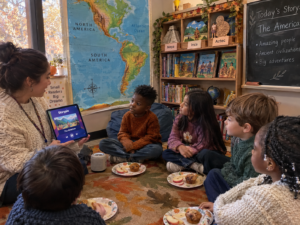
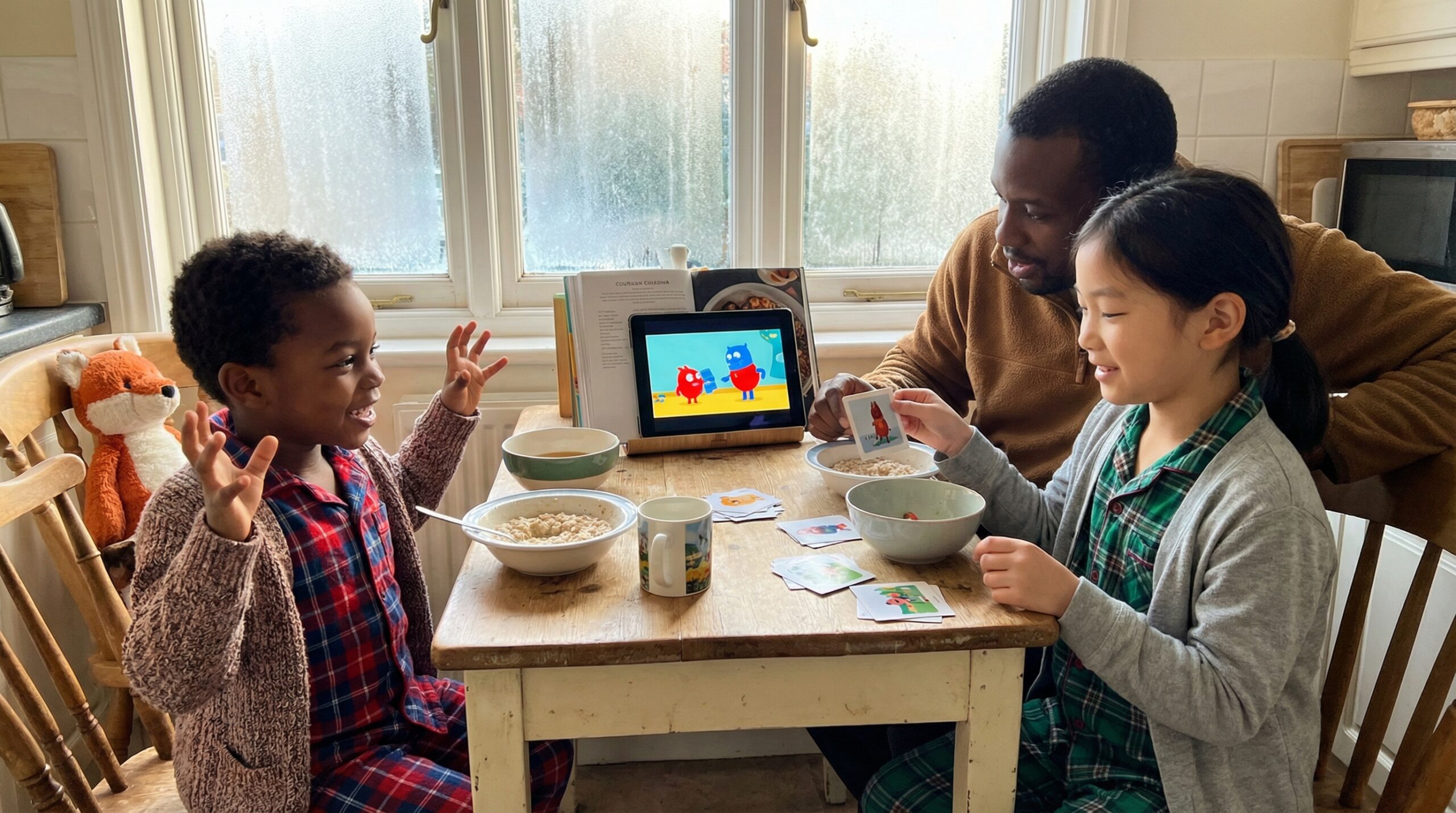
Education through storytelling ages 3-12 explains why short tales sink into growing minds. Stories match how children think. They bundle cause, feeling, and characters into memorable packages. A 2023 study found that children who learned through storytelling retained 70% of the information compared to just 10% when taught through traditional methods, highlighting the effectiveness of storytelling in enhancing information retention among children.
What storytelling is and why it matters
Storytelling is an ancient human practice. For millennia, communities used tales to pass on history, values, and practical knowledge. Over time, people refined simple patterns. Those patterns make stories easy to follow and hard to forget.
Also, storytelling brings structure. A beginning, middle, and end help children order events. In short, the format supports memory and meaning.
How the brain responds
Neuroscience finds clear results. Listening to stories activates language regions and memory centers. It also lights emotion networks in the brain. Therefore, children store story information more reliably than isolated facts.
Moreover, story listening can sync the listener and teller. That neural synchrony boosts attention and bonding. As a result, narrative becomes both social and cognitive fuel.
Core benefits of narrative for young learners
- Language and vocabulary growth. Stories expose children to varied words and sentence patterns.
- Memory and recall. Events tied to cause and feeling form clear sequences.
- Social and emotional learning. Characters let children practice empathy and perspective-taking. In fact, research shows that storytelling contributes 68.2% to the improvement of early childhood empathy skills, especially at the age of 5–6 years, reinforcing the importance of these narratives.
- Cognitive skills. Following plots exercises attention, working memory, and causal reasoning.
Age-related shifts: preschool to preteen
Children change quickly. From ages 3 to 5, kids respond best to repeating lines and vivid character actions. Stories at this stage build basic vocabulary and sequencing.
Next, ages 6 to 8 bring stronger inference and plot following. Children begin to explain motives and predict outcomes. This shift supports classroom comprehension and reasoning. A longitudinal study published in May 2024 found that storytelling connectedness in children ages 5–8 predicted phonological awareness and reading comprehension measured 3–4 months later, demonstrating the long-term benefits of storytelling on literacy skills.
Finally, ages 9 to 12 handle multiple viewpoints and subtler themes. Older children discuss choices and moral shades. Their storytelling interest often moves toward longer, layered tales.
A brief cultural and historical note
Oral storytelling appears across continents and eras. From folktales to fables, societies relied on narrative to teach. These traditions shaped narrative structures and motifs we still use today.
Consequently, education through storytelling ages 3-12 taps into a deep cultural practice. It aligns modern learning with time-tested human methods.
Where to explore more
Storytelling remains a lively, evolving field. For ready prompts, short audio tales, and kid-friendly content, visit Storypie for ideas and examples that spark curiosity. A 2024 quasi-experimental study of preschoolers found that children who experienced augmented-reality (AR) storybooks had higher story comprehension scores, illustrating how innovative storytelling methods can enhance comprehension skills in preschoolers.
Also, educators and parents can discover collections that pair age-appropriate narratives with clear learning goals. The National Literacy Trust’s 2023 Annual Literacy Survey reported that 1 in 2 (50.5%) children and young people said they enjoyed listening to stories, indicating its relevance in educational contexts. Story-based learning stays human, memorable, and joyful.