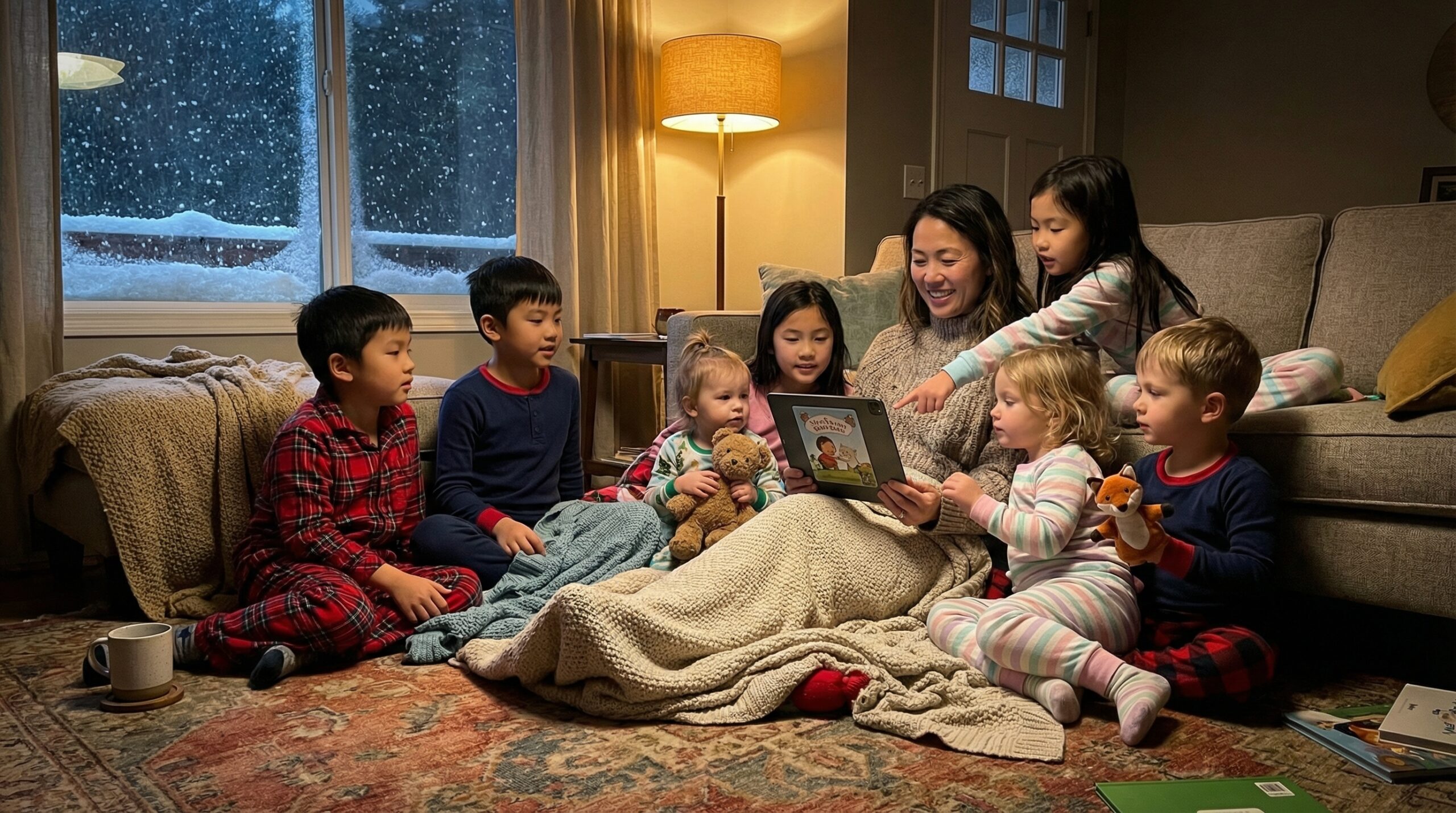
Education through storytelling ages 3 to 12 helps children hold facts, feelings, and sequences in one tidy package. In plain terms, narrative makes learning stick. I tell bedtime stories for a living, and I watch tiny tales do huge work.
Why education through storytelling ages 3 to 12 works
Stories give information shape. They place facts inside characters, goals, and causes. Children remember sequences and reasons better when they live inside a tale. A 2025 meta-analysis found that interactive/shared reading produced a moderate aggregate effect on young children’s narrative ability, particularly benefiting 4–5-year-olds.
How stories map to learning
Neuroimaging finds that listening to a coherent story activates language centers and the hippocampus. Also, social brain regions light up. In other words, stories tune the brain to remember and to take another person’s view. Research indicates that children who learned through storytelling retained 70% of the information, compared to just 10% when taught through traditional methods. This stark contrast highlights the effectiveness of storytelling as a teaching method.
Because narrative bundles events into cause and effect, it supports memory consolidation. Therefore children retrieve ideas more easily later. A longitudinal study published in May 2024 found that storytelling connectedness in children ages 5–8 predicted phonological awareness and reading comprehension measured 3–4 months later.
Age specific gains with education through storytelling ages 3 to 12
Different ages gain different skills from stories. Here are the common and measurable benefits by stage.
Preschool (ages 3 to 5)
Repeated, predictable tales boost vocabulary and retelling. Short, clear stories aid the language explosion. Parents and teachers notice faster word growth and more confident speech. Interactive storytelling not only enhances vocabulary but also strengthens narrative skills in young children.
Early primary (ages 6 to 8)
Stories support the shift from decoding words to true comprehension. Children build inference skills and improve narrative retell. These gains predict later reading success. A randomized study of augmented-reality storybooks published in October 2024 found that AR-enhanced storytelling significantly improved retelling and comprehension compared to traditional printed books, emphasizing the innovative use of technology in storytelling.
Older primary (ages 9 to 12)
More complex plots and shifting perspectives nurture critical reading and moral reasoning. Empathy grows as kids imagine choices and consequences across characters. Research shows that substituting regular language instruction with teacher read-aloud significantly improved children’s intelligence scores over a 4-month period, demonstrating the cognitive benefits of read-aloud sessions.
What research measures
Researchers link shared reading and oral storytelling to stronger receptive and expressive vocabulary. They also report better narrative retell and higher reading comprehension later.
Typical outcomes include vocabulary tests, standardized literacy scores, and social cognitive tasks like theory of mind. These are measurable gains you can watch grow over months.
Social and routine benefits
Shared stories build bonding and calm routines. They create tiny rituals that support secure attachment and sleep habits. In short, stories help families feel closer.
Also, inclusive and diverse tales support identity and cross cultural understanding. Repetition matters too. Children need repeated exposure to learn fully.
Notes of caution
Not all story exposure works the same. Interactive, responsive storytelling beats passive listening. Diverse content matters for identity and empathy.
Finally, expect repetition. Children often ask for the same story many times. That repetition is normal and powerful.
Stories in practice and a gentle next step
A small anecdote shows the point. I once told a four minute tale about a lost sock that became a treasure map. Within two nights my niece used that plot to explain why she tidied her room. That transfer moment shows applied learning at work.
If you want family-friendly story ideas, visit the Storypie homepage. For app-based family libraries, find the app at Storypie get app. These resources offer inclusive tales and a simple way to save family stories.
The evidence is clear. Education through storytelling ages 3 to 12 supports language, memory, empathy, and school readiness. Make tonight a simple story night and watch learning stick.