
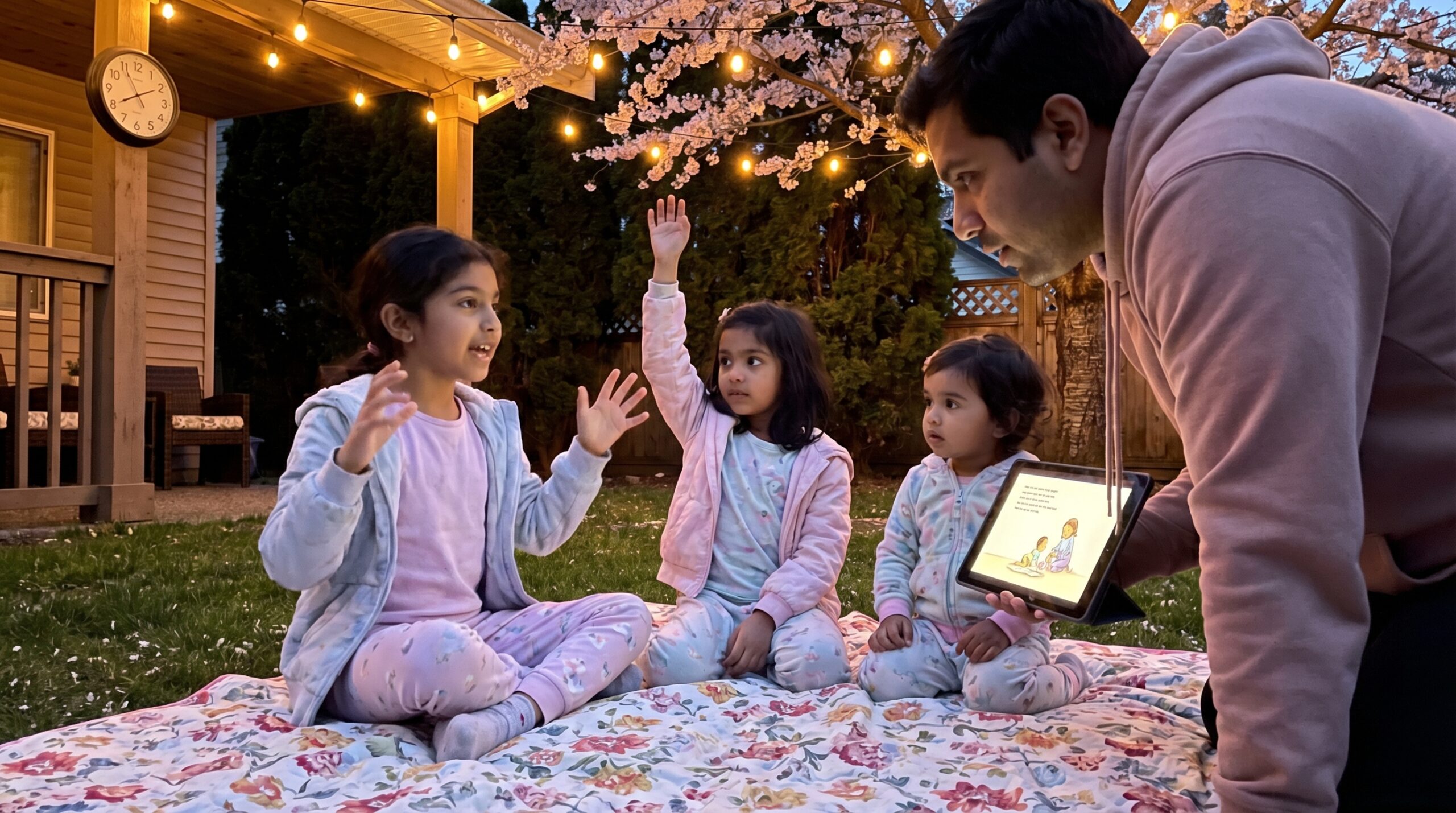
I build products and tell bedtime stories for a living. I see one clear pattern: education through storytelling for ages 3-12 helps kids learn faster.
Why education through storytelling works
First, stories lower cognitive load. A clear beginning, middle and end gives children a tidy sequence. Facts slot into that sequence and stay put. In fact, a 2025 study indicated that narrative structure significantly enhances memory accuracy, linking storytelling techniques to improved retention in children.
Second, emotion and characters make facts memorable. Feeling grabs attention and helps the brain encode new ideas. Also, familiar characters create hooks for later recall. Research shows that storytelling contributes 68.2% to the improvement of early childhood empathy skills, especially at the age of 5–6 years, making it a valuable practice for social development.
Third, stories build schemas. When new facts attach to a known frame, retrieval becomes easier. Finally, timing matters. A short story before sleep helps the hippocampus lock in learning. A longitudinal study published in May 2024 found that storytelling connectedness in children ages 5–8 predicted phonological awareness and reading comprehension measured 3–4 months later, demonstrating the long-term benefits of storytelling on literacy skills.
What research says in plain talk
Across cultures, oral stories passed skills and values from one generation to the next. Modern studies back this up. Storytelling improves vocabulary, comprehension and recall. A 2025 meta-analysis of 25 experimental/quasi-experimental studies found that interactive/shared reading produced a medium aggregate effect on young children’s narrative ability. Brief retrieval practice after a story boosts memory. In some studies, a short prompt before sleep doubled later recall. Regular read alouds link to larger vocabularies and better listening skills.
How it maps to ages 3 to 12
Education through storytelling for ages 3-12 adapts as children grow. Here is a simple map to the stages.
- Ages 3 to 5: Rapid word growth and early episodic memory. Short, vivid scenes help new words stick. Use repetition and pictures.
- Ages 6 to 8: Kids move from learning to read to reading to learn. Oral stories still build inferencing and deeper vocabulary. Ask who did what and why.
- Ages 9 to 12: Abstract thinking and perspective taking grow. Longer, layered stories help moral reasoning and integrate facts into broader models.
Practical, tonight-friendly steps
Keep routines short and tight. Ten focused minutes is magic. In the UK’s National Literacy Trust Annual Literacy Survey (2024), 42.3% of children and young people aged 8–18 said they enjoyed listening to audio (audiobooks/podcasts) in their free time in 2024 — higher than the 34.6% who said they enjoyed reading for pleasure in 2024, highlighting the growing trend of audio storytelling.
- Timebox it: 8 to 10 minutes only.
- One follow-up question: ask one question and listen. This step often doubles recall.
- Record or retell: kids remember more when they speak.
Try this tonight. Tell one short scene. Ask one question. Repeat tomorrow.
What to expect and how often
Short, frequent sessions beat marathon reads. Aim for nightly or most nights of the week.
Expect better vocabulary, stronger comprehension and more confident storytelling. Shared attention boosts outcomes, so pair audio stories with a quick chat when you can.
A few gentle caveats
Storytelling is not a single solution. It complements shared reading, conversation and formal lessons.
Quality matters. Coherent, meaningful stories beat trivia-packed monologues.
A quick invite
I love how narrative turns learning into play. If you want a simple place to try a tiny library of family stories, try Storypie. Start tonight. Tell one scene. Ask one question. The results are quietly delightful.