
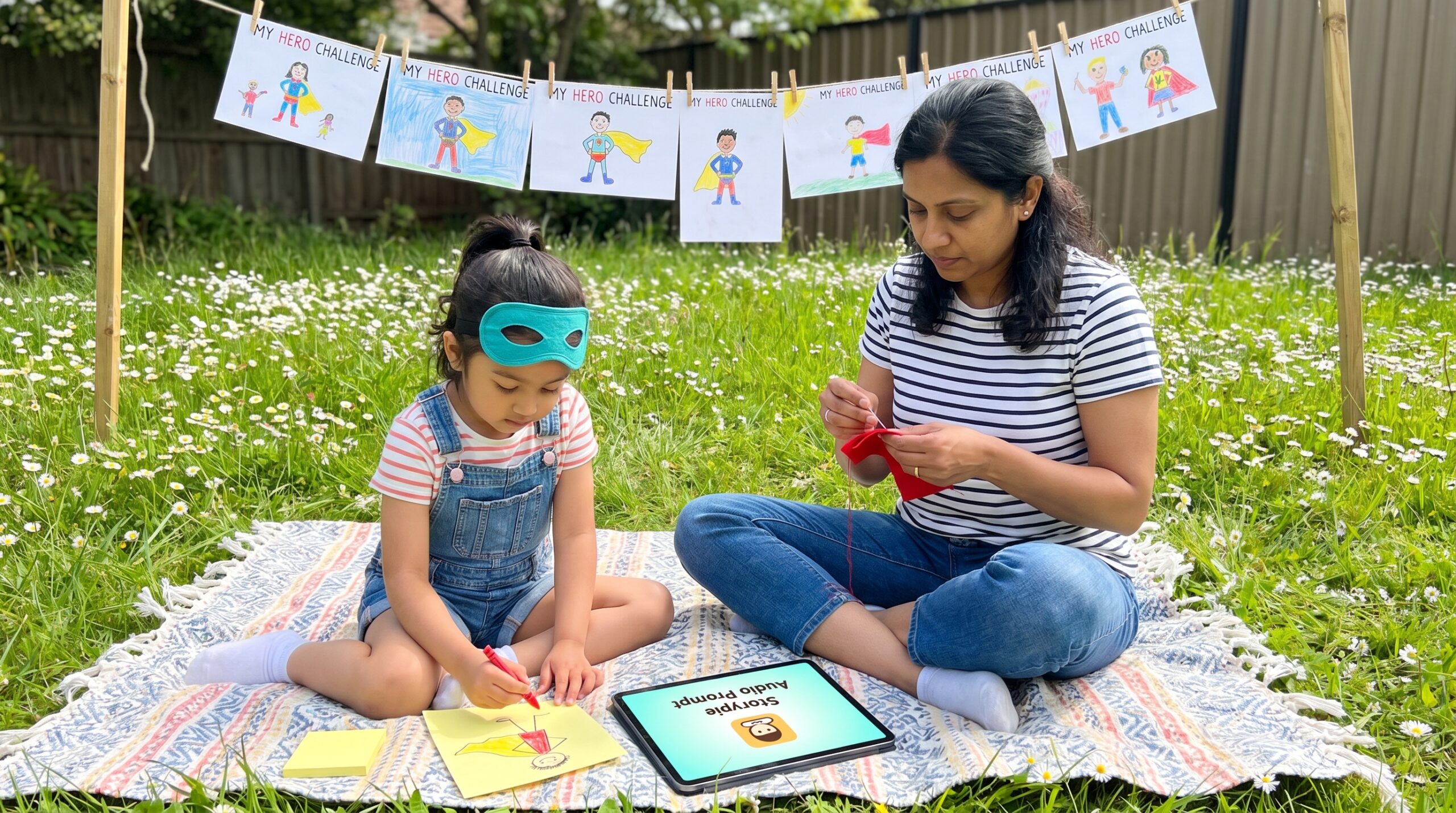
The create your own hero challenge makes a weekend afternoon into pure play and delight. It asks families to invent a hero, choose powers, and make a small craft. This simple activity sparks language, creativity, and cozy connection. In fact, a national survey conducted for LEGO Education found that 96% of teachers agreed that learning through play is more effective than traditional approaches, highlighting the educational benefits of imaginative activities like creating heroes.
Create your own hero challenge: Getting started
First, gather a few basic supplies. Paper, crayons, pencils, and safe scissors work well. Optional bits like stickers or fabric scraps add sparkle, but you do not need them.
How long to play
Set a clear time so kids know what to expect. Try 15 to 30 minutes for preschoolers. Plan 30 to 60 minutes for early primary kids. For older children or small groups, allow up to 90 minutes. Research published in 2023 indicates that children aged 5–6 who engage in collaborative play with siblings or peers show significantly higher imagination flexibility scores compared to those who play alone, making group activities like this especially beneficial.
Step-by-step: build your hero
Next, guide the process with warm questions and choices. Invite your child to name the hero and pick three powers. Then decide the hero’s appearance, tools, and one kind habit.
- Name the hero. Make it playful and memorable.
- Choose three powers. Mix helpful, funny, and practical ideas.
- Design the look. Draw or craft a costume and prop.
- Record the moment. Take a photo or save a short voice clip.
Prompts to kick off imagination
Use a few simple prompts to jumpstart ideas. For example, ask what three powers the hero has. Also ask who they help and why. Try a silly weakness or a cute habit. Sample names include Bright Beam, Captain Whisker, River Shield, and Grandma Zoom. For powers, combine one helpful, one funny, and one practical ability. Interestingly, a 2023 study found that children who strongly identified with superhero roles did not exhibit increased risk-taking behavior, suggesting that superhero play can be a safe and imaginative outlet for kids.
Age friendly adaptations
Adjust the challenge for each child. For preschoolers, offer two choices and keep drawing quick. For early primary kids, add a tiny craft prop and a one-sentence backstory. Older children can expand into a mini comic or short audio scene. A five-year longitudinal study on superhero engagement found that many children show continued interest and growth in their superhero play, indicating its lasting impact on their imaginative development.
Safety, inclusivity, and accessibility
Always choose non toxic supplies and supervise scissors or small parts. Provide sensory friendly options when needed. Encourage heroes of many genders, cultures, body types, and abilities. This builds empathy and reduces stereotypes.
Extensions and sharing
After you build a hero, try a short micro-episode. Act out a rescue or record a one-minute audio adventure together. Photograph the art and save it in a family album. Also, use Storypie prompts for audio ideas and easy recording. Visit our app for short, family-friendly prompts and tools to save your stories Storypie app. For more about Storypie, see the Storypie home.
Final thought
The create your own hero challenge is delightfully simple and deeply rewarding. With a little paper and a big splash of imagination, families can build stories they will treasure. Try the challenge again next weekend, or swap roles and let kids interview you as the hero. Engaging in creative activities not only activates brain areas associated with emotion and reward, as indicated by a 2025 study, but also strengthens the bonds of family through shared storytelling.