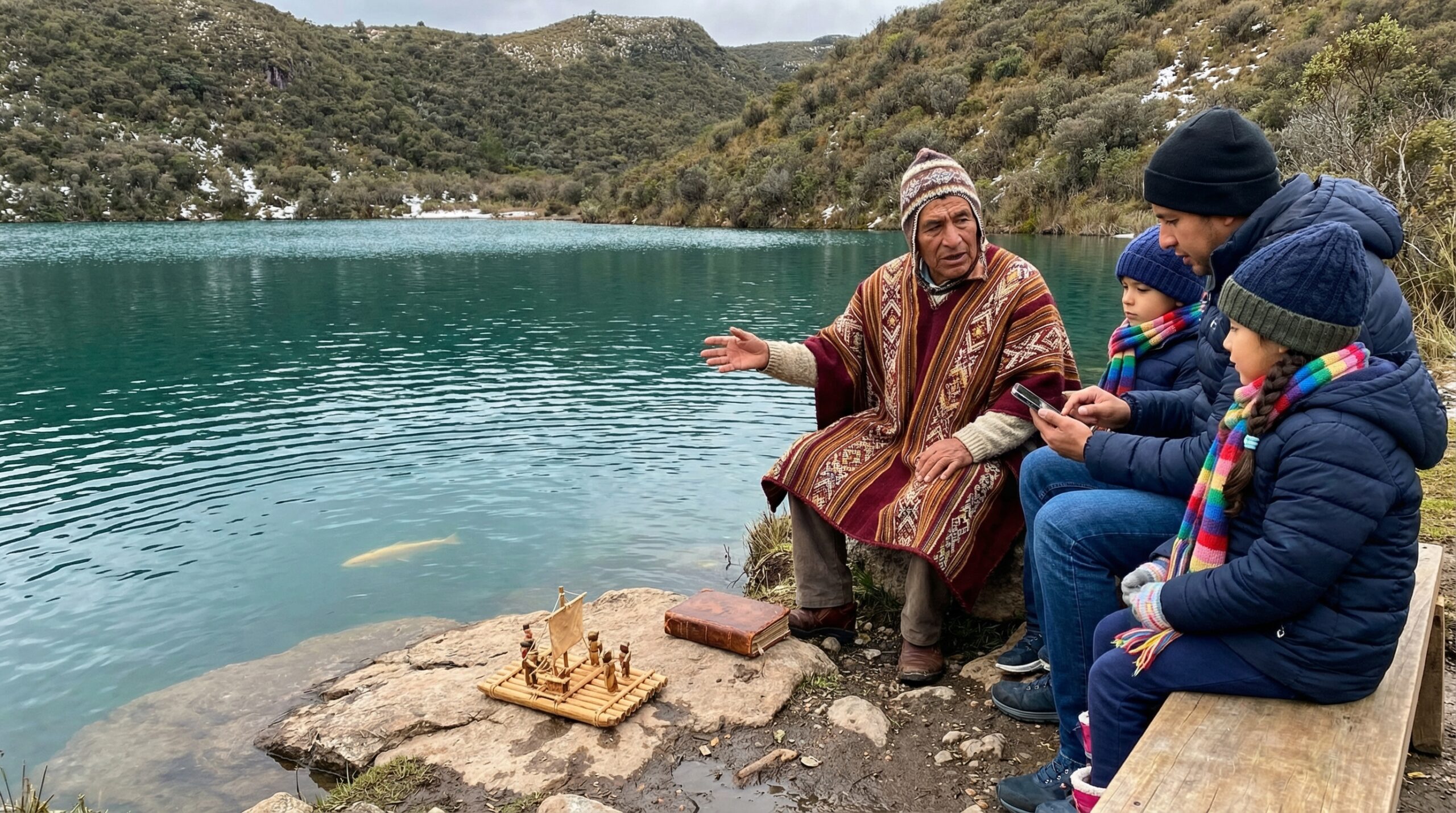
El Dorado Muisca ritual is what I first heard at the Museo del Oro in Bogotá.
El Dorado Muisca ritual: a small raft, a big story
I stood very close to the Muisca raft. The tiny figures gleamed. The raft told the story better than any map could.
First, a guide spoke softly. He said the central figure was a leader dusted with gold. He also said the ceremony was about giving, not hoarding. That line stuck with me. It feels short and true.
Read or listen to a story about El Dorado now: Read or listen to a story about El Dorado now: For 3-5 year olds, For 6-8 year olds, For 8-10 year olds, and For 10-12 year olds.
Quick facts the way I tell kids
- El Dorado started as a ritual title. It meant “the golden one.”
- The Muisca lived on the high plains of the Altiplano Cundiboyacense. Their centers included Bacatá and Hunza.
- At Lake Guatavita a new leader wore gold dust. He boarded a reed raft and threw offerings into the lake. The gifts were for the gods.
- The Muisca were brilliant goldsmiths. They used lost-wax casting and tumbaga alloys.
- They made small votive figures called tunjos. The Muisca raft in the Museo del Oro records the lake rite. It is a tiny masterpiece and an honest clue.
- Spanish storytellers misunderstood the ceremony. The golden man grew into a golden city. Europeans mounted costly quests, for example Sir Walter Raleigh. Those searches caused violence and harm.
- People tried for centuries to drain or loot Lake Guatavita. Finds were limited. Today the lake is protected.
Why the El Dorado Muisca ritual matters today
I tell families this plainly. Gold had spiritual value. It did not mean a bank account.
Today, scholars and Colombian communities stress that point. Archaeology, museums, and local protection help us remember. The ritual teaches respect. It teaches that stories and culture are true treasures.
A tiny family activity that actually works
Try this tonight. First, ask one question. “What is our family treasure?” Pause. Listen closely.
Next, make a tiny box. Add one small object. A leaf, a ticket, or a drawing will do. Keep the memories.
Then, tell a six-sentence story together. Pick an I voice. Say: “I went to the lake. I heard the water. I dropped my treasure. I learned to share. I smiled. I kept the story.”
Be playful. Celebrate attempts, not polish.
Storypie keeps many of these tales for families to explore together. Visit Storypie for more myths and activities. Tonight ask your child, “What is our family treasure?” and listen closely.