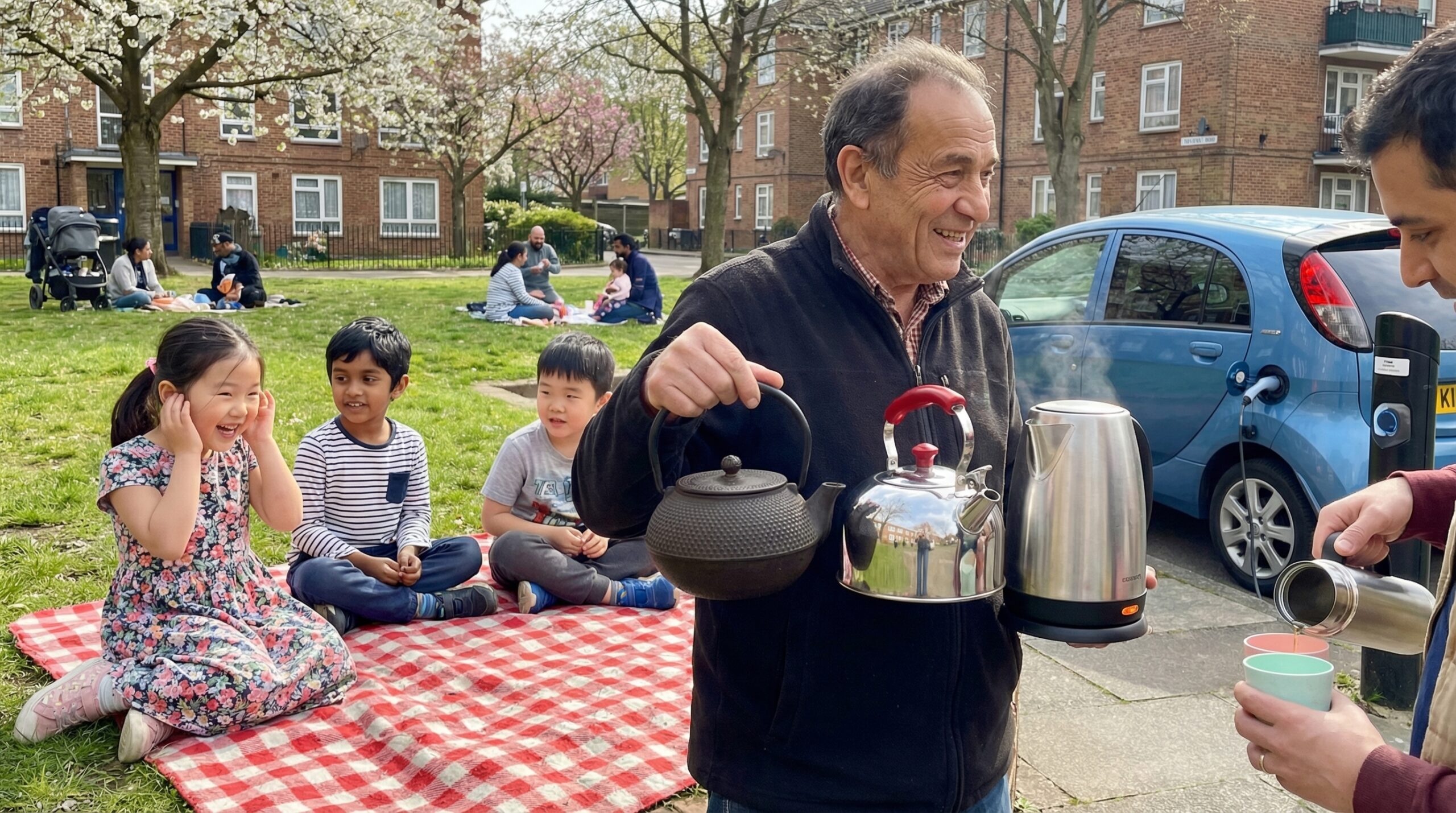
I love that an electric kettle for families can be a tiny teacher in the kitchen. It hums and then it clicks. Kids learn cause and effect in seconds. That short surprise beats a long lecture every time.
Electric kettle for families: a tiny teacher
When I tested kettles with my niece, she jumped at the click. She laughed and asked why. That instant lesson stuck. Meanwhile, the kettle did the heavy lifting with heat and safety.
A quick history
Electric kettles first appeared in the late 19th century. At first they were slow and basic. However, the big change came around 1955. Then manufacturers added an automatic click-off. That click made kitchens safer and more predictable.
How an electric kettle works
Electricity powers a hidden or exposed heating element. The element warms the water quickly. Steam reaches a thermostat or a steam sensor. The sensor trips a cut-out and the kettle clicks off. Many kettles also include boil-dry protection. In short, element, sensor, and safety cut-out form the kettle’s brain and brawn.
Common parts and materials
Most kettles have a base, a lid, a spout with a filter, and an insulated handle. Cordless models often sit on a 360-degree base. You will find stainless steel, borosilicate glass, and food-grade plastics. Stainless and glass avoid plastic contact with hot water. Also check for BPA-free plastics when shopping. In fact, stainless steel electric kettles accounted for 45.7% of the market revenue share in 2023, making them the most preferred material due to their durability and resistance to rust and corrosion.
Types and choices
There are many kettle styles to suit family life. Choose by use, not by fuss.
- Basic rapid-boil kettles for daily tea and cocoa.
- Temperature-control kettles with settings from 70 to 100 C for delicate teas.
- Gooseneck kettles for pour-over coffee lovers.
- Travel kettles with lower power, and insulated kettles for hot drinks on the go.
Capacities range from 0.5 to 1.7 litres. Power ratings commonly sit between 1,500 and 3,000 W. So a litre can boil in about 1 to 4 minutes depending on wattage.
Energy, cost and efficiency
Heating 1 litre from 20 C to 100 C needs about 0.1 kWh. At typical tariffs that is only a few pence. Electric kettles are often 80 to 90 percent efficient. Thus they usually waste less energy than a gas hob. For best results, boil only the water you need. In fact, a study by the UK’s Department for Energy Security & Net Zero found that 65% of respondents reported that they at least occasionally ‘boil the kettle with more water than you are going to use’, which reflects common usage habits that can lead to energy waste.
Safety and child guidance
Kettles include automatic shut-off, boil-dry protection, locking lids, and cool-touch handles on some models. Yet hot water moves fast and can hurt. Keep kettles and cords away from edges. Teach children to listen for the click, but never let them operate a kettle unsupervised. A supervised listening activity is a lovely, safe spring lesson in cause and effect.
Care, buying tips and disposal
Descale regularly where water is hard. Vinegar or citric acid works well. Rinse spout filters and wipe the exterior gently. Never immerse electrical bases in water. For families, cordless models with 360-degree bases and stainless or glass bodies are usually the most practical. Finally, check warranties and safety marks before you buy.
When it is time to replace a kettle, do not bin it. Recycle under WEEE rules at household recycling centres or use retailer take-back schemes.
Read or listen to a story about Electric Kettle now: For 3-5 year olds, For 3-5 year olds, For 6-8 year olds, For 8-10 year olds, and For 10-12 year olds.
At Storypie, we loved retelling an electric kettle’s life. From 1890s slow-boilers to the 1955 click, the kettle has charm and usefulness. The global electric kettle market was valued at approximately USD 1.77 billion in 2023 and is projected to reach USD 2.58 billion by 2030, growing at a compound annual growth rate (CAGR) of 5.6% from 2024 to 2030. Try the listening game tonight and see what pops up in conversation. It’s fun and surprisingly delightful.