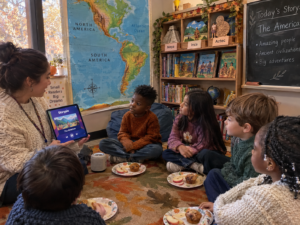
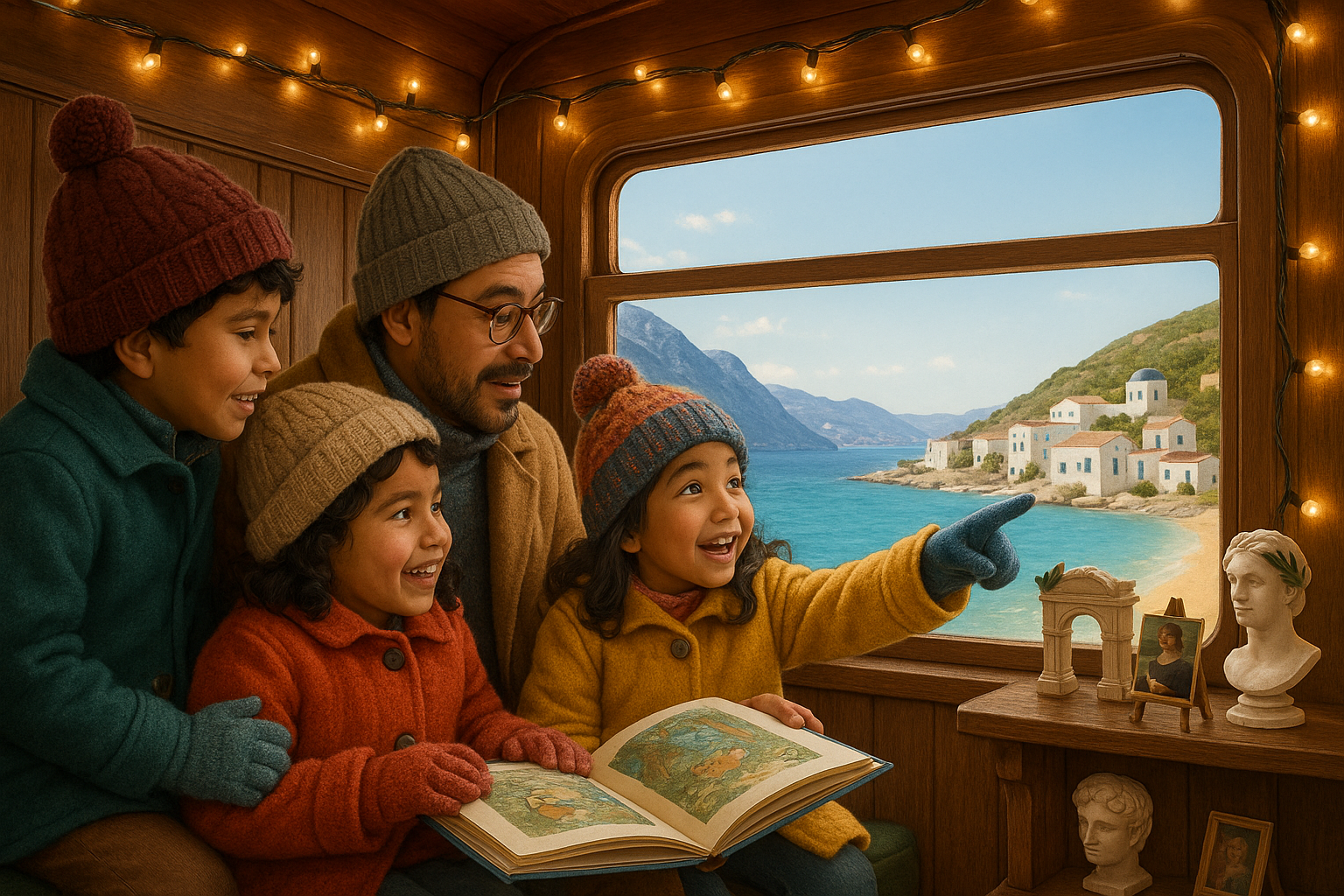
Europe for kids feels like a bright storybook land. Right away, the continent invites curiosity and play.
Europe for Kids: A Small, Splendid Continent
Europe sits west of Asia and rests between great seas. To the north lies the Arctic Ocean, to the west the Atlantic, and to the south the Mediterranean. Many maps mark Europe’s eastern edge along the Ural Mountains and nearby rivers. This line helps explain why Europe feels both compact and wonderfully varied. In fact, Europe is home to about 731.7 million people across 52 countries, which gives a child-friendly sense of how many different places and people fit into this relatively small continent, according to WorldData’s Europe statistics.
Regions and Landmarks
Northern Europe shows long coasts and deep fjords. Southern Europe brings warm seas, olive trees, and sunny islands. Western Europe mixes lively cities with rolling countryside. Eastern Europe offers wide plains and the mighty Volga river. Important peninsulas include the Iberian, Italian, and Balkan peninsulas. Islands like Great Britain, Ireland, Sicily, and Crete add delightful variety. Mountain ranges such as the Alps and the Pyrenees shape snowy winters and green summer hikes. Major rivers like the Danube, Rhine, and Thames shaped towns and trade for centuries.
People, Languages, and Culture
People and languages make Europe sing. Families speak tongues from Romance, Germanic, and Slavic language families. Also, Finno Ugric languages like Finnish and Hungarian add unique sounds. Basque sits happily as a language isolate in the west. Many Europeans speak two or more languages, which makes travel feel like a friendly puzzle. To help explain how political groups fit into the picture, note that the European Union — which is a group of many (but not all) European countries — had a population of about 493 million on 1 January 2006, according to the European Union statistics – Wikipedia. When the United Kingdom left the EU in 2020, the bloc’s population fell by over 10%, a clear and simple example of how borders and memberships can change population counts and recent history in ways kids can relate to.
Art, Food, and Family-Friendly Moments in Europe
History and art shimmer across the continent. Ancient Greece gave early ideas about stories and democracy. Rome left roads, aqueducts, and engineering marvels. The Middle Ages gave castles and cathedrals. The Renaissance brought brilliant paintings and new inventions. Later centuries added explorers, factories, and trains that reshaped daily life. Above all, art and music often feel close and lovely, even for children.
Food and festivals are irresistible hooks for family learning. Try pizza in Italy, paella in Spain, or flaky pastries in France. Seasonal festivals range from sparkling Christmas markets to joyful carnivals. Museums often welcome families with hands-on exhibits and child-friendly trails.
Gentle Travel Tips for Parents
When planning trips, choose a gentle pace with downtime. Also, check seasons because Alpine winters can be snowy and Mediterranean summers get busy. Look for family rooms, child discounts, and stroller-friendly routes. Simple activities bring places to life. For example, match postcard pictures to countries, cook a simple crepe, or listen to a short classical tune together.
Read or listen to a story about Europe now: Read or listen to a story about Europe now: For 3-5 year olds, For 6-8 year olds, For 8-10 year olds, and For 10-12 year olds.
Finally, invite children to imagine a castle, a seaside village, or a snowy slope. Then follow that spark with a map, a snack, and a short Storypie tale. Little questions and shared moments make learning joyous and memorably marvelous.