First Thanksgiving 1621 felt like a small, lived moment in a hard year. I tell it at bedtime because kids lean in when a moment feels lived. So I open with a tiny hook and a steady feeling of togetherness.
Read or listen to a story about First Thanksgiving (1621) now: For 3-5 year olds, For 3-5 year olds, For 6-8 year olds, For 8-10 year olds, and For 10-12 year olds.
Why First Thanksgiving 1621 feels small and real
In autumn 1621 the Pilgrims at Plymouth held a modest harvest celebration. The English colonists lived in a place called Patuxet. They had survived a brutal winter that killed many; of the Mayflower’s 102 passengers, about half were alive at the 1621 harvest celebration, with Plimoth Patuxet listing 53 survivors (24 adult men, 5 adult women, and 24 children/teenagers). Therefore they were fewer than they started with. The Wampanoag Confederacy joined them, and their leader Massasoit came with some 90 men, as noted in Edward Winslow’s eyewitness account. Contemporary letters like Winslow’s in Mourt’s Relation describe a shared feast and hunting that lasted for three days.
Squanto and the practical gifts
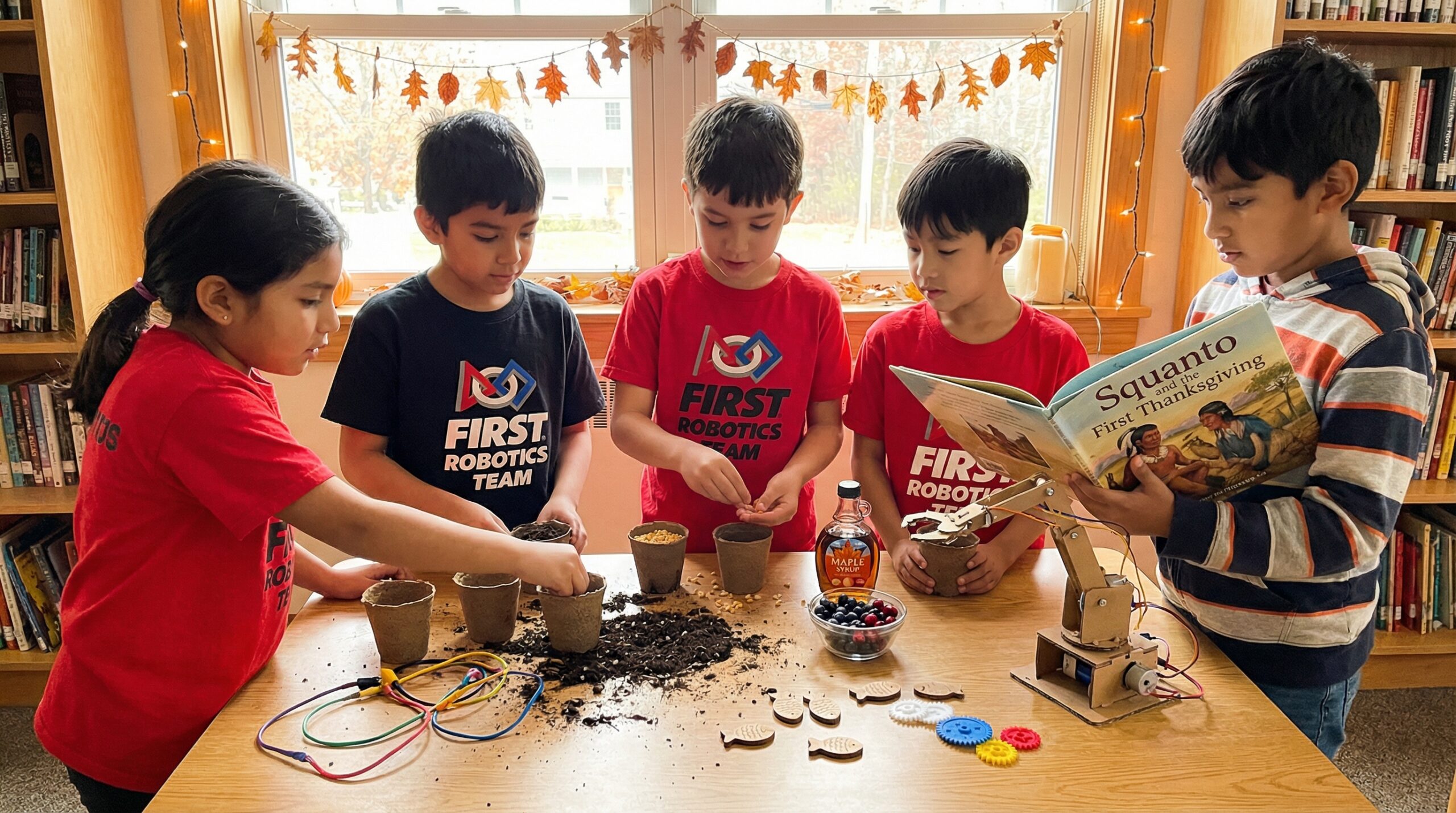
I always put Squanto front and center when I tell this. His real name was Tisquantum. He spoke English and had returned from Europe. He taught the Pilgrims to plant corn with fish as fertilizer. He also showed how beans and squash could grow with corn. That practical help mattered more than ceremony, because it helped people survive.
Food, smell, and scale of the feast
The food was local and earthy. There was venison from Wampanoag hunters, who, according to Winslow’s account, killed five deer and brought them to the plantation as part of the feast. There was wildfowl, shellfish, corn, beans, and squash. Interestingly, the menu of the First Thanksgiving did not include cranberry sauce, potatoes, or pies, as these items were not available to the colonists at the time, according to The Christian Science Monitor. There may have been turkey. The feast likely smelled of smoke, salt, and roasting fowl. It probably lasted days with hunting and sharing. It was not the giant theatrical Thanksgiving we picture today. Many later stories added costumes and symbols. Historians note that details remain debated and often simplified.
Context and respect
Importantly, the Pilgrims settled on a site that had been a Patuxet village. Epidemics had emptied that place before 1620. Therefore context matters. Always include Native perspectives. Also read accounts that center Wampanoag voices and museum materials.
A small bedtime activity to connect
Try a quick parent child activity tonight. First, read a short account of Squanto and the harvest. Then ask: How can you help someone today? Let the child choose one small action. Draw it or act it out. Record a sentence of your child saying what they will do. Save that recording or drawing in a family folder. Small acts stick and build confidence.
This story is a small, surprising moment. It often sparks big smiles. So try asking one short question and turn history into a kind plan. For more stories and listening options, visit Storypie.