Quick intro
Fourth of July Independence Day for kids remembers a big decision in 1776. On July 4 leaders in the American colonies adopted the Declaration of Independence. This short moment changed history, and children can enjoy its simple power.
What happened in 1776
On July 2, 1776 the Continental Congress voted for independence. Then on July 4 they adopted the written Declaration of Independence.
Thomas Jefferson led the writing as the principal author. John Adams and Benjamin Franklin served on a five-person committee. The document listed complaints about King George III. These included taxation without representation, limits on trade, quartering of troops, and denial of fair trials. Fifty-six men later signed the parchment copy, with most signatures dated August 2, 1776.
However, independence did not fix every injustice. Many people stayed without full rights after 1776. Enslaved people, Indigenous nations, and women faced ongoing unfair treatment. That complexity matters and can be shared in an age-appropriate way.
How families celebrate
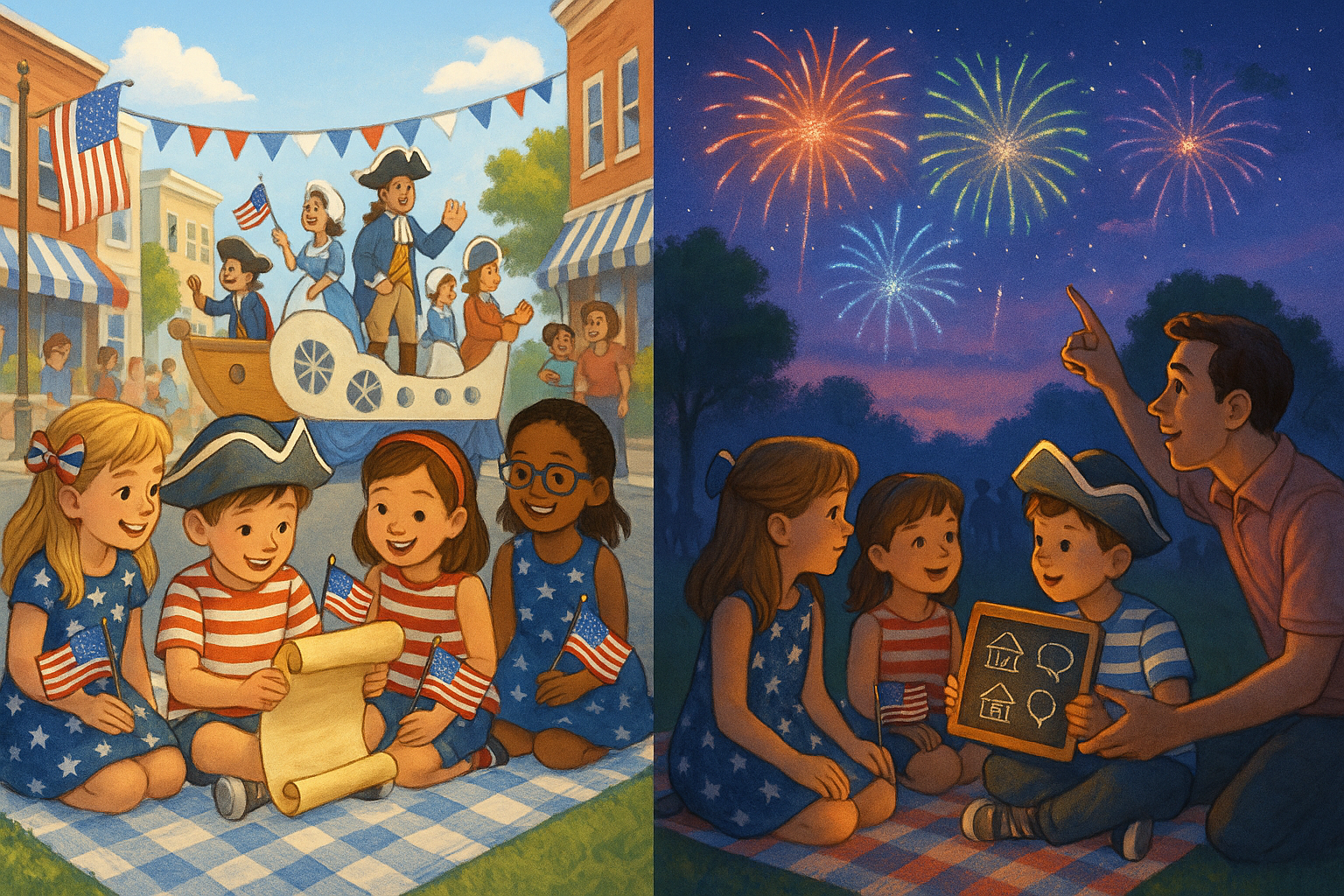
Families celebrate the Fourth of July with fireworks, parades, concerts, and backyard barbecues. Many towns still read the Declaration or hold flag ceremonies.
The first public celebrations took place on July 4, 1777. People rang bells, lit bonfires, and set off fireworks to mark the new nation.
July 4 later became a federal holiday. In 1870 it applied to some federal employees. By 1938 it became a paid federal holiday for all federal workers.
Simple activities and conversation starters
- Read a short adapted account about Jefferson and the Declaration.
- Make paper flags and stage a tiny living-room parade.
- Create a short timeline: July 2 vote, July 4 adoption, August 2 signatures.
- Ask a prompt: What freedoms would you include in your list?
Safety, visits, and quick plans
Fireworks look joyful but they carry real risk. When possible, choose professional displays. Keep sparklers away from very young children because they can burn extremely hot. Also watch for heat and sun safety on warm summer days. Finally make a quiet room for pets who may feel frightened.
Visit Independence Hall, the Liberty Bell, or a local historical society for family programs. Museums and parades often offer kid-friendly activities and guided talks. These visits turn ideas into real experiences children can remember.
Read or listen on Storypie
Read or listen to a story about Fourth of July (Independence Day) now: For 3-5 year olds, For 6-8 year olds, For 8-10 year olds, and For 10-12 year olds.
Also explore Storypie for more child-friendly episodes and playful prompts. Try a short family episode tonight and ask: What freedoms would you include in your list?
Final thought
Celebrate with joy and curiosity. Share a short story, ask questions, and remind children that history can be bright and complicated. Enjoy the moment and make a little family memory.