
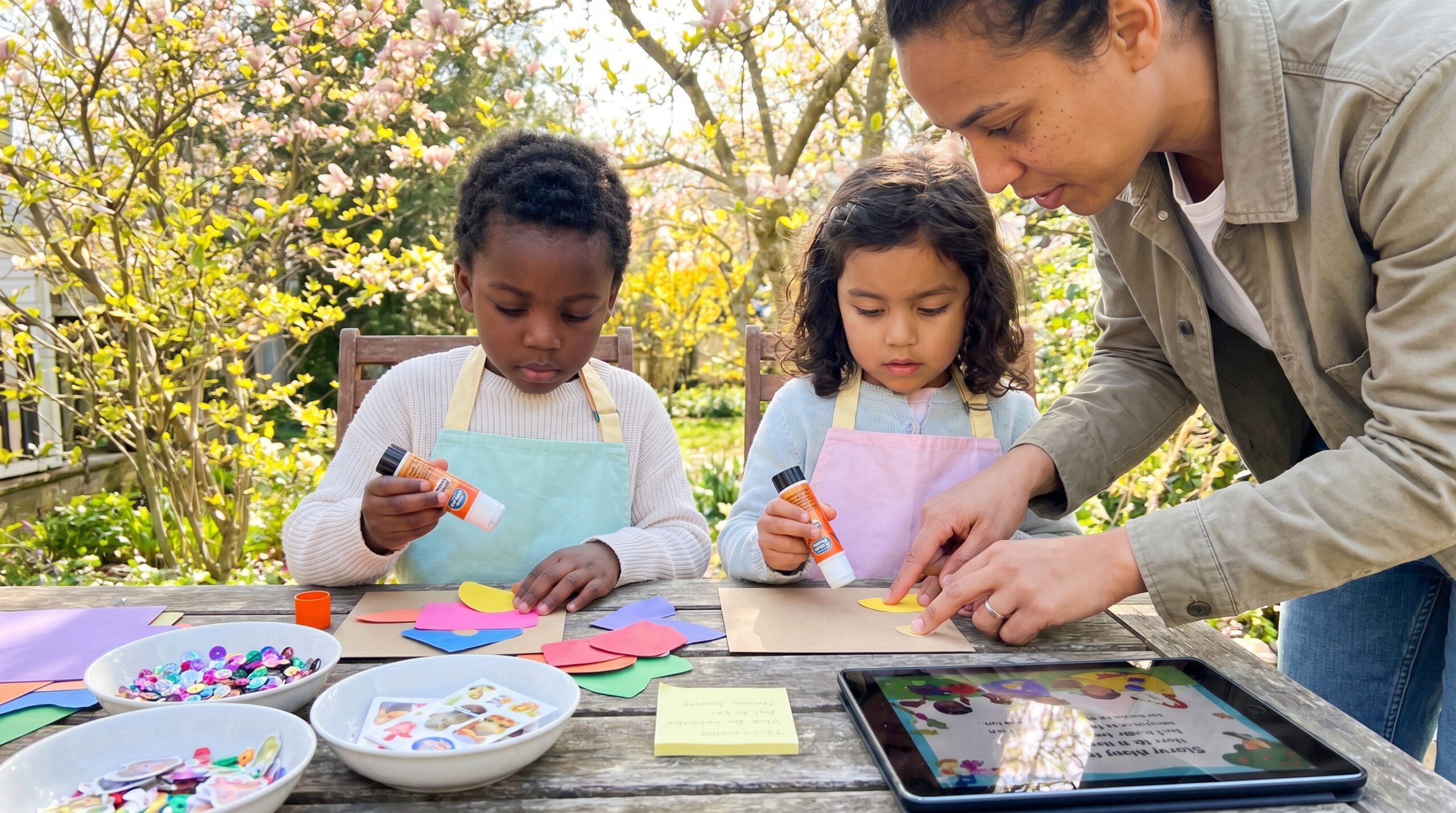
A glue stick for kids helps make craft time tidy and calm. It invites independent play and quiet focus. Moreover, it feels nice in small hands and stays delightfully low-mess. In fact, the global glue stick market was valued at approximately $500 million in 2023 and is projected to reach $800 million by 2030, highlighting its significance in children’s crafting.
What is a glue stick for kids?
A glue stick is a solid, twist-up adhesive in a plastic tube. You rub the exposed solid onto paper or card. The twist base and cap work like a lipstick or chapstick. Often the glue goes on purple. Then it dries clear so children can see where they have glued.
How glue sticks work
Most glue sticks use a water-based polymer such as polyvinyl acetate. They include waxes or stearates to hold the solid form. Also they contain mild plasticizers and preservatives. When you rub the stick onto paper, a thin film transfers. Then the water evaporates and the bond sets. The result is a light but useful paper-to-paper hold.
Short history
In 1969 Dr. Wolfgang Dierichs adapted a lipstick idea into the first glue stick. That invention made crafts cleaner and easier. Today glue sticks still matter for calm, simple activities.
Good uses and limits
Glue sticks shine where neatness matters. For example, they work well for school projects and scrapbooking. In fact, the school application segment accounted for 50% of the glue stick market in 2023, underscoring their importance in educational settings. Also photo-safe formulas exist for mounting pictures.
- Perfect: paper to paper, collages, simple repairs
- Try acid-free sticks for archival work
- Not ideal: wood, heavy materials, many plastics, or porous surfaces
- Most are not fully waterproof
Safety and practical tips
Choose non-toxic, washable sticks labeled for children. Also check safety standards like ASTM or EN71 when relevant. In the U.S., art materials, including glue sticks, must undergo a toxicological review and be labeled as conforming to ASTM D-4236 under the Labeling of Hazardous Art Materials Act (LHAMA). Caps can be a choking risk for infants. So keep caps out of reach and supervise toddlers.
- Glue on skin washes off with soap and water
- For hair or dried residue, a little vegetable oil can help
- For fabric, scrape excess and launder promptly
Choices, greener options, and sizes
Look for refillable tubes to cut plastic waste. Also choose washable or purple-application sticks for easier use. Larger sticks fit small hands well and reduce frustration. As the global glue stick market is projected to reach USD 2.35 billion by 2034, the demand for user-friendly and eco-conscious options will likely continue to grow.
Quick application tips that build skills
Apply a thin, even layer. Press glued pieces together for a few seconds. Use short strokes for small shapes. To support fine motor play, give pre-cut shapes and a glue stick. Then let the child twist the base and steady the press. These small motions strengthen hand skills over time.
Read or listen to a story about Glue Stick now: Read or listen to a story about Glue Stick now: For 3-5 year olds, For 6-8 year olds, For 8-10 year olds, and For 10-12 year olds.
Finally, try a calm craft break this spring. For more stories and quiet activities, visit Storypie or get the Storypie app.