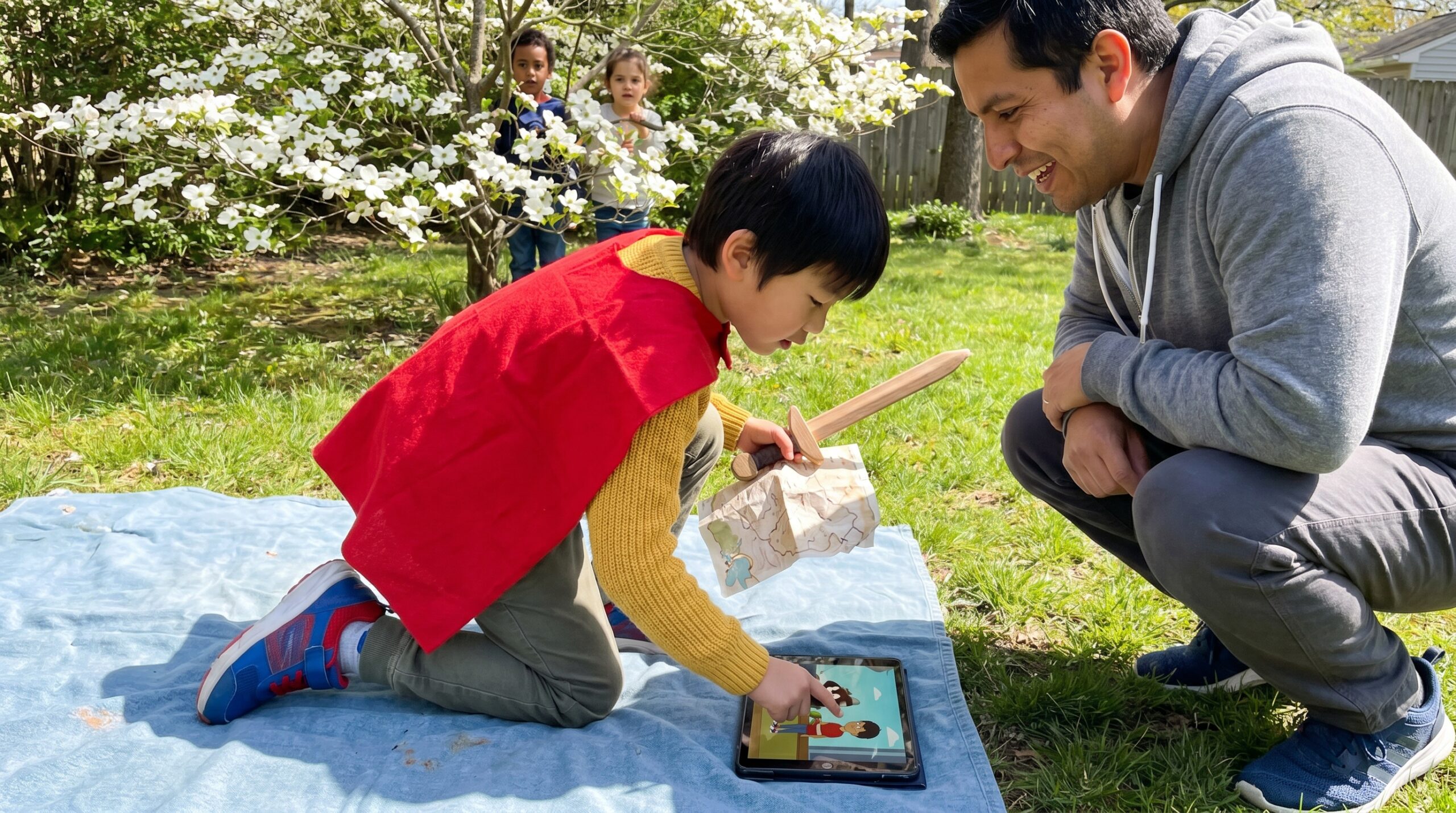
How kids become the hero in their own adventure is a simple idea with big effects. In these stories, the child stands at the center. They act, decide, and see the world through their eyes. Parents and teachers notice new confidence and fresh language after a single episode. A study published in November 2025 found that overall leisure enjoyment was positively associated with life satisfaction among elementary school-age children, with emotional self-efficacy partially mediating this relationship. This shows how crucial a child’s self-efficacy is to their happiness and sense of adventure.
What child-as-hero stories are: how kids become the hero in their own adventure
Child-as-hero stories put a young person at the story’s core. The child drives action and solves problems. Often the tale keeps a hopeful tone. Sometimes it stays small and cozy. Other times it becomes grand and magical. Early childhood education plays a vital role in empowering children to take initiative, as evidenced by the fact that in the 2023–2024 program year, Head Start programs served 805,919 children aged birth to 5 in the United States, providing them with comprehensive education and support.
Roots and history
Folktales and fairy tales seeded this pattern centuries ago. For example, Tom Thumb and Hansel and Gretel show tiny heroes outwitting big dangers. Later, 19th and 20th century works widened the model. Think Tom Sawyer, Peter Pan, Matilda, and Harry Potter. These stories made child protagonists familiar examples of curiosity and courage.
Where the pattern appears
You find child-as-hero ideas across many formats. Picture books and chapter books often lead the list. Theatre and radio carry the theme too. Film and television expand its scope. Also, short-episode story apps now offer quick, child-focused tales. For instance, Storypie features compact episodes that foreground young protagonists. These formats match modern attention spans and repeated listening.
Age patterns and identification
Pretend play begins in toddlerhood and blooms in the preschool years. Typically this peak falls between ages three and six. School-age children continue heroic play with richer plots. Meanwhile older children shift toward peer-based identification and moral complexity. Therefore different ages relate to the child-as-hero idea in different ways.
Benefits and limits
There are clear benefits when kids become the hero in their own adventure. Role-play and child-centered narratives support language growth and planning. They also help with perspective-taking and self-control. In fact, among children aged 3–5 years, 37% played outdoors for ≤1 hour on weekdays, emphasizing the importance of outdoor play in fostering independence and adventure. Research shows that outdoor play, which is crucial for their development as heroes in their own stories, can significantly enhance their confidence and problem-solving skills, as highlighted in an analysis published in June 2024 by the Centers for Disease Control and Prevention.
At the same time, limits exist. Unrealistic or adult themes can confuse or scare. Also, risky actions portrayed without context may lead to unsafe imitation. In 2023, almost 1.8 million children in the United States received preventive services due to abuse or maltreatment, illustrating the importance of support systems in helping children overcome challenges and become resilient heroes in their own narratives.
Practical balance
Adults often guide selection and framing. That balance helps preserve the positive effects. Still, the power of the child-as-hero model comes mainly from safe rehearsal, not from real risk.
Cultural variety
Not every culture tells solitary hero tales. Some traditions prefer communal problem-solving or elder-guided stories. Hero types also vary. You meet clever tricksters, brave rescuers, and curious investigators. Diverse examples expand a child’s view of what bravery can look like.
Quick takeaways
- Definition: a child directs the story and action.
- History: roots in folktales, growth in modern children’s classics.
- Formats: books, stage, screen, and short-episode apps such as Storypie.
- Impact: supports language, planning, empathy, and confidence.
- Limits: keep themes age-appropriate and culturally diverse.
In short, positioning a child as the hero creates a small laboratory for judgment and feeling. When kids become the hero in their own adventure, they rehearse choices and grow emotional vocabulary. Above all, the story becomes a mirror of possibility.