
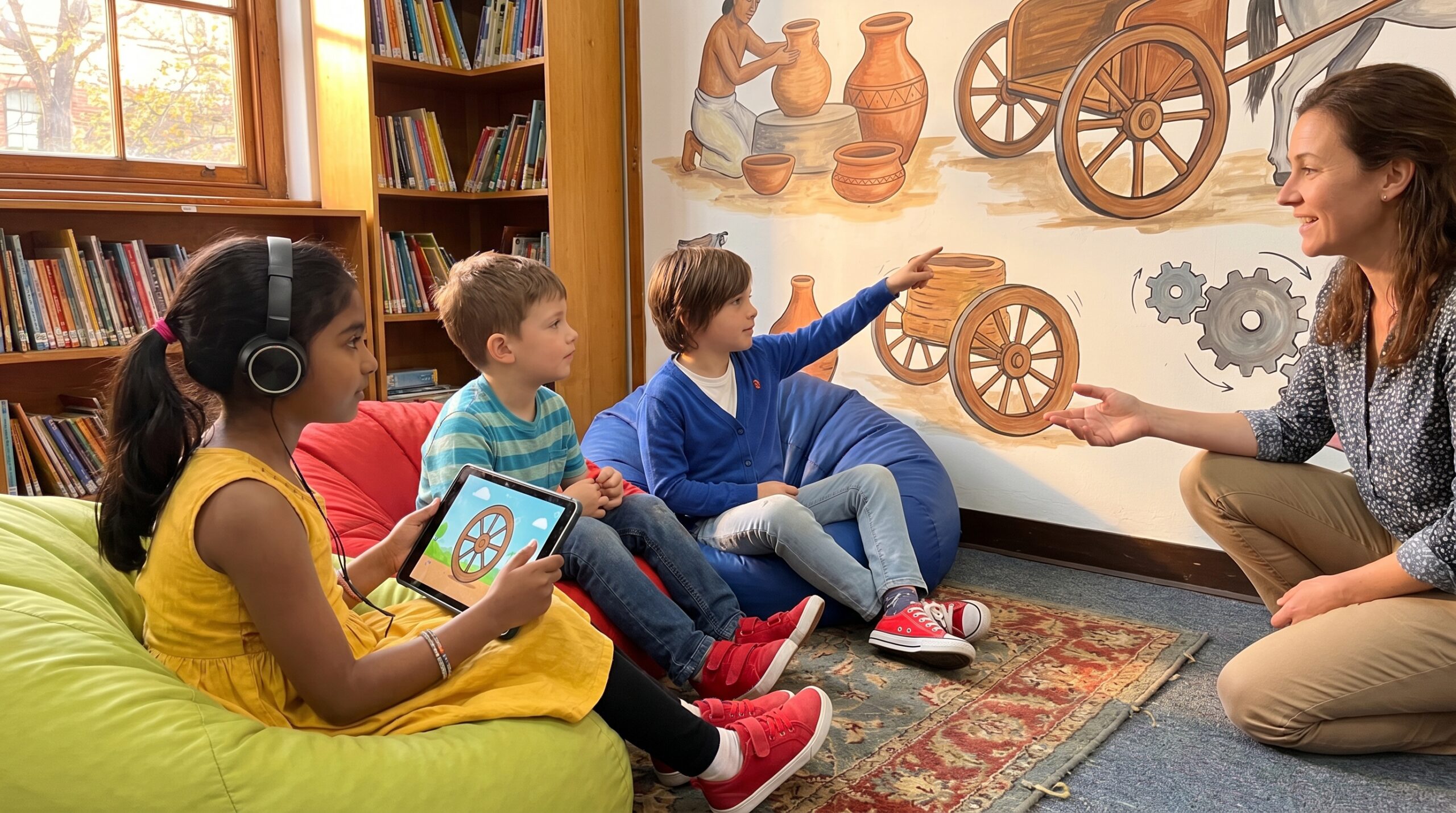
Quick wonder: what is the wheel invention?
I point to a toy car and watch the question arrive: how does that round bit make everything move easier? The wheel invention sparks that question first. It is a tiny bright idea with huge results. For parents and teachers this idea helps children feel history in a hand they can touch. In fact, in 2023, the global wheel market was valued at $60.2 billion and is projected to grow at a compound annual growth rate (CAGR) of 4.3% from 2024 to 2032, highlighting its ongoing relevance and growth potential.
The earliest uses and surprises
People first used rotary motion long before carts rolled. For example, the potter’s wheel appeared in ancient Mesopotamia around 3500 BCE. People spun clay to shape bowls and pots. Soon after, people added axles and wooden wheels to carts. Archaeologists found a wooden wheel in the Ljubljana Marshes dated about 3300 to 3000 BCE. However, scholars still debate exact dates and routes of spread. That mystery delights curious kids.
How a wheel works: plain and simple
At its core a wheel is a wheel and axle. It is one of six classic simple machines. It reduces friction so a small push moves a heavy load. Try a tiny demo at home. For instance roll a filled cup, then lift it. Rolling makes the work feel smaller.
Types of wheels and how they changed travel
Wheels come in many forms. There are potter’s wheels, solid disk wheels, and later the spoked wheel. Spokes made wheels lighter and faster, which mattered for Bronze Age chariots. People later added metal rims and stronger axles. Also waterwheels and toothed wheels turned labor into steady power. Gears are just toothed wheels talking to each other. They powered clever devices such as the Antikythera mechanism and later clocks. In 2023, the global production of automotive wheels reached approximately 1.2 billion units, with China producing 65% of this volume, emphasizing the scale of wheel production globally.
Big effects from a small idea
The effects of the wheel invention were gigantic. Wheels let people carry heavier loads and travel farther. That changed trade, farming, cities, and warfare. It encouraged specialization. Craftspeople could sell goods farther away. Armies used faster chariots. Mills ground grain with water power. Yet wheels did not spread everywhere for hauling. For example in the Americas before 1500 CE, wheels appear in small toys but not in transport. That shows technology meets environment and need, not only bright ideas. In 2023, the United States wheel and rim manufacturing industry generated $12.4 billion in revenue, highlighting its importance in the economy.
Everyday descendants and a tiny experiment
Everyday descendants of the wheel invention surround us. Bikes, cars, gears in toys, rolling suitcases, and mills copy the same basic trick. I once made a cardboard wheel and axle with a child. We compared a solid disk to a spoked toy wheel. Then we watched which rolled faster. Tiny experiments stick like glue.
Read or listen to a story about The Wheel now: For 3-5 year olds, For 6-8 year olds, For 8-10 year olds, and For 10-12 year olds.
Tip: try a quick cardboard wheel tonight. Race a solid disk and a spoked toy. Ask, “How does making a wheel lighter help a vehicle go faster?” Celebrate attempts and tiny discoveries. Small hands, huge ideas.
Get the Storypie app if you want stories on the go. Also explore more inventions and kid-friendly reads on Storypie.