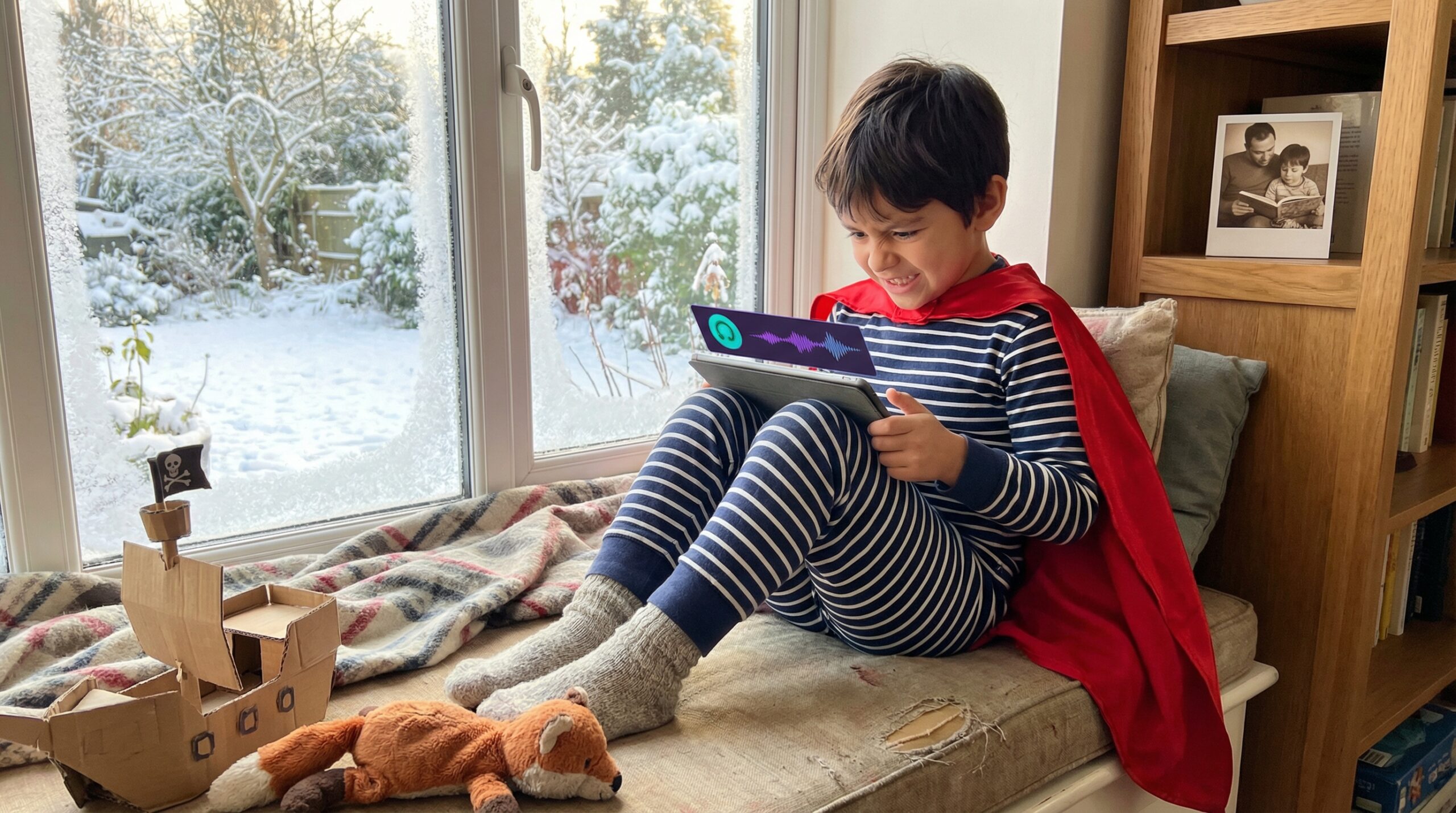
When kids become the hero in their own adventure, I watch something small and delightful happen. For example, my niece rescued a lost kitten in a bedtime tale. The next day she tried the new swing at the park.
What it means to be the hero
Being the hero means the child is the main character who makes choices and faces challenges. They grow through the tale and feel those wins at home. Psychologists call this vicarious mastery. In short, the child rehearses courage and decision making in a safe space. This concept is vital, as research shows that children who engage in such activities develop a greater sense of self-efficacy, which is crucial for their personal growth and confidence.
Why the hero role matters
First, agency builds confidence. I have seen autonomy turn a quiet child into a small risk taker in healthy ways. Also, stories that show setbacks followed by recovery strengthen resilience. Children rehearse how to cope before life asks them to. Notably, according to Generation Unlimited, in 2023, 64 million young people were reached across 50 countries, with approximately 2 million achieving transformative outcomes through empowerment programs that help children take initiative and become heroes in their own lives.
Second, language and social growth follow naturally. Listening to child-led adventures grows vocabulary and narrative understanding. Moreover, such tales improve perspective taking and emotional insight. Access to quality education is crucial for children to develop these skills, as highlighted by World Bank investments, which led to the enrollment of 31 million children in quality preschool education between 2014 and 2024.
Evidence and characteristics
Cultural classics from Alice to Matilda show this pattern across time. Therefore, the hero pattern appears in many traditions and modern tales. For parents and teachers, that repetition points to a core benefit: kids learn by identifying with a protagonist. Furthermore, programs like Head Start have served nearly 800,000 children aged birth to 5 in 2023, emphasizing the importance of early educational interventions in fostering children’s growth and self-efficacy.
How kids become the hero at each age
Preschool (ages 2 to 5) shows play and simple cause and effect. Toddlers use pretend play to try on hero roles and to learn impulse control. Keep moments short and sensory because little attention spans need that.
Early school age (6 to 9) enjoys moral choices and small dilemmas. Children at this stage follow more complex plots. They like to pick what the hero does next, and they notice consequences. A 2023 study found that 58% of children perceived a high level of school self-efficacy, highlighting how they view themselves as heroes in their own stories.
Preteen (10 to 12) stories include identity themes and nuanced growth. Preteens want deeper character details and real consequences. They use stories to sort out who they are.
What these hero moments look like
In practice, the hero role often shows up as quick, first-person moments at home. They feel like tiny personal victories. Parents then notice more confidence and curiosity in daily life.
These moments are not lectures. Instead, they act like small, repeatable wins. Over time, those wins pile up into real change. Research from Educational Psychology Review indicates that engaging children in active learning can enhance their motivation and sense of agency, which are crucial for becoming heroes in their adventures.
Technology and choice
Apps that combine audio and gentle choices can make a story feel owned. In particular, Storypie supports audio playback and choice-driven experiences. For busy families, audio tales fit into routines like bedtime or car rides.
Finally, when a child decides an ending, they rehearse decision making. That rehearsal matters for confidence and for real-life choices later.
Closing thoughts
I love recording little first-person moments. They become family treasures and tiny engines of change. Try a short, child-led audio tale tonight and watch a small hero appear.
Learn more about audio options and Storypie stories on the Storypie app.