
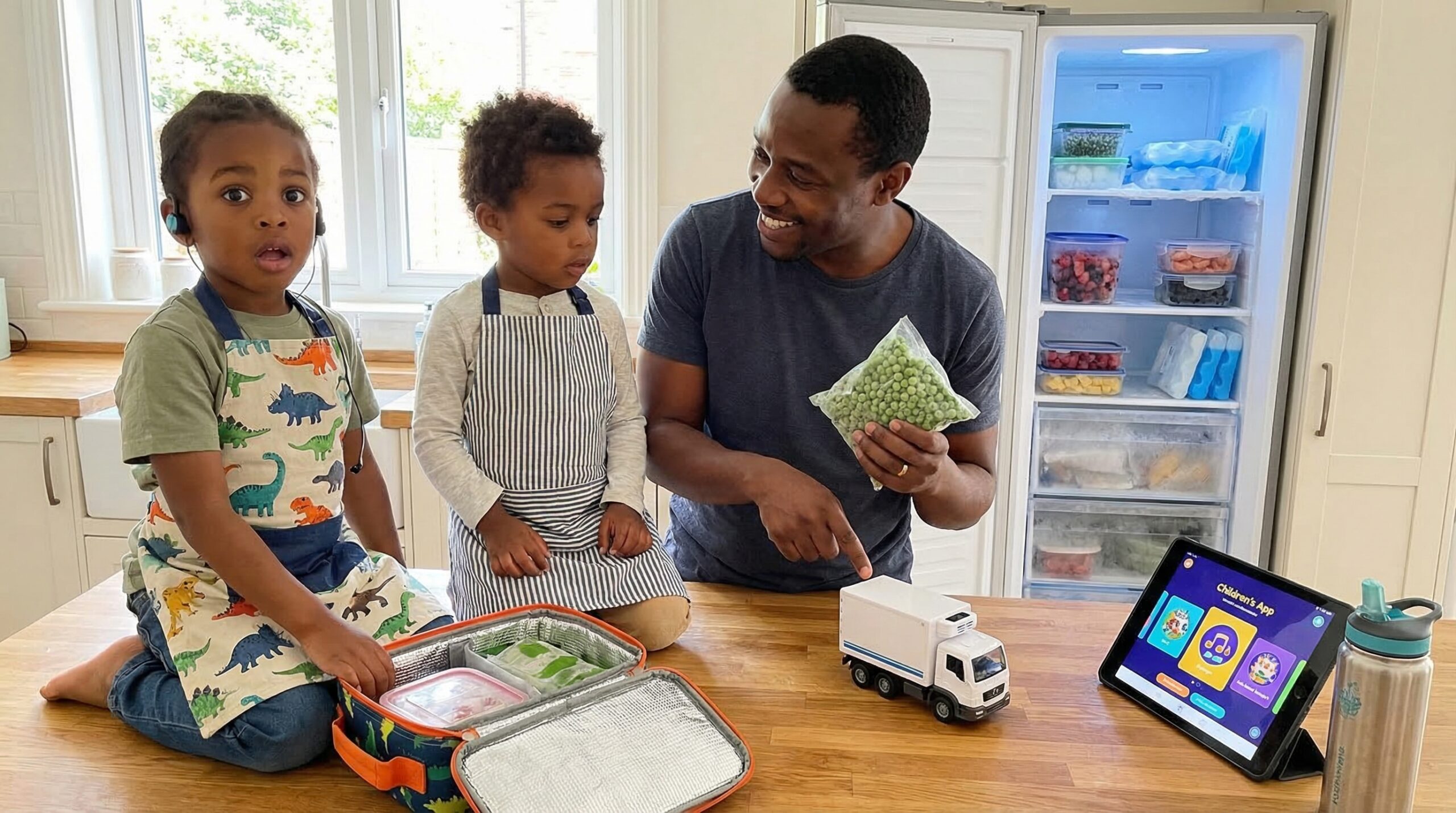
The kitchen freezer keeps food cold so families waste less and eat fresher. For parents and teachers, the kitchen freezer is a tiny home science hero.
What a kitchen freezer does
A freezer holds food at or below freezing. Most households aim for minus 18 C or 0 F for safe long-term storage. In fact, the U.S. Department of Agriculture recommends keeping freezers at 0 °F (−18 °C) or below for long‑term storage. Because cold slows chemical change and microbial growth, food lasts much longer.
Types of freezers
Families choose a freezer based on space, habits, and budget. Common types include:
- Chest freezers: horizontal and roomy. They keep cold well and cost less to run. An ENERGY STAR certified chest freezer uses about 215 kWh of electricity annually, costing approximately $30 per year to operate.
- Upright freezers: have shelves for easy organization and quick access. However, an upright freezer uses about 395 kWh annually, costing about $60 per year.
- Refrigerator-freezer combos: offer both fridge and freezer in one appliance for small kitchens.
- Portable packs and gel packs: small, handy options for lunches and picnics.
How kitchen freezers work
Most home freezers use a vapor-compression cycle. First, a compressor pumps refrigerant. Next, the condenser releases heat. Then the refrigerant expands and cools. Finally, evaporator coils absorb heat from inside the compartment. The design is simple and effective.
Why flash-freezing mattered
Flash-freezing changed how fresh food travels. Inventors like Clarence Birdseye froze foods quickly. As a result, tiny ice crystals formed. Those crystals protect texture and flavor better than slow freezing. Later, refrigerated trucks carried that freshness far and wide.
Food safety and limits
Freezing slows bacterial growth but does not reliably kill all microbes. Additionally, toxins that already exist may remain. Therefore keep your freezer at minus 18 C or colder. Label and date packages. Follow storage times for meats, breads, and leftovers. According to the FSIS freezer storage chart, uncooked steaks/chops and roasts can be stored for 4 to 12 months, uncooked ground meat for 3 to 4 months, and uncooked whole poultry for up to 12 months.
Practical family tips
- Portion food before freezing to thaw only what you need.
- Blanch vegetables briefly, then plunge them into ice water to keep color and nutrients.
- Prevent freezer burn with airtight packaging or vacuum sealing.
- Try a quick home flash-freeze trick: spread berries on a tray, freeze until firm, then bag for single-serve snacks.
- Thaw safely in the refrigerator, in cold running water, or in the microwave and cook immediately.
Energy, maintenance and safety
Keep the door closed as much as possible and avoid overpacking. Clean coils and check door seals regularly. Defrost manual models when recommended. Recycle old units through certified services so refrigerants are recovered. As of 2024, approximately 41 million standalone freezers are in use in the United States, with over 17 million being more than 10 years old, costing consumers $1.3 billion annually in energy bills. Never let children play inside a freezer. Also avoid freezing sealed glass bottles.
Quick facts
- Target temperature: −18 C or 0 F.
- What freezing does: slows microbes and chemical change.
- What it does not do: reliably kill all microbes.
- Top hacks: label and date, portion food, and flash-freeze small items.
Read or listen to a story about Freezer now: For 3-5 year olds, For 6-8 year olds, For 8-10 year olds, and For 10-12 year olds.
Try one small freezer hack this week. For example, label and date chopped fruit or pack a frozen water bottle in a lunch. Then share your tiny science win and a smile with your child. For more friendly stories and activities, visit Storypie.