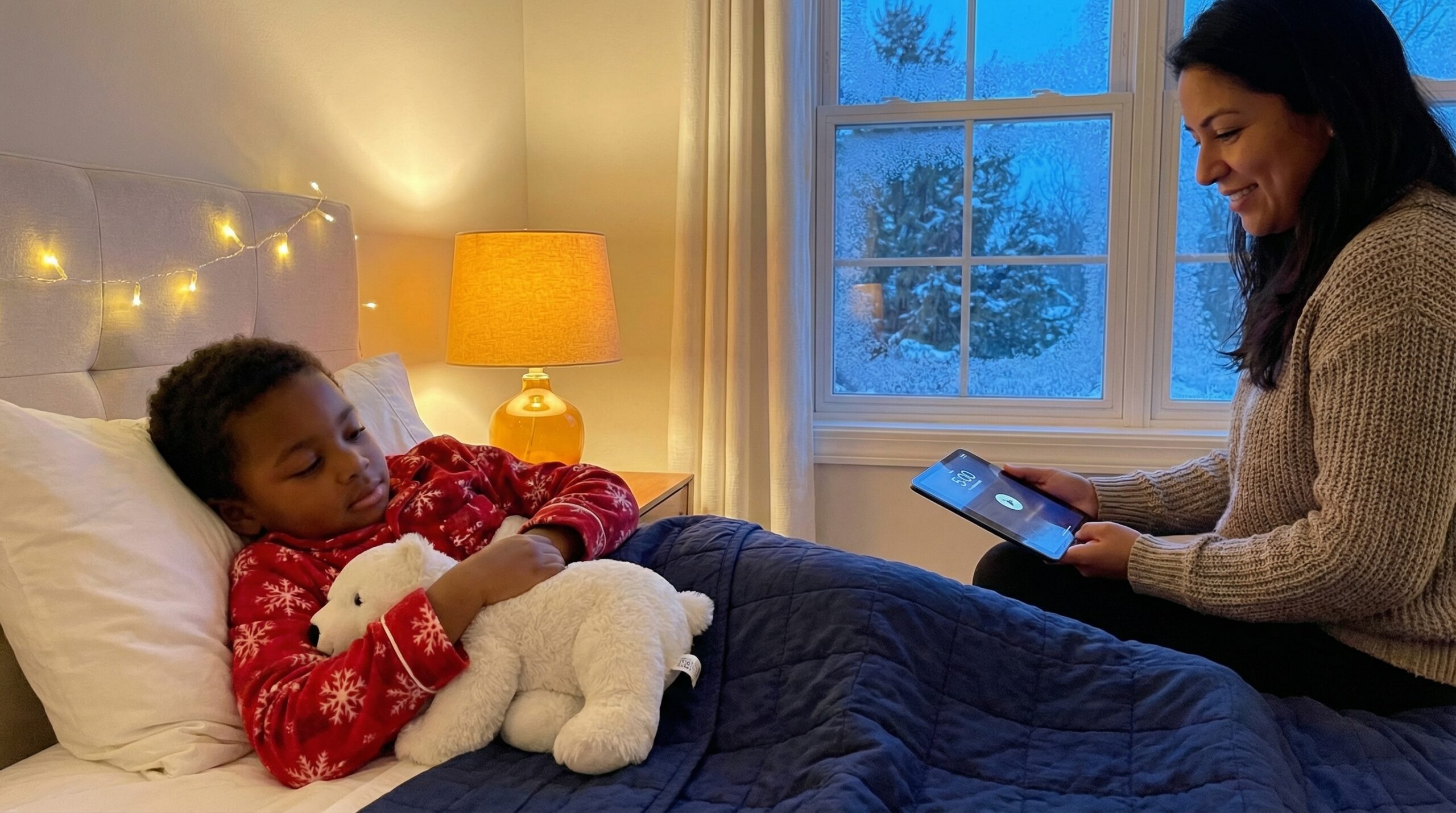
I build products and tell bedtime stories for a living. I call this the mini story ritual, a bedtime wind-down that helps kids switch from busy to calm. According to a 2025 survey, 71% of parents agreed that storytelling helps their children wind down at bedtime, with 49% naming it their preferred method.
What is a mini story ritual
The mini story ritual is a short, repeatable storytelling moment. It runs as a cozy cue before sleep. Families have used bedtime stories for comfort for generations, and this ritual is their modern cousin. A nationally representative C.S. Mott Children’s Hospital poll found that 90% of parents of 1–6-year-olds reported having a bedtime routine for their child, and 67% reported that the routine includes reading bedtime stories.
Length, format, and setting
Mini stories usually run three to eight minutes. They are often audio-first, and they work well with soft lights and cuddles. Consistency matters. Repeating a style or timing creates a predictable sleep cue. The NHS child-sleep guidance advises that a predictable bedtime routine is important and that the bedtime routine ‘should last no longer than 45 minutes’ to help children wind down.
Who benefits from a mini story ritual
These rituals help infants, toddlers, and preschoolers roughly zero to five years. They also suit older children who want a short, calming close to the day. Age-appropriate language and familiar themes make the ritual feel safe and soothing. A 2025 study reported that consistent bedtime routines, including storytelling started as early as 3 months, were associated with fewer night-time awakenings, reduced sleep problems, and longer sleep durations by age 3.
Why parents and caregivers love them
Mini story rituals reduce bedtime friction. Short sessions fit busy evenings and stay doable nightly. Pediatric sleep research supports steady routines for easier sleep onset and better long-term sleep patterns. Also, consistent tales become a tiny bedtime magic cue. Research shows that about 35.0% of U.S. children aged 4 months to 14 years had insufficient sleep according to the CDC, emphasizing the need for effective bedtime routines like storytelling.
Safety and accessibility
Keep volume low and use parental controls on apps. Look for labeled content and multiple language options for multilingual families. Also, choose sensory-considerate tracks for neurodivergent children. These steps make the ritual inclusive and safe.
Three quick reasons the mini story ritual works
- Predictability: A repeated opening line or style reduces anxiety.
- Emotional anchor: Calm voice and small, solvable scenarios help children mirror that calm.
- Low friction: A five minute slot stacks into nightly wins and stays realistic for busy families.
A simple structure to recognize
The mini story ritual often follows a gentle pattern: a familiar spark, a short audio moment, and a closing cue that signals sleep. Over time, the same rhythm becomes a subtle, reliable bedtime trigger.
A tiny anecdote
One winter night a toddler who never sat still curled up and nodded off during the closing cue. I still call that my cheapest magic trick. It shows how small rituals can deliver big comfort.
Try a short tale tonight
For a gentle nudge, try playing a five minute story while cuddling. The Storypie app offers short, calm stories and helpful parental controls. Visit the Storypie app for a soft, simple bedtime wind-down: Storypie app.
Mini story rituals are a tiny investment with steady returns. They are a cozy little cue you can use tonight. Try one and watch how the small routine makes bedtime smoother and sweeter.