
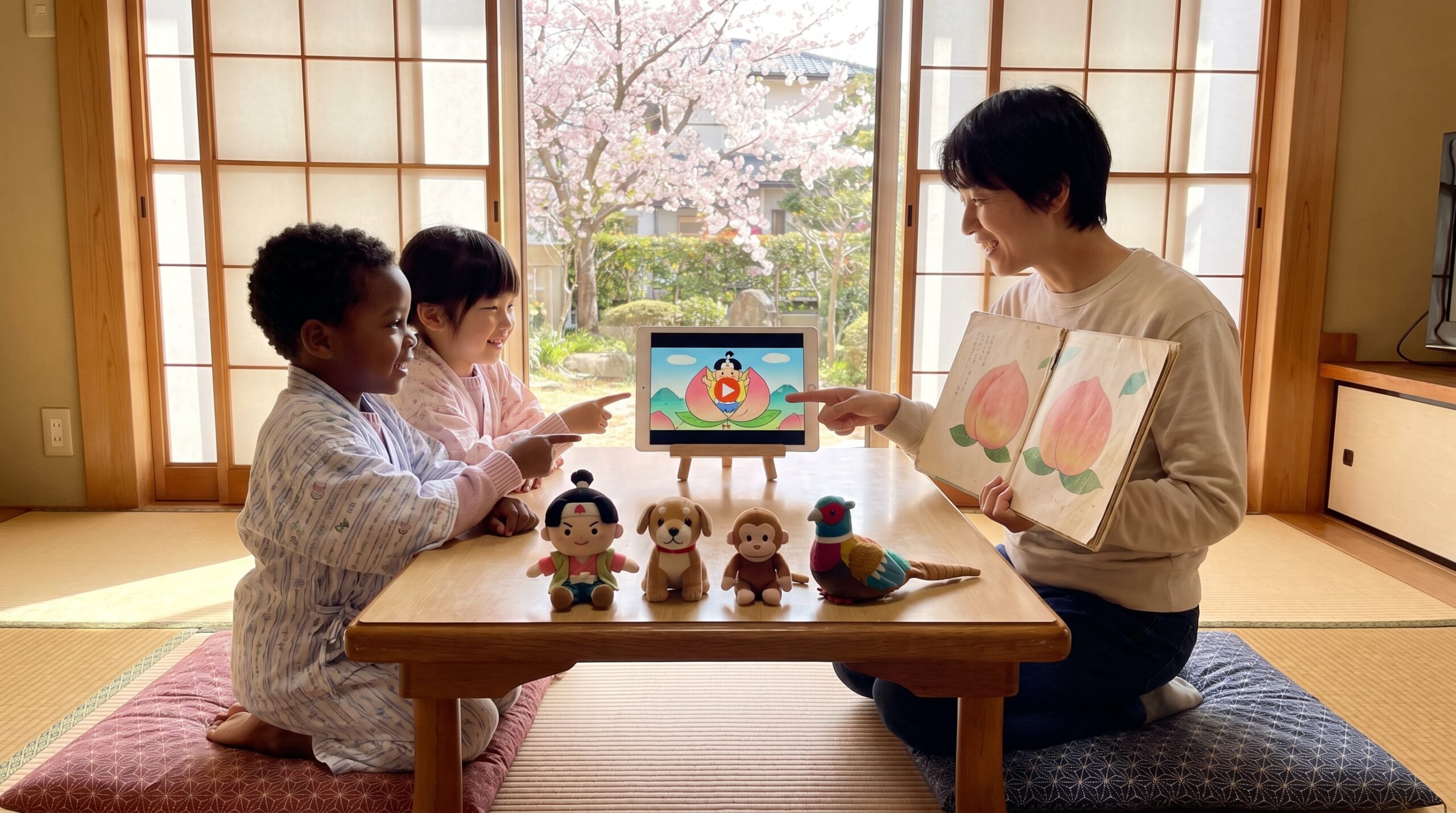
Momotaro – Japanese is a bright, compact folktale that children love. It begins simply. A peach floats down a river. An elderly couple find it. Inside is a baby boy named Momotaro. His name blends momo, or peach, with taro, a common boy name. The earliest printed version of the Momotarō story dates back to approximately 1650 CE, illustrating its long-standing significance in Japanese culture.
What happens in Momotaro – Japanese?
Momotaro grows strong and brave. Then he sets out to Onigashima, Ogre Island. Along the way he befriends three animals. A loyal dog, a clever monkey, and a watchful pheasant join him.
He wins their help with kibi dango, millet dumplings. Together they face the oni, or ogres. They recover stolen goods. Finally they return home with fairness restored.
Why Momotaro – Japanese endures
The tale uses clear images and bold action. For that reason it sticks with children. Also it celebrates teamwork, courage, and generosity. The animals model loyalty and cleverness. The peach symbolizes protection and luck in East Asian lore. The story of Momotarō was first incorporated into nationalized textbooks for Japanese elementary schools by the Meiji government in 1887, highlighting its educational importance in Japan and how it has been used to teach values to children.
Momotaro also serves as a cultural touchstone. The story grew from oral tales in the Edo period. It ties to the old Kibi region, now Okayama. Statues, songs, and local festivals honor the tale there, such as the Momotaro Festival held in Inuyama City each year on May 5, celebrating the hero throughout the town with Momotaro-related decorations. Over time the story was reshaped many times, including wartime uses; during World War II, Momotarō was used in Japanese propaganda films, such as “Momotarō’s Divine Sea Warriors,” to symbolize the Japanese government, with the demons representing enemy states. Today it appears in modern versions that emphasize kindness and fairness, and the character of Momotarō has been featured in various modern media, including manga and video games, such as Akira Toriyama’s “Dr. Slump” and the “One Piece” series.
Words to say aloud
Introduce a few bright words. For example:
- momo — peach
- kibi dango — kee-bee dahn-go, millet dumplings
- oni — OH-nee, ogre
- Onigashima — oh-nee-gah-shee-ma, Ogre Island
- Momotaro — Mo-mo-ta-ro, clear and bright
Age notes and content
The tale suits a wide age range. For toddlers, soften conflict and focus on returning stolen items. For older children, discuss how the tale changed over time and why groups repurposed it. In every version the core themes remain teamwork and fairness.
Read or listen to a story about Momotaro – Japanese now: For 3-5 year olds, For 6-8 year olds, For 8-10 year olds, and For 10-12 year olds. Also explore the main story page at Read or listen to a story about Momotaro – Japanese now on Storypie.
Momotaro – Japanese is playful, heroic, and full of clear images. It makes a gentle cultural gateway. Try it for a quiet afternoon. It will likely become a favorite.