I like to tell stories that start small. This plastic bottle story traces early plastics to modern uses. It stays friendly for parents, teachers and curious kids.
Read or listen to a story about Plastic Bottle now: For 3-5 year olds, For 6-8 year olds, For 8-10 year olds, and For 10-12 year olds.
Plastic bottle story: what it is
A plastic bottle is a container made from synthetic polymers. It typically has a body, a neck, a cap, a label and sometimes a tamper ring. For example, clear drinks often use PET, recycling code 1.
Other common codes include HDPE 2 for milk jugs and opaque containers. You might also spot codes 3 PVC, 4 LDPE, 5 PP, 6 PS and 7 for mixed or specialty types. Parents see bottles every day. Kids find them easy to hold and explore.
How plastic bottles are made and used
Most single use bottles are shaped by blow molding. Imagine a hot plastic bubble stretched and cooled into shape. Manufacturers use extrusion blow molding or injection stretch blow molding. Because of PET, the 1970s changed how we carry drinks.
Families like bottles because they are lightweight and shatter resistant. Also, they are cheap to make. Meanwhile, bottles can last a very long time in nature. They become litter, break into microplastics and reach soils and oceans. In fact, in 2022, 158.04 million tonnes of plastics entered the packaging sector, with a significant portion being plastic bottles.
Recycling made clear
Recycling follows simple steps: collect, sort, wash, shred into flakes and turn into pellets. PET can be bottle to bottle when collection and cleaning are good. Often plastics are downcycled into fibres, carpet or strapping unless food grade processes are used. In 2023, the U.S. PET bottle recycling rate reached 33%, marking the highest rate since 1996.
In the same year, the U.S. collected 1,962 million pounds of PET bottles for recycling, the highest annual weight ever recorded. Deposit return schemes and strong kerbside programs raise return rates a lot. So, family routines matter. Small systems add up to big results.
Quick 15 minute upcycle for curious hands
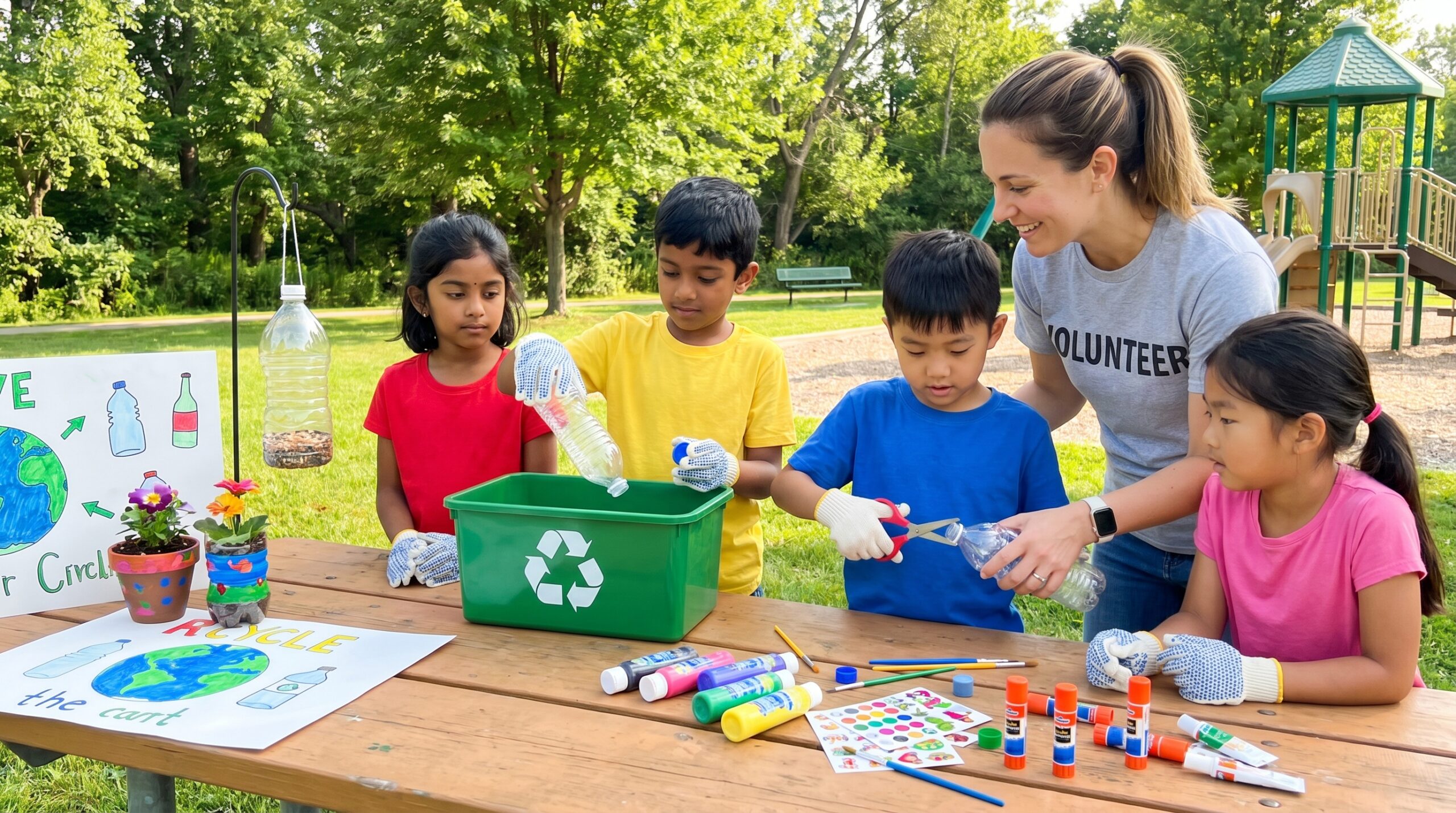
Try a short craft that turns a bottle into a planter. Kids cheer at tiny wow moments. It builds pride and curiosity.
- Materials: clean plastic bottle, blunt scissors (adult use), paint, string, soil and a small seedling.
- Steps: rinse and dry the bottle. Adult cuts the top to make a pot. Kids decorate with paint. Fill with soil and plant the seedling.
- Safety: adults handle cutting and hot glue. Sand sharp edges and avoid heating single use bottles for food reuse.
Simple family actions and next steps
Rinse bottles and check local rules for caps and labels. Choose refillable bottles and try refill stations. Talk with kids about why reuse matters. Habit beats guilt. In 2023, the average amount of post-consumer recycled PET used in U.S. bottles and jars was 16.2%, up from 13.2% in 2022. Additionally, 59% of recycled PET used in U.S. and Canadian end markets went to bottle applications, exceeding the previous record of 54% set in 2022.
Read more stories on Storypie and try this craft this weekend. For a friendly app, consider getting Storypie: Get the Storypie app. Small acts turn waste into wonder.