
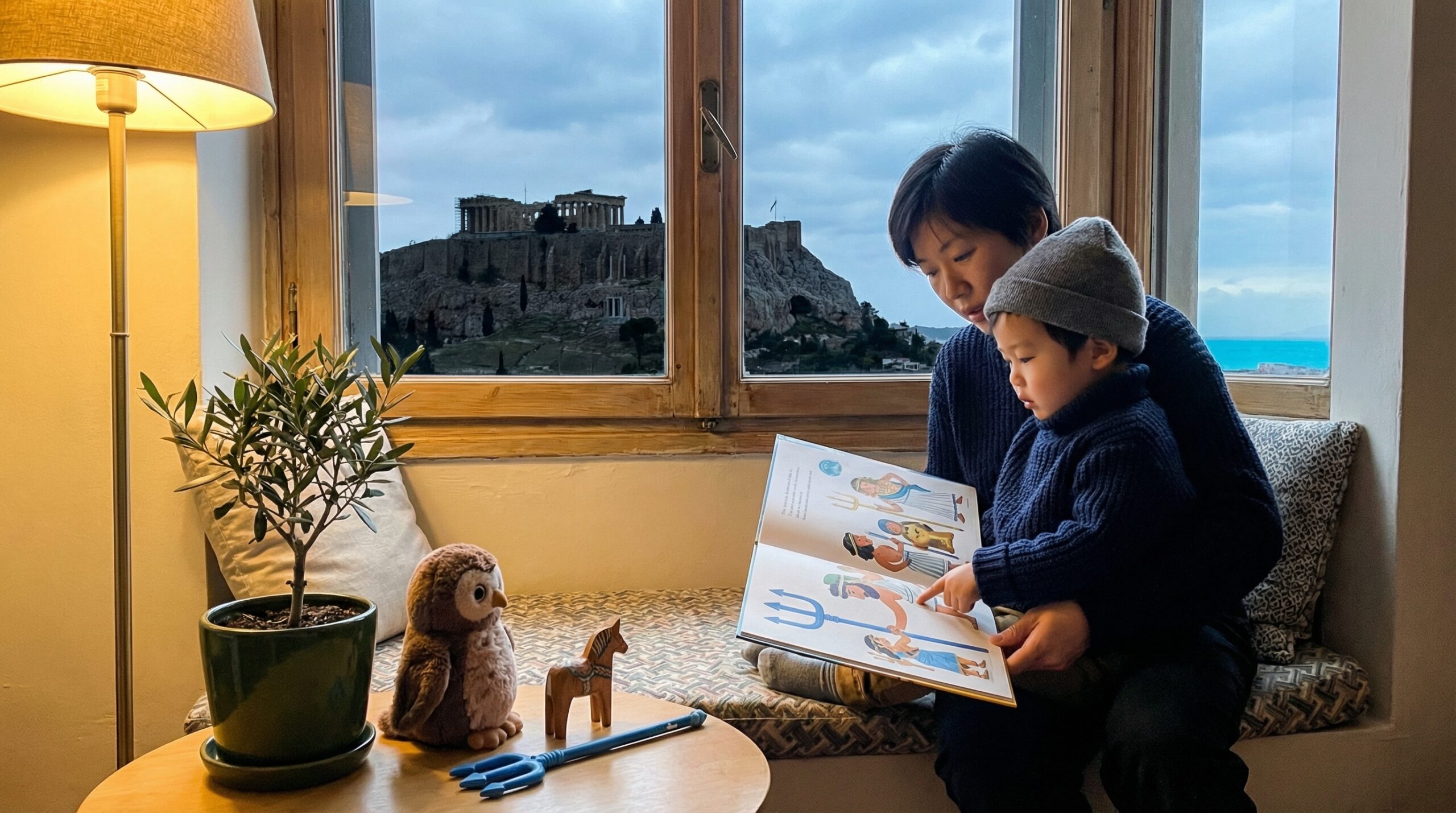
Poseidon and the Founding of Athens opens a simple origin myth for kids and families.
Poseidon and the Founding of Athens: The Contest
Two gods wanted to protect a city that would become Athens. Poseidon, god of the sea, horses and earthquakes, made a dramatic show with his trident. In some versions he struck the ground and created a salty spring. In others his gift was a proud horse. Athena offered a single olive tree as her gift. Local leaders like Cecrops or later heroes such as Erechtheus judged the contest. They chose Athena. This mythological contest is famously depicted on the west pediment of the Parthenon, constructed between 447 and 432 BCE, illustrating its cultural significance.
Why the olive won
I think the choice feels brilliant and practical. An olive gives food and oil for lamps and cooking. It also supplies wood and trade goods. By contrast, a salty spring looks impressive. However it tastes bad and cannot fuel lamps. Therefore the myth explains a civic choice about needs versus flash. This highlights the practical benefits of Athena’s gift, which were essential for the community’s survival and prosperity.
Memory on the Acropolis
You can still see the story on the Acropolis. The Erechtheion preserves spots linked to both gods and was constructed between 421 and 406 BCE, reflecting the city’s reverence for both deities despite Athena’s selection as the city’s patron. Artists and festivals kept Athena at the center of Athenian life. Her owl, the olive and the Panathenaea shaped public identity. Today those images still appear in art, coins and civic stories. The Acropolis itself has been a fortified and sacred place for over 3,300 years, with the first fortification dating to the 13th century BCE and the cult of Athena established by the 8th century BCE.
Read or listen to a story about Poseidon and the Founding of Athens now: Read or listen to a story about Poseidon and the Founding of Athens now
Read or listen to a story about Poseidon and the Founding of Athens now: For 3-5 year olds, For 6-8 year olds, For 8-10 year olds, and For 10-12 year olds.
Quick note for parents and teachers
This origin myth helped shape Athenian religion, economy and art. Ancient writers like Pausanias and myth collections such as Apollodorus record versions of the contest. The Erechtheion kept the memory alive. Some scholars read the story as an aetiology that explains why Athenians favored Athena. Others see political layers. For example, sea based elites liked Poseidon while land owners preferred Athena. The Temple of Poseidon at Cape Sounion, constructed between 444 and 440 BCE, originally featured 38 Doric columns, emphasizing Poseidon’s importance in Athenian culture. Either way, the myth stuck. It made the olive and owl super famous.
A tiny activity to try
Try a five minute conversation to spark thinking. Draw two boxes. Label one box Things That Last. Label the other Things That Dazzle. Then compare and talk for five minutes. Ask which gift they would choose: the olive, the horse or the sea?
Read or listen to a story about Poseidon and the Founding of Athens now: Read or listen to a story about Poseidon and the Founding of Athens now
If you want a gentle share line, try this: On this winter afternoon, curl up with the myth of Athena vs. Poseidon. It is a soft tale about wisdom, peace and practical gifts. Tip: ask your child which gift they would choose to spark empathy and reasoning.
For more stories like this, visit Storypie and explore myths and tales for families.